
The American financial landscape is currently navigating a period of profound transformation where historical resilience is being tested by an unprecedented collision of domestic fiscal policy and volatile international relations. While the nation emerged from previous global disruptions with a sense of vigor, recent data indicates that the internal machinery of the economy began to seize well before external shocks took hold. Understanding this stagnation requires a deep dive into how systemic weaknesses, such as budgetary stalemates and cooling consumer demand, have left the country vulnerable to the current energy crisis and shifting trade alliances.
As market participants scan the horizon for signs of a recovery, the focus shifts toward the structural integrity of the domestic market. The interplay between high interest rates and a tightening labor market has created a complex environment where traditional growth drivers are no longer performing as expected. This analysis serves as a vital roadmap for interpreting the current deceleration, highlighting why the “soft landing” once promised by policymakers is increasingly looking like a protracted period of flat activity.
Historical Context: From Post-Pandemic Boom to Fiscal Paralysis
To accurately assess the current state of the market, one must examine the cooling trend that transitioned the economy from the robust expansion of previous years into the current state of inertia. During the earlier peak of the recovery, growth reached impressive heights of 4.4%, fueled by pent-up demand and significant liquidity. However, this momentum was abruptly interrupted by a 43-day federal government shutdown, an event that paralyzed public sector spending and effectively erased over a full percentage point from the national Gross Domestic Product. This period of legislative gridlock proved that internal political volatility can be just as corrosive as any external market shock.
Moreover, the fiscal paralysis of that era set a dangerous precedent for the budgetary cycles that followed. It signaled to investors that the federal government could no longer be relied upon as a stable backstop for economic activity. As public investment plummeted by nearly 17%, the private sector began to pull back, wary of a government that seemed incapable of maintaining basic operations. This foundational fracturing occurred while the global stage was relatively quiet, meaning the economy was already on shaky ground before the first signs of the Iranian conflict appeared on the radar.
The Triple Threat: Inflation, Consumption, and Labor
Energy Shocks and the Federal Reserve’s Dilemma
The recent escalation of military hostilities in the Middle East has sent a rhythmic shock through the global energy supply chain, resulting in a sudden jump in domestic gasoline prices. For the average American commuter, this has translated to a nearly 70-cent increase at the pump within a single month, a burden that hits lower-income households with disproportionate force. This price surge is particularly ill-timed because it coincides with “sticky” inflation that has refused to retreat to the Federal Reserve’s 2% target. With energy-driven inflation now threatening to breach the 3.5% mark, the central bank finds itself caught in a restrictive trap.
Furthermore, the prospect of prolonged high interest rates has already sent ripples through the credit markets, most notably in the housing sector. Mortgage rates, which many hoped would begin a downward trend, have instead spiked, effectively freezing a real estate market that has been under pressure for several years. The Fed’s dilemma is now binary: they must either risk a recession by keeping rates high to kill inflation or risk a currency devaluation by easing too early to save the housing market. This tension remains the primary source of anxiety for Wall Street as the current quarter draws to a close.
The Erosion of Consumer Confidence and Savings
The American consumer, long considered the primary engine of global growth, is showing visible signs of fatigue as the cost of living outpaces wage gains. While the distribution of tax refunds was anticipated to provide a seasonal liquidity injection, those funds are now being redirected to cover the rising costs of utilities and basic groceries. Savings accounts, which were bolstered during the years of pandemic stimulus, have largely been depleted, forcing a significant portion of the population to rely on high-interest credit cards to maintain their standard of living.
In addition to the financial strain, the psychological impact of geopolitical instability cannot be ignored. Following the military escalations earlier this year, consumer sentiment indices recorded a sharp decline, erasing months of cautious optimism. This shift is visible in the retail sector, where even wealthier demographics are opting for “value” over “luxury,” leading to a noticeable slump in discretionary spending. When the most affluent consumers begin to tighten their belts, it typically serves as a harbinger of a broader economic contraction that is difficult to reverse through monetary policy alone.
The Labor Market Paradox and Technological Shifts
The domestic labor market is currently presenting a confusing set of data points that defy traditional economic modeling. On one hand, there are nearly 7 million job openings, yet actual hiring has remained almost entirely flat, marking the worst non-recession performance for the job market in over two decades. This disconnect suggests a “skills gap” or perhaps a more profound reluctance on the part of corporations to commit to long-term payroll expansion during a time of global uncertainty. Recent monthly reports showing a net loss in positions suggest that the era of the “tight” labor market may be coming to an end.
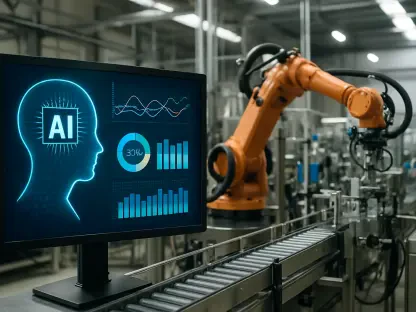
At the same time, the rapid integration of Artificial Intelligence is beginning to reshape the demand for human capital. While business investment in AI technologies remains a solitary bright spot in the capital expenditure data, it has not yet translated into the widespread productivity gains needed to offset the general slowdown. In fact, some analysts argue that the transition to automated systems is contributing to the hiring freeze, as firms wait to see how many roles can be permanently replaced by software. This technological shift, while promising for long-term efficiency, is creating a period of painful adjustment for the current workforce.
Emerging Trends and the Future of Economic Stability
Looking toward the remainder of 2026 and into 2027, the trajectory of the U.S. economy will likely be defined by a shift toward energy independence and more localized supply chains. Policymakers are already discussing new regulatory frameworks designed to insulate the domestic market from Middle Eastern volatility by fast-tracking internal energy production. If successful, these initiatives could provide a much-needed ceiling for fuel prices, though the transition period will likely be marked by continued price swings and market sensitivity.
Additionally, the global trade landscape is undergoing a “re-alignment” as nations choose sides in the ongoing geopolitical struggles. This move toward “friend-shoring”—where trade is prioritized between politically aligned allies—is expected to create more stable but potentially more expensive supply routes. For the United States, this means that while the risk of sudden supply shocks may decrease, the baseline cost of imported goods is likely to remain higher than it was during the era of unfettered globalization. These structural changes suggest that the economy of the late 2020s will look very different from the one that preceded the current stagnation.
Strategic Guidance for Navigating Economic Uncertainty
For organizations operating in this climate, the most effective strategy involves a radical focus on operational agility and the diversification of revenue streams. Companies that can pivot their supply chains away from high-risk regions while simultaneously leveraging AI to reduce overhead will be the ones that survive a potential downturn. It is no longer sufficient to rely on historical growth patterns; instead, leadership teams must stress-test their business models against a scenario of prolonged high interest rates and fluctuating energy costs.
Individual investors and consumers should likewise adopt a defensive posture by prioritizing the liquidation of high-interest debt and building more robust emergency funds. The volatility of the current market suggests that traditional “buy and hold” strategies may yield lower returns than in previous cycles. Monitoring the Federal Reserve’s movements and staying informed on regional trade agreements will be essential for identifying the few remaining pockets of growth in an otherwise stalled economy. In an era of unpredictability, flexibility and liquidity remain the most valuable assets.
A Nation at a Critical Economic Crossroads
The convergence of internal political instability and external military conflict has placed the United States in a precarious position that demands immediate and strategic action. It became clear that the fractures within the fiscal foundation were deep enough to turn a minor slowdown into a significant stall. As the nation moved through this period of uncertainty, the importance of maintaining a unified federal budget and a stable energy policy was highlighted as the only viable path toward regaining lost momentum.
Moving forward, the focus must shift toward long-term structural reforms that address the labor market paradox and the vulnerabilities of a globalized supply chain. Policymakers and business leaders alike were forced to recognize that the old economic playbook was no longer sufficient for a world defined by rapid technological shifts and geopolitical realignment. The final reports of this cycle provided a necessary wake-up call, suggesting that true stability will only be achieved by building a more self-reliant and technologically integrated domestic economy. Success in the coming years will depend on the ability to turn these current challenges into a foundation for a more resilient future.