
From Revolutionary Icon to Market Reality
The Tesla Cybertruck, once hailed as the unshakeable future of utilitarian vehicles, has hit a significant and unexpected roadblock. After a promising first year, the futuristic pickup saw its sales plummet by nearly 50% in 2025, a stark reversal of fortune that sent shockwaves through the electric vehicle market. This downturn transforms the Cybertruck from a symbol of audacious innovation into a cautionary tale about the limits of disruption. This article will dissect the complex interplay of factors—from production realities and economic pressures to polarizing aesthetics and technical failures—that contributed to the vehicle’s dramatic sales decline, exploring what this means for Tesla and the future of electric trucks.
A High-Stakes Bet on Radical Disruption
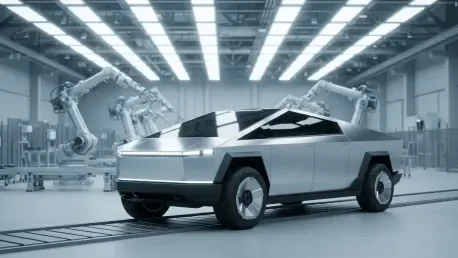
To understand the Cybertruck’s current struggles, one must revisit its bombastic debut. The vehicle was unveiled not just as a new product but as a radical reimagining of the pickup truck, built on an exoskeleton of stainless steel and boasting features like steer-by-wire technology. The initial hype was immense, translating into a mountain of pre-orders and establishing ambitious production targets of 250,000 units annually. This early momentum positioned the Cybertruck as a segment-defining force, setting expectations so high that any deviation from its meteoric trajectory would be viewed as a significant failure. This foundational context is critical, as the very elements that generated its initial excitement ultimately became its greatest liabilities.
The Cracks in the Stainless-Steel Armor
Economic Headwinds and Production Bottlenecks
The first major obstacle in the Cybertruck’s path was a collision of unfavorable economics and manufacturing complexity. The removal of the $7,500 federal clean-vehicle tax credit in 2025 immediately erased a significant purchase incentive, magnifying the impact of its already high $79,000 launch price. This financial headwind hit just as the company was grappling with the realities of its ambitious design. The specialized stainless-steel body proved difficult to manufacture at scale, creating production bottlenecks that kept output far below targets. After a respectable first year with 39,000 units sold, sales collapsed to just 20,200 in 2025—the largest volume-based decline for any EV in the American market that year. This starkly illustrates how the Cybertruck’s high-concept engineering failed to align with market affordability and scalable production.
A Design Too Bold, A Persona Too Loud
While the Cybertruck’s angular, monolithic design captivated a niche audience, it simultaneously alienated the mainstream truck buyers needed to sustain high-volume sales. Its unconventional aesthetic stood in sharp contrast to more traditional EV offerings like the Chevrolet Equinox EV, which saw its sales double by appealing to broader consumer tastes. Furthermore, the Cybertruck became inextricably linked to the increasingly polarizing public profile of CEO Elon Musk. For a growing segment of the market, purchasing the vehicle was perceived less as a practical choice and more as a political statement, dramatically narrowing its demographic appeal and turning off potential customers who simply wanted a reliable, functional electric pickup.
Confidence Eroded by Recalls and Global Roadblocks
Persistent quality control issues and technical failures delivered a severe blow to consumer confidence. The vehicle has been subjected to 10 recalls since its 2023 launch, addressing critical safety defects identified by the National Highway Traffic Safety Administration (NHTSA). These included accelerator pedals that could become trapped at full throttle and an optional off-road light bar prone to detaching. Coupled with widely publicized problems like its notoriously ineffective windshield wiper, these issues painted a picture of a product rushed to market without adequate refinement. Compounding these domestic challenges, the Cybertruck’s sharp-edged design fails to meet pedestrian safety standards in key international markets like Europe and China, effectively barring it from global expansion and capping its long-term sales potential.
The Future of the Electric Pickup Segment
The Cybertruck’s faltering performance is forcing a realignment in the electric pickup market. Competitors are likely to interpret its struggles as a clear signal that mainstream appeal, manufacturing simplicity, and affordability are more critical to success than radical, high-risk design. This may lead to a wave of more conventional and utility-focused electric trucks that prioritize practicality over novelty. For Tesla, the path forward is uncertain. The company must decide whether to double down on the Cybertruck’s niche appeal, potentially at a lower production volume, or consider a significant redesign for a future generation—a move that would concede the failure of its original vision.
Navigating the Post-Hype Landscape
The core lesson from the Cybertruck’s journey is that market-disrupting innovation cannot succeed without a foundation of practicality, reliability, and market accessibility. The vehicle’s sales decline was not caused by a single flaw but by a systemic failure to balance futuristic ambition with real-world consumer needs and manufacturing constraints. For automakers, the takeaway is clear: understanding the target demographic and ensuring production scalability are paramount. For consumers, this serves as a reminder to look beyond initial hype and evaluate a vehicle based on its long-term value, safety, and utility.
A Vision Unfulfilled
The story of the Tesla Cybertruck was ultimately one of a revolutionary vision colliding with market reality. Its initial promise to redefine an entire vehicle category was derailed by a combination of economic pressures, an alienating design, and a cascade of technical failures. While it succeeded in capturing the world’s attention, it failed to build the broad, sustainable customer base necessary for mass-market success. The Cybertruck’s ongoing struggles will remain a powerful case study in the automotive industry, highlighting the critical balance between pushing boundaries and meeting the fundamental expectations of the modern consumer.Fixed version:
From Revolutionary Icon to Market Reality
The Tesla Cybertruck, once hailed as the unshakeable future of utilitarian vehicles, has hit a significant and unexpected roadblock after a promising first year that saw its sales plummet by nearly 50% in 2025, a stark reversal of fortune that sent shockwaves through the electric vehicle market. This downturn transforms the Cybertruck from a symbol of audacious innovation into a cautionary tale about the limits of disruption. This article will dissect the complex interplay of factors—from production realities and economic pressures to polarizing aesthetics and technical failures—that contributed to the vehicle’s dramatic sales decline, exploring what this means for Tesla and the future of electric trucks.
A High-Stakes Bet on Radical Disruption
To understand the Cybertruck’s current struggles, one must revisit its bombastic debut. The vehicle was unveiled not just as a new product but as a radical reimagining of the pickup truck, built on an exoskeleton of stainless steel and boasting features like steer-by-wire technology. The initial hype was immense, translating into a mountain of pre-orders and establishing ambitious production targets of 250,000 units annually. This early momentum positioned the Cybertruck as a segment-defining force, setting expectations so high that any deviation from its meteoric trajectory would be viewed as a significant failure. This foundational context is critical, as the very elements that generated its initial excitement ultimately became its greatest liabilities.
The Cracks in the Stainless-Steel Armor
Economic Headwinds and Production Bottlenecks
The first major obstacle in the Cybertruck’s path was a collision of unfavorable economics and manufacturing complexity. The removal of the $7,500 federal clean-vehicle tax credit in 2025 immediately erased a significant purchase incentive, magnifying the impact of its already high $79,000 launch price. This financial headwind hit just as the company was grappling with the realities of its ambitious design. The specialized stainless-steel body proved difficult to manufacture at scale, creating production bottlenecks that kept output far below targets. After a respectable first year with 39,000 units sold, sales collapsed to just 20,200 in 2025—the largest volume-based decline for any EV in the American market that year. This starkly illustrates how the Cybertruck’s high-concept engineering failed to align with market affordability and scalable production.
A Design Too Bold, A Persona Too Loud
While the Cybertruck’s angular, monolithic design captivated a niche audience, it simultaneously alienated the mainstream truck buyers needed to sustain high-volume sales. Its unconventional aesthetic stood in sharp contrast to more traditional EV offerings like the Chevrolet Equinox EV, which saw its sales double by appealing to broader consumer tastes. Furthermore, the Cybertruck became inextricably linked to the increasingly polarizing public profile of CEO Elon Musk. For a growing segment of the market, purchasing the vehicle was perceived less as a practical choice and more as a political statement, dramatically narrowing its demographic appeal and turning off potential customers who simply wanted a reliable, functional electric pickup.
Confidence Eroded by Recalls and Global Roadblocks
Persistent quality control issues and technical failures delivered a severe blow to consumer confidence. The vehicle has been subjected to 10 recalls since its 2023 launch, addressing critical safety defects identified by the National Highway Traffic Safety Administration (NHTSA). These included accelerator pedals that could become trapped at full throttle and an optional off-road light bar prone to detaching. Coupled with widely publicized problems like its notoriously ineffective windshield wiper, these issues painted a picture of a product rushed to market without adequate refinement. Compounding these domestic challenges, the Cybertruck’s sharp-edged design fails to meet pedestrian safety standards in key international markets like Europe and China, effectively barring it from global expansion and capping its long-term sales potential.
The Future of the Electric Pickup Segment
The Cybertruck’s faltering performance is forcing a realignment in the electric pickup market. Competitors are likely to interpret its struggles as a clear signal that mainstream appeal, manufacturing simplicity, and affordability are more critical to success than radical, high-risk design. This may lead to a wave of more conventional and utility-focused electric trucks that prioritize practicality over novelty. For Tesla, the path forward is uncertain. The company must decide whether to double down on the Cybertruck’s niche appeal, potentially at a lower production volume, or consider a significant redesign for a future generation—a move that would concede the failure of its original vision.
Navigating the Post-Hype Landscape
The core lesson from the Cybertruck’s journey is that market-disrupting innovation cannot succeed without a foundation of practicality, reliability, and market accessibility. The vehicle’s sales decline was not caused by a single flaw but by a systemic failure to balance futuristic ambition with real-world consumer needs and manufacturing constraints. For automakers, the takeaway is clear: understanding the target demographic and ensuring production scalability are paramount. For consumers, this serves as a reminder to look beyond initial hype and evaluate a vehicle based on its long-term value, safety, and utility.
A Vision Unfulfilled
The story of the Tesla Cybertruck was ultimately one of a revolutionary vision colliding with market reality. Its initial promise to redefine an entire vehicle category was derailed by a combination of economic pressures, an alienating design, and a cascade of technical failures. While it succeeded in capturing the world’s attention, it failed to build the broad, sustainable customer base necessary for mass-market success. The Cybertruck’s ongoing struggles will remain a powerful case study in the automotive industry, highlighting the critical balance between pushing boundaries and meeting the fundamental expectations of the modern consumer.