
The persistent hum of automated assembly lines now masks the silent, digital conflict raging within factory walls, transforming the manufacturing sector into the primary battleground for a new generation of sophisticated cyber adversaries. The industry’s continued position as the number one target for cyberattacks is not a fleeting trend but a fundamental realignment of risk, driven by a confluence of technological advancement, unique operational pressures, and evolving attacker motivations. This shift demands a radical rethinking of industrial security, moving beyond traditional defenses to address a threat landscape that is more complex and dynamic than ever before.
The Modern Factory Floor: A High-Stakes Digital Frontier
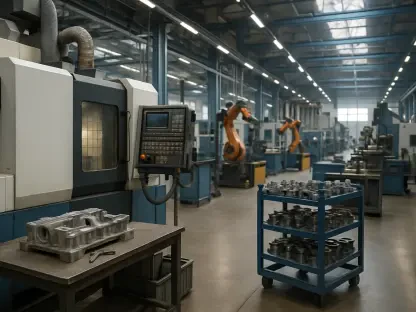
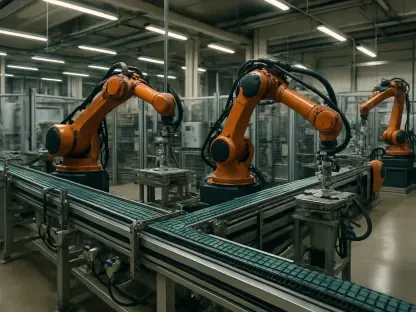
Today’s manufacturing facilities bear little resemblance to their predecessors. They are intricate ecosystems of interconnected operational technology (OT) and information technology (IT), where data flows seamlessly from enterprise resource planning systems to the robotic arms on the production line. This digital transformation, often dubbed Industry 4.0, has unlocked unprecedented efficiency and innovation. However, it has also erased the traditional air gap that once isolated sensitive industrial controls from the outside world, creating a vast and permeable attack surface.
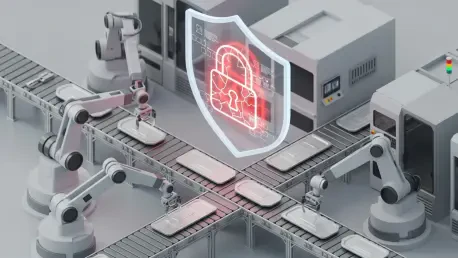
Every new sensor, connected device, and cloud-based management platform introduces potential vulnerabilities. The very systems designed to optimize production and streamline supply chains can become entry points for malicious actors. Consequently, an attack is no longer just a data breach; it is a direct assault on the physical world. The stakes involve not only financial loss and intellectual property theft but also operational paralysis, supply chain disruption, and potential safety hazards, making the modern factory a uniquely high-value, high-impact target.
The Evolving Threat Landscape in Manufacturing
The nature of the threats facing manufacturers has evolved significantly. While ransomware remains a prevalent and damaging tactic, viewing attacks through a purely financial lens is a critical oversimplification. Adversaries now operate with a multifaceted playbook, leveraging a deeper understanding of industrial processes to achieve a range of objectives. This evolution reflects a broader trend where attackers are not just exploiting networks but are actively studying the core business operations of their targets to maximize leverage and impact.
The New Adversary Playbook: More Than Just a Ransom
The common belief that manufacturers are targeted simply because downtime is expensive and they are likely to pay ransoms quickly captures only part of the story. A less visible but equally powerful motivator has emerged within the hacking community: prestige. For aspiring cybercriminals and hacking syndicates, successfully compromising a complex industrial environment serves as a demonstration of technical prowess. It is an entrance exam of sorts, proving they possess the skill to navigate the intricate convergence of IT and OT systems.
A decade ago, the specialized knowledge and tools required to attack industrial systems were scarce. Today, malware designed specifically for OT environments is accessible, and educational resources on industrial network protocols are widely available. This democratization of knowledge allows hackers to test their skills in an environment that is challenging enough to be impressive within their circles yet perceived as safer to target than national critical infrastructure, where an attack would trigger a massive and coordinated government response.
The Expanding Attack Surface: A By-the-Numbers Look at Rising Risk
The ambition of attackers is meeting a rapidly expanding field of opportunity. With an estimated 91 percent of manufacturing organizations planning to adopt new technologies within the next twelve months, the digital footprint of the average factory is growing exponentially. The rush to integrate Industrial Internet of Things (IIoT) devices, deploy edge computing, and leverage cloud analytics for predictive maintenance creates countless new potential entry points for attackers.
Each new connection point between the corporate network and the factory floor must be secured, a task complicated by the long lifespan of industrial equipment and the challenges of patching legacy systems. This rapid technological adoption, while essential for competitiveness, is creating a perfect storm. The attack surface is widening at the precise moment when adversaries, armed with greater knowledge and more sophisticated tools, are more motivated than ever to breach industrial defenses.
The Perfect Storm: Why Defenders Are Playing Catch-Up
Manufacturing occupies a unique and precarious middle ground in the risk calculus of cybercriminals. Attacking critical infrastructure like a power grid guarantees an overwhelming response from national and international law enforcement agencies, placing the perpetrators at extreme risk. Conversely, targeting a low-impact entity offers little financial reward or reputational gain. Manufacturing, however, presents the ideal balance of challenge, reward, and manageable risk.
The technical complexity of a modern factory provides the challenge necessary for hackers to prove their abilities. Simultaneously, the direct link between operational uptime and revenue provides immense leverage for ransomware and extortion demands. Companies facing halted production lines are under extreme pressure to resolve the situation quickly to avoid contractual penalties and customer attrition. This combination makes the sector an irresistible proving ground that is both technically rewarding and financially lucrative for attackers, all while carrying a lower probability of triggering a full-scale international manhunt.
The CISO’s DilemmNavigating Risk, Liability, and Innovation
While attackers operate with agility and a high tolerance for failure, the Chief Information Security Officers (CISOs) tasked with defending manufacturing environments face a vastly different set of constraints. Their primary directive is to ensure the 24/7 availability and integrity of systems where any disruption has immediate and severe financial consequences. This operational imperative fosters a culture of caution, particularly when it comes to adopting new, unproven security technologies.
This inherent conservatism creates a significant dilemma. A CISO knows that if an experimental defensive tool fails or, worse, causes an operational outage, the professional repercussions could be career-ending. The risk of being held liable for a failed innovation often outweighs the potential reward of staying ahead of threat actors. In contrast, an attacker faces no such consequences; if a novel attack method fails, they simply try another. This asymmetry in risk and reward leaves defenders playing a perpetual game of catch-up, often relying on established practices while adversaries relentlessly innovate.
The AI Arms Race: Securing Tomorrow’s Smart Factories
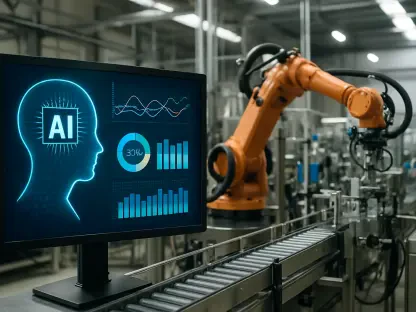
This defensive hesitation is most pronounced in the adoption of artificial intelligence. Adversaries are already leveraging AI to automate reconnaissance, craft more convincing phishing campaigns, and identify vulnerabilities at a scale and speed that human analysts cannot match. Their ability to experiment freely means they are integrating AI into their offensive toolkits faster than organizations are deploying it for defense. Security leaders recognize the potential of AI, but implementation is not a simple switch.
For a defensive AI system to be trusted, it must be rigorously tested and validated to ensure it does not generate false positives that could disrupt production. It is not a product to be bought but a methodology to be built upon and refined over time. This careful, deliberate process stands in stark contrast to the attackers’ rapid, trial-and-error approach. The result is a growing capabilities gap, where the offensive use of AI is outpacing its defensive application, creating an even steeper uphill battle for those charged with protecting the smart factories of tomorrow.
From Prime Target to Security Pioneer: A Strategic Path Forward
The strategies that secured manufacturing environments over the past decade are insufficient for the challenges of the next. Acknowledging this reality is the first step toward building a more resilient posture. Industry leaders must now fundamentally challenge their existing processes and embrace a mindset of continuous adaptation, mirroring the agility of their adversaries. This involves fostering better integration between disparate security tools and leveraging technologies like AI not as a blanket solution but as a targeted tool to solve specific, well-defined problems.
Defenders possess a powerful, intrinsic advantage: they are protecting tangible assets, from production capabilities and supply chains to the livelihoods of their employees. By harnessing this purpose and coupling it with a willingness to innovate, the manufacturing sector can transition from its current status as a favored target. The path forward requires a strategic, problem-focused approach to technology adoption and a cultural shift that prioritizes proactive cyber resilience. Through this transformation, manufacturing has the opportunity not only to secure itself but to set a new standard for operational technology security across all industries.