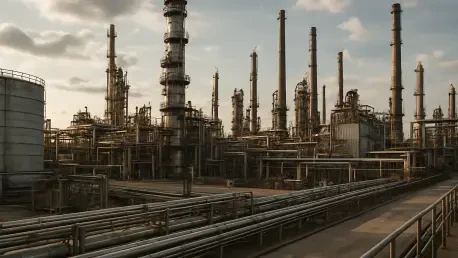

The immense challenge for established industrial sectors such as energy, chemicals, and mining lies in reconciling the need for digital transformation with the prohibitive costs and operational risks associated with overhauling deeply embedded, mission-critical control systems. For decades, the prevailing wisdom dictated that embracing new technologies like artificial intelligence and advanced analytics required a costly and disruptive “rip-and-replace” strategy, a prospect that often delayed or derailed modernization initiatives. This created a significant bottleneck, leaving many vital industries vulnerable to market volatility, mounting cybersecurity threats, and increasingly stringent regulatory demands. The dilemma has forced operators to choose between maintaining reliable, albeit aging, infrastructure and pursuing innovation that could jeopardize production stability. A new automation architecture, however, presents a pivotal shift in this paradigm, offering a structured, gradual pathway to modernization that allows companies to integrate cutting-edge digital capabilities without sacrificing the proven reliability of their existing operational frameworks, effectively de-risking the path to a more agile and intelligent industrial future.
A New Paradigm for Industrial Modernization
Bridging the Gap Between Legacy and Future
The core philosophy behind the Automation Extended program is the provision of a structured, incremental pathway for companies to integrate sophisticated digital technologies into their established operational environments. This approach is built upon ABB’s extensive installed base of distributed control systems (DCS), including well-regarded platforms like ABB Ability System 800xA and Symphony Plus. Instead of demanding a complete teardown of existing infrastructure, the architecture enables operators to preserve their substantial investments in current control systems while progressively layering on future-ready capabilities. This method acknowledges the immense value and proven reliability of legacy systems that have been fine-tuned over years of operation. By creating a bridge between the old and the new, the system allows for a phased modernization that aligns with budget cycles, operational schedules, and strategic priorities, thereby transforming the daunting task of a complete overhaul into a manageable, value-driven evolution that enhances rather than disrupts critical industrial processes.
The gradual integration of advanced technologies such as artificial intelligence (AI), machine learning, the Internet of Things (IoT), and advanced analytics is central to this modernization strategy. In a landscape defined by rapid market fluctuations, sophisticated cybersecurity threats, and evolving regulatory pressures, the ability to adapt is paramount. The Automation Extended architecture facilitates this adaptation by allowing industries with large, complex infrastructures—including utilities and mining operations—to deploy these digital tools without the massive disruption of a full replacement. For example, a chemical plant could introduce AI-driven predictive maintenance algorithms to monitor critical equipment, or a utility could leverage IoT sensors for real-time grid optimization, all while the core process control functions remain untouched and secure. This incremental adoption model ensures that new technologies can deliver immediate value in specific areas, building a business case for further investment and allowing the organization to develop new competencies at a sustainable pace, all without compromising the fundamental stability of their operations.
The Core Architectural Innovation
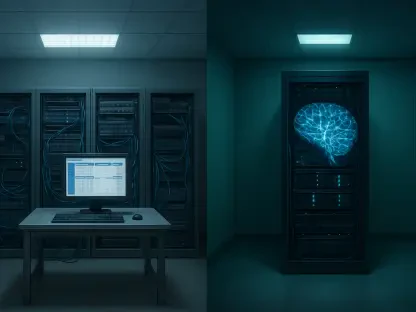
A key technological breakthrough within the Automation Extended architecture is the deliberate and secure separation of critical, real-time control functions from newer, data-intensive digital applications. This is achieved through a bifurcated design that establishes a “software-defined domain” exclusively responsible for maintaining the deterministic performance and high availability of mission-critical processes. This domain is essentially a protected environment where the proven logic of the core control system operates without interference. In parallel, a securely connected digital environment is established to host advanced applications, including AI and machine learning tools, advanced analytics platforms, and other decision-support systems. This separation is crucial because it isolates the core operational technology (OT) from the information technology (IT) applications, preventing any potential instability from the latter from affecting the former. This innovative design allows companies to experiment with and deploy new capabilities at scale while significantly mitigating operational risk, ensuring that the plant or facility continues to run safely and reliably.
The strategic benefit of this architectural separation becomes clear when considering the practical implications for industrial operators. By decoupling core control from advanced applications, companies are empowered to pursue innovation with newfound confidence and agility. An energy producer, for instance, can deploy a sophisticated machine learning model to analyze historical and real-time data for asset performance optimization, all without altering or jeopardizing the validated control strategies managing the power generation process. This structure means that software updates, patches, or even the trial of a new analytical tool in the digital environment will not pose a risk to the underlying control loop. This greatly accelerates the deployment of digital solutions that enhance decision-making, improve efficiency, and drive profitability. Ultimately, it creates a flexible and resilient ecosystem where the robust, unchanging reliability of core operations coexists with the dynamic, rapidly evolving world of digital innovation, giving companies the best of both worlds.
Building a Resilient and Interoperable Ecosystem
An Open and Modular Framework
The foundation of the Automation Extended ecosystem is an open and modular framework designed to maximize interoperability and future-proofing. By integrating industry-standard technologies like Open Platform Communications Unified Architecture (OPC UA), the system ensures seamless and secure data exchange between devices, applications, and systems from different manufacturers. This commitment to openness directly addresses one of the industry’s long-standing challenges: vendor lock-in. Operators are no longer constrained by proprietary protocols and can select best-in-class solutions from a diverse ecosystem of providers. Furthermore, the architecture leverages a cloud-native infrastructure with containerization, which allows applications to be packaged with their dependencies and deployed consistently across different computing environments, from the on-premises edge to the public cloud. This modular approach not only enhances flexibility and scalability but also simplifies the management and deployment of software, enabling industrial facilities to adapt more quickly to changing technological landscapes and business requirements.
This forward-looking technological foundation is what enables the architecture to deliver tangible operational benefits. The use of OPC UA, for example, is critical for creating a unified namespace for plant-wide data, making it easier for advanced applications to access and analyze information from disparate sources. Containerization technologies, meanwhile, allow for the rapid deployment and scaling of microservices-based applications, such as an anomaly detection service that can be spun up to monitor a specific piece of equipment and then scaled down when no longer needed. This level of agility was previously unattainable in monolithic control system environments. By building on an open, standards-based, and modular foundation, the ecosystem provides a robust and adaptable platform for hosting the next generation of industrial applications, ensuring that operators can continuously innovate while maintaining a secure, reliable, and efficient operational backbone that is built for longevity.
The Strategic Business Advantage
Framed as a strategic alternative to the traditional “rip-and-replace” cycle, this new architecture provides a compelling business case rooted in enhanced scalability, agility, and asset longevity. By allowing for the incremental integration of new technologies, it helps operators manage capital expenditures more effectively, avoiding the massive upfront investment required for a complete system overhaul. This phased approach enables companies to extend the productive life of their existing assets, maximizing the return on investment for their current control infrastructure while still benefiting from modern digital capabilities. The inherent scalability of the system means that modernization can start small—perhaps with a single production line or a specific set of assets—and expand as value is proven and budgets allow. This agility empowers organizations to respond more rapidly to market opportunities and competitive pressures, transforming their automation infrastructure from a static, costly asset into a dynamic and evolving platform for continuous improvement and innovation.
This modernization approach fundamentally reoriented the relationship between operational technology and business strategy. By preserving the core control systems that ensured decades of stable production, the architecture had successfully de-risked the process of digital transformation. It had demonstrated that innovation did not have to come at the cost of reliability. Instead of forcing a difficult choice between maintaining the status quo and embarking on a high-stakes overhaul, it offered a third way: a sustainable, evolutionary path that integrated the best of both worlds. The resulting ecosystem allowed industrial enterprises to leverage cutting-edge tools like AI and advanced analytics to optimize their operations, improve decision-making, and enhance safety, all while building upon the solid foundation of their existing infrastructure. This had set a new benchmark for industrial modernization, proving that progress could be both transformative and prudent.