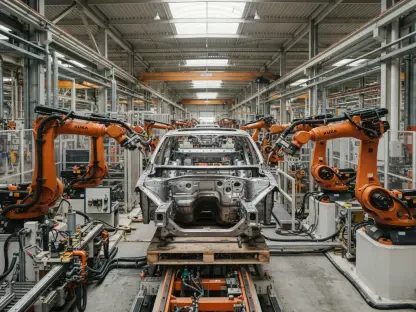

The global automotive landscape is currently undergoing its most radical transformation in a century as manufacturers race to integrate sophisticated robotic systems into assembly lines that were once dominated by manual labor. As of 2026, the transition toward electric mobility has necessitated a complete reimagining of the factory floor, moving away from traditional internal combustion workflows. The strategic partnership between ABB and the BMW Group centers on the deployment of 1,700 industrial robots to facilitate the manufacturing of the Neue Klasse electric vehicle lineup. This expansion represents a critical step in scaling production capacity to meet the rising demand for battery-electric transport.
The integration of these robots is not merely a hardware upgrade but a fundamental shift in how complex machinery interacts with high-voltage components. By focusing on critical production hubs in Germany and China, the collaboration addresses the logistical and technical hurdles of mass-producing next-generation vehicles. This analysis examines how advanced motion control and heavy-duty automation provide the necessary foundation for a sustainable, high-output manufacturing ecosystem.
Driving Automation in the Neue Klasse Era
The central focus of this manufacturing evolution is the Neue Klasse, a platform designed to redefine the electric driving experience through enhanced efficiency and structural innovation. One of the primary challenges addressed by this research into automated production is the physical scale of battery assembly, which requires precision far beyond the capabilities of conventional human-led processes. The study highlights how the assembly of these vehicles depends on the seamless synchronization of robotic units that manage everything from intricate wiring to the placement of massive battery modules.
Furthermore, the Neue Klasse era demands a higher degree of flexibility in manufacturing lines to accommodate rapid updates and new model variants. The challenge lies in creating a system that is both rigid enough for high-speed production and adaptable enough for future modifications. By utilizing standardized robotic platforms, the production process remains agile, allowing for the introduction of various body styles without requiring a complete overhaul of the existing factory infrastructure.
Accelerating the Global Transition to Electric Mobility
The broader significance of this research lies in its potential to accelerate the global shift toward zero-emission transportation by lowering the barriers to high-volume production. As international regulations regarding carbon emissions tighten, the importance of efficient, localized manufacturing has become a matter of survival for legacy automakers. This collaboration serves as a blueprint for how strategic automation can reduce the lead time required to bring new electric models to the global market.
Moreover, the relevance of this work extends to the economic stability of the regions involved, as it ensures that traditional manufacturing hubs remain competitive in a changing technological environment. By investing in high-tech automation, BMW and its partners are securing the future of their workforce through upskilling and the reduction of hazardous manual tasks. The global relevance is underscored by the simultaneous deployment in Europe and Asia, reflecting a unified strategy for a worldwide market.
Research Methodology, Findings, and Implications
Methodology
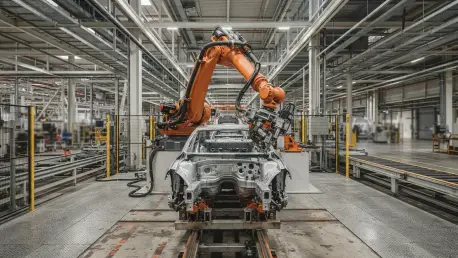
The investigative methodology utilized in this production strategy involved the deployment of 1,700 robots categorized into three distinct functional classes based on their technical capabilities. The first category focused on material handling and precision processing, including spot welding and gluing for vehicle body construction. The second category specialized in the heavy-duty assembly of battery packs, utilizing robots with a payload capacity of 620kg to ensure structural integrity and safety.
To manage this vast robotic fleet, the ABB OmniCore platform was implemented as the primary control interface, providing advanced motion synchronization and data analysis. This methodology allowed for a high degree of technical oversight, ensuring that each robot operated within strict tolerances for speed and accuracy. The use of digital twins and simulation tools during the planning phase further refined the placement of each unit, minimizing downtime and maximizing the spatial efficiency of the production halls.
Findings
The research findings indicated that the integration of 1,700 robots significantly increased the production throughput at the Munich and Tiexi facilities. It was discovered that the OmniCore system provided a 20 percent improvement in energy efficiency compared to previous-generation controllers, which is vital for maintaining a sustainable manufacturing footprint. The data showed that the automated lines could handle up to 40 different model variants and updates planned for the 2026 to 2028 production cycle.
Additionally, the study found that regional sourcing strategies were essential for maintaining supply chain resilience. By establishing battery assembly plants in close proximity to vehicle production lines, the logistics risks associated with heavy component transport were largely mitigated. These results confirmed that the local-for-local approach, supported by high-level automation, is the most effective way to scale electric vehicle production without incurring excessive environmental or financial costs.
Implications
The practical implications of these findings suggest that the automotive industry must prioritize cybersecurity and data integrity as factories become increasingly connected. The inclusion of robust cybersecurity features within the robot controllers indicates a shift in priority from simple mechanical output to secure, data-driven manufacturing. This trend will likely influence future standards for industrial automation, where the protection of intellectual property and operational uptime is as critical as the physical assembly process itself.
Societally, the move toward such high levels of automation addresses the chronic labor shortages currently facing the manufacturing sector. By automating the most physically demanding and repetitive tasks, companies can maintain high production volumes even in regions with aging populations. This implies a future where the role of the factory worker evolves from manual labor to system oversight and maintenance, requiring a different set of technical skills and education.
Reflection and Future Directions
Reflection
A reflection on the implementation process revealed that the primary challenge was the synchronization of global supply chains with localized assembly schedules. Overcoming the logistical complexities of installing 1,700 robots across two continents required an unprecedented level of cooperation between engineering teams and battery suppliers like CATL and Rimac. While the project successfully met its initial milestones, the research could have been expanded by investigating the long-term wear patterns of robots under the unique stresses of heavy battery handling.
The project also highlighted the necessity of standardized software across different robotic models to prevent fragmentation in the control systems. Although the OmniCore platform addressed many of these concerns, the transition from legacy systems to modern architectures still posed significant integration hurdles. These challenges were eventually overcome through the use of modular software updates, which allowed the team to fine-tune the robots’ performance in real-time as production volumes scaled.
Future Directions
Future research should explore the potential integration of humanoid robotics to assist with more delicate assembly tasks that currently remain manual. While industrial robots are excellent for heavy lifting and repetitive welding, the complexity of internal cabin assembly still presents challenges that may benefit from the versatility of humanoid units. Exploring the collaboration between specialized industrial arms and mobile, multipurpose robots could further optimize the efficiency of the factory floor.
Another area for further exploration is the implementation of artificial intelligence to predict maintenance needs before mechanical failures occur. By analyzing the massive amounts of data generated by the 1,700 robotic units, manufacturers could develop predictive models that significantly reduce unplanned downtime. Investigating how these AI systems can be integrated without compromising established cybersecurity protocols will be a key focus for the next generation of smart factories.
Transforming Automotive Manufacturing Through Strategic Automation
The research into the collaboration between ABB and BMW demonstrated that the shift to electric mobility required more than just new battery technology; it demanded a complete structural overhaul of manufacturing systems. The deployment of 1,700 robotic units across global facilities established a robust framework for high-precision assembly and large-scale battery integration. It was found that the use of advanced motion control systems not only improved production speed but also contributed significantly to energy conservation goals.
This strategic partnership proved that the future of automotive production relied on the convergence of heavy-duty hardware and sophisticated software management. The findings suggested that localized production and regional sourcing were the most viable paths for managing the complexities of the global supply chain. Ultimately, the investigation highlighted how strategic automation served as the essential bridge between the automotive industry’s combustion past and its electrified, data-driven future. Moving forward, the focus shifted toward expanding these automated systems into additional global regions and exploring the role of autonomous logistics within the factory environment.