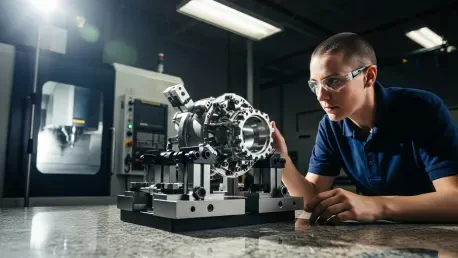

The pursuit of micron-level accuracy in today’s high-stakes manufacturing environments places an unprecedented focus on every component within the production chain, yet the foundational element of workholding is often underestimated. Advanced workholding systems have evolved far beyond simple clamps, now serving as a critical linchpin for achieving the demanding standards of efficiency, precision, and repeatability required by aerospace, medical, and automotive industries across the United States. A stable and reliable workholding setup is the absolute cornerstone of any successful production milling operation, directly influencing process stability and ensuring that the sophisticated capabilities of modern Computer Numerical Control (CNC) equipment are fully leveraged. Without a secure, consistent, and intelligently designed method of securing a workpiece, the promise of high-tolerance machining remains an unachievable goal, relegating even the most advanced machinery to underperformance and inefficiency.
The Unseen Pillars of Precision and Repeatability
The relentless push for tighter tolerances and greater operational efficiency in American manufacturing has made sophisticated workholding an indispensable part of the process. In this competitive landscape, secure fixture setups are essential for minimizing costly downtime between jobs and maintaining unwavering quality control across high-volume production runs. Advanced systems directly contribute to this efficiency by enabling complex multi-part loading configurations. This strategy significantly extends spindle runtime and streamlines the entire production flow by allowing machines to operate for much longer periods without the need for manual intervention from an operator. By transforming the workholding solution from a passive accessory into an active driver of productivity, manufacturers can unlock new levels of output and reliability. This focus on maximizing machine uptime is a strategic imperative for any facility looking to optimize its operational a bottom line and remain competitive.
Repeatability stands as another critical objective that advanced workholding solutions are uniquely positioned to address, forming the bedrock of consistent part quality. The implementation of sophisticated hydraulic and manual clamping options dramatically reduces the inherent variability that can occur between individual setups, ensuring that each part is held in the exact same position and with the same precisely calibrated force. This level of consistency is absolutely vital, as even minor, almost imperceptible deviations in clamping force or part alignment can compound over the course of extended production runs. Such inconsistencies can lead to significant quality issues, dimensional drift, and unacceptably high scrap rates. By engineering out these variables at the source, advanced workholding guarantees a predictable and high-quality output, which is fundamental to process stability and profitability in precision manufacturing.
Synergizing Technology with Deep Industry Expertise
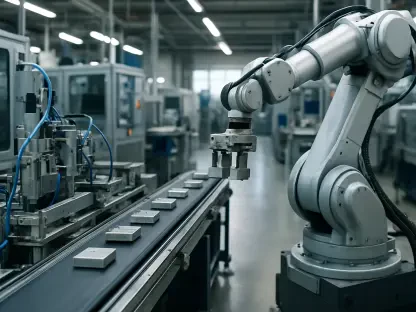
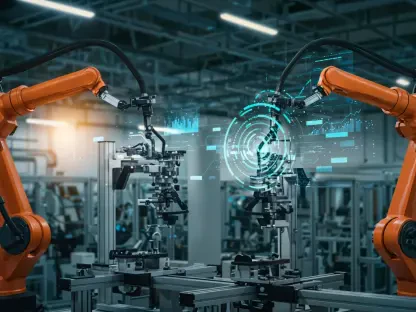
The rapid evolution of CNC technology and the industry-wide strategic shift toward automated milling processes have elevated the importance of fully integrated workholding solutions. Custom fixtures that are designed from the ground up with automation in mind are no longer a luxury but an essential component for the modern smart factory. These advanced systems are meticulously engineered to optimize part location and distribute clamping pressure with exceptional accuracy, supporting precision outcomes in a wide array of applications that range from small-batch prototyping to large-scale, fully automated production lines. A workholding solution that fails to integrate seamlessly with robotic loaders, pallet changers, and other automated systems inevitably becomes a significant bottleneck, undermining the efficiency gains promised by the broader investment in automation technology and limiting the plant’s overall potential.
In this technologically advanced field, deep institutional knowledge and extensive hands-on experience in the workholding sector provided a significant competitive advantage. Decades of combined manufacturing process knowledge enabled specialists to develop highly practical and robust clamping systems that were precisely tailored to the specific operational demands of original equipment manufacturers (OEMs) and their contract manufacturing partners. This specialized expertise ensured that the most effective clamping methods were applied to produce consistent and reliable results, regardless of production volumes, complex part geometries, or challenging materials. This marriage of engineering theory and practical application was what differentiated a standard product from a true manufacturing solution, one that solved common clamping challenges and aligned perfectly with the overarching goals of automation and process optimization. The value of this experience was a key resource for facilities that aimed to push the boundaries of manufacturing excellence.
Ultimately, the successful practical application of this advanced workholding technology translated directly to tangible operational success for manufacturing facilities. The strategic implementation of features like multi-station fixtures, which allowed for the simultaneous processing of multiple parts, maximized operational continuity and delivered substantial gains in efficiency. Versatile standard products, including innovative low-profile wedge clamps, served as reliable and adaptable universal tools for a variety of tasks. At the same time, custom design capabilities, supported by full CAD modeling and extensive industry experience, addressed the most specialized and complex application needs. These comprehensive solutions were viewed not merely as products but as strategic assets that empowered facilities to meet and exceed their most ambitious precision and productivity goals, solidifying the role of advanced workholding as a cornerstone of modern industrial production.