
Global industrial leaders are currently navigating a landscape defined by rapid technological shifts and unpredictable geopolitical tensions that demand immediate adaptation across every level of the supply chain. The 2026 State of Manufacturing & Supply Chain Report reveals a significant shift in how global industries approach production and logistics by focusing on a digital-first strategy that prioritizes regional stability. Based on insights from hundreds of senior leaders in sectors like electric vehicles, clean energy, and robotics, the current industrial climate highlights a definitive transition toward a highly integrated, AI-driven ecosystem. This change is no longer viewed as an optional upgrade but as a necessary response to persistent global volatility and a shrinking pool of specialized labor that has challenged traditional output methods. By prioritizing resilience and speed, companies are effectively moving away from antiquated models to embrace high-tech solutions that can withstand regulatory demands while maintaining the flexibility required to innovate.
Current industry trends are defined by the need for extreme precision in an increasingly complex market where traditional lead times are no longer acceptable for high-growth sectors. Companies are strategically evolving to create a more stable foundation for production by integrating software-driven procurement with physical shop-floor operations. This transformation aims to mitigate the risks associated with long-distance logistics and the rising costs of raw materials, which have become central concerns for nearly every manufacturing executive. The push toward digitalization has moved beyond simple data collection into the realm of actionable intelligence, allowing for real-fledged visibility into every stage of the part-making process. As organizations move through 2026 and look toward 2028, the emphasis remains on building a robust infrastructure that can pivot instantly in response to market fluctuations or trade policy changes. This proactive stance ensures that the manufacturing sector remains a cornerstone of economic stability despite the many external pressures it faces.
The Integration of Physical Infrastructure and Artificial Intelligence
Merging Digital Speed with Traditional Logistics
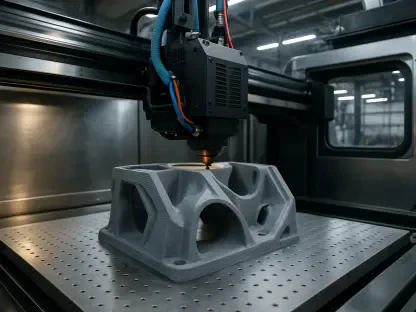
The strategic merger between digital manufacturing platforms and established physical infrastructure illustrates the current direction of the industry, where speed must be matched by massive scale. By combining high-speed digital tools with extensive global supply chains, companies are now able to bridge the gap between the initial design phase and final production in ways that were previously impossible. This unified approach directly addresses major pain points, such as the persistent need for reliability when fulfilling complex, custom orders across different geographic regions. The integration of advanced digital platforms with physical distribution hubs allows for a seamless flow of information that translates into faster turnaround times for critical components. Consequently, engineers are finding that they can move from a CAD model to a physical prototype in a fraction of the time, reducing the friction that often plagues the middle stages of the product development lifecycle.
The logistical scale of this partnership is further exemplified by the deployment of dedicated freight assets and automated sorting centers that ensure parts are delivered exactly when they are needed. By utilizing a hybrid model that blends a global network of specialized manufacturing partners with local distribution power, firms can provide a level of service that matches the agility of a startup with the reliability of an industrial giant. This synergy is particularly vital for sectors like medical technology and aerospace, where precision is paramount and delays can result in significant financial or operational setbacks. The current environment favors those who can maintain a vast catalog of configurable components while offering the flexibility to produce highly specialized, low-volume parts on demand. This shift toward a more responsive logistics model is effectively redefining the boundaries of what is possible in modern hardware production and supply chain management.
Artificial Intelligence: From Experimentation to Essential Infrastructure
Artificial intelligence has officially transitioned from an experimental tool to a core piece of industrial infrastructure that dictates the competitive standing of modern manufacturing firms. The vast majority of leadership teams now view AI implementation as vital for their ongoing success, with sophisticated algorithms already embedded into their daily procurement and production workflows. This shift marks the definitive move of AI from simple data analysis in the virtual domain into physical applications on the factory floor, such as optimizing machine tending and redesigning entire production processes. By leveraging large language models and specialized foundation models, companies are streamlining the way they interpret technical specifications and manage supplier communication. This integration reduces the likelihood of human error during the quoting process and ensures that the most efficient manufacturing methods are selected for every unique project.
The potential for productivity gains through AI-driven automation is immense, with internal projections across the industry showing efficiency improvements that reach several hundred percent in specific workflows. Instead of moving toward a future where human workers are entirely replaced, the sector is embracing a “humans plus machines” model that maximizes the strengths of both. In this framework, AI handles repetitive administrative tasks, predictive maintenance, and complex logistics scheduling, which allows human experts to focus on high-value creative work and architectural innovation. This collaborative approach not only boosts output but also improves the overall quality of the workplace by removing the most tedious aspects of the engineering and sourcing roles. As AI continues to evolve, its role in predicting supply chain disruptions before they occur is becoming a standard feature of the most resilient and forward-thinking manufacturing operations.
Leveraging Technology to Address Labor and Operational Efficiency
Automating Workflows to Combat Skill Shortages
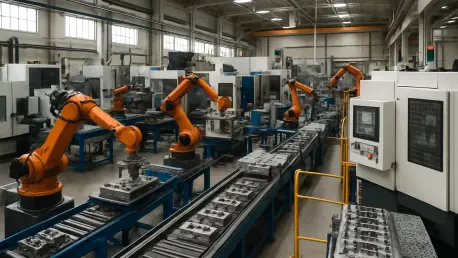
Workforce challenges continue to be a primary concern for the industrial sector, making automation a critical tool for addressing the widening gap in available skilled labor. The goal is to utilize advanced robotics to handle manual tasks like picking, bundling, and machine tending, which leads to much higher levels of quality and consistency than manual labor can provide. By offloading these repetitive and often physically taxing actions to machines, manufacturers can maintain high output levels even when they face a significant lack of specialized manual laborers. This strategy allows the existing workforce to be redeployed into more technical roles, such as robot programming or quality assurance management, where human judgment is still essential. The current trend suggests that automation is not just about cost-cutting, but about ensuring that production can continue uninterrupted in an era of demographic shifts and changing labor preferences.
Digital manufacturing systems have also become the new standard for managing the entire production lifecycle while significantly reducing the administrative burdens that often slow down innovation. Engineers frequently spend hours every week on procurement and paperwork, but modern digital systems can automate these tasks to reclaim thousands of hours of valuable engineering time annually. These platforms offer essential services like transparent costing, real-time tracking, and automated feedback on design for manufacturability, which helps companies mitigate risks before they enter production. By simplifying the interface between the designer and the factory, these tools eliminate the need for endless email chains and manual data entry, allowing teams to move faster and with greater confidence. This focus on operational efficiency is transforming the factory into a more streamlined environment where data flows as freely as the physical goods being produced.
Digital Platforms as the New Industry Standard
The adoption of digital manufacturing platforms has reached a tipping point, with nearly every major industrial player now considering these tools essential for their core production operations. These platforms provide a centralized ecosystem where quality management, transparent costing, and production scheduling coexist to provide a single source of truth for all stakeholders. This level of visibility is crucial in a market characterized by volatility, as it allows sourcing managers to make informed decisions based on real-time capacity and material availability data. The ability to compress cycle times through these integrated platforms has become a key differentiator, enabling companies to respond to market demands faster than their competitors who still rely on legacy systems. Furthermore, the integration of quality assurance protocols directly into the platform ensures that every part meets the necessary certifications without adding extra layers of bureaucracy.
Beyond simple procurement, these digital environments are increasingly being used to manage complex global networks while maintaining a strong regional footprint that protects against international shipping delays. The transparency offered by these platforms allows for better demand forecasting and design optimization, which ultimately reduces waste and lowers the total cost of ownership for manufactured goods. As manufacturers continue to integrate these digital tools, the distinction between software and hardware companies is beginning to blur, leading to a new era of “software-defined manufacturing.” This evolution enables a more flexible approach to production, where design changes can be implemented almost instantly across multiple production sites. The result is a more resilient and responsive industrial base that is better equipped to handle the challenges of the current economic landscape while driving continuous improvement in product quality.
The Resurgence of Regional Manufacturing and Global Standards
Reshoring Efforts and the Adoption of Advanced Robotics
There is a powerful and sustained push toward reshoring in 2026, with many industry leaders making domestic production a top priority to avoid the fragility of long-distance supply chains. While moving manufacturing closer to the point of consumption is highly desirable, it comes with significant hurdles such as complex trade compliance and the volatility of local material costs. To succeed in this transition, companies are seeking out partners who possess deep expertise in tariffs and regional sourcing to help them navigate the logistical complexities of bringing production back home. This movement is driven by a desire for greater control over the manufacturing process and a need to reduce the carbon footprint associated with international shipping. By establishing regional hubs, businesses can ensure a more stable supply of critical components while fostering a local ecosystem of innovation and high-tech employment.
To remain competitive with highly automated facilities worldwide, domestic manufacturers are increasingly adopting advanced robotics that range from collaborative units to general-purpose humanoid systems. This includes everything from cobots used for precision welding and grinding to emerging autonomous mobile robots that handle material transport within the factory. The ultimate objective is to eliminate wasted motion and optimize every link in the supply chain, making local production economically viable for businesses of all sizes, including small and midsize enterprises. By reaching levels of efficiency that were previously only seen in massive overseas factories, domestic producers are proving that they can compete on cost while offering superior speed and local accountability. This technological arms race is pushing the boundaries of what can be automated, leading to a more robust and self-sufficient industrial sector that is less dependent on global logistics.
Strategic Implementation and Industry Outlook
The transition toward a regionalized and automated manufacturing sector required a fundamental rethinking of how supply chain partnerships were structured and maintained throughout the year. Leaders found that success was not just about buying the latest hardware, but about integrating that technology into a cohesive strategy that prioritized long-term resilience over short-term savings. The 2026 report indicated that companies which successfully combined AI-driven insights with regionalized production networks saw a marked improvement in their ability to handle sudden market shifts. These organizations focused on building transparent relationships with suppliers who could offer both digital agility and physical reliability in an increasingly regulated trade environment. The shift toward this model was a direct response to the lessons learned from previous disruptions, highlighting the critical importance of being able to pivot production sites and sourcing strategies without sacrificing quality or speed.
Actionable steps for the future involved a heavy investment in digital literacy for the existing workforce and the implementation of modular automation systems that could be scaled as needed. Industry experts recommended that firms should prioritize the automation of administrative procurement tasks to free up engineering resources for higher-value design improvements. Furthermore, the move toward regionalization was most successful when paired with advanced design-for-manufacturability tools that ensured parts were optimized for local production capabilities from the start. As the industry moved forward, the focus shifted toward creating a “resilient sourcing” model that utilized digital platforms to balance global reach with regional security. By embracing these technological and structural changes, manufacturers positioned themselves to be more innovative and productive, ensuring that they could meet the demands of a complex global market while maintaining a strong and stable domestic presence.