
Beneath the tranquil surfaces of many American industrial landscapes, a silent and persistent accumulation of hazardous human waste continues to threaten the integrity of local ecosystems and public health. This chemical legacy is most visible at Superfund sites, locations designated by the Environmental Protection Agency as requiring long-term remedial action due to extensive contamination. Despite the gravity of the situation, the standard protocols for environmental assessment often rely on logistical frameworks that have not kept pace with the urgency of modern ecological crises. Traditional methods frequently involve shipping samples to specialized laboratories, a process that creates a significant bottleneck in the race to secure contaminated regions.
The current analytical paradigm is shifting toward the development of portable, accessible chemical sensors designed for immediate environmental safety assessments. This evolution marks a departure from centralized laboratory testing, moving instead toward a model where high-precision data can be generated directly at the source. By integrating microscopic materials with digital intelligence, researchers are finding ways to circumvent the delays inherent in conventional EPA analysis. This technological synergy promises to transform how authorities respond to industrial leaks and long-term soil degradation, offering a level of responsiveness that was previously impossible within the constraints of traditional chemistry.
Modern environmental management increasingly relies on this fusion of nanotechnology and advanced computation to address the invisible threats in the water supply. The ability to detect complex mixtures of toxins without the need for cumbersome separation techniques represents a significant leap forward. As these digital and physical tools become more refined, the gap between the discovery of a hazard and the implementation of a safety plan continues to narrow, providing a robust defense against the encroachment of industrial pollutants into residential and natural spaces.
The Invisible Threat Lurking in Our Waterways
The persistence of hazardous substances at American Superfund sites highlights a deep-seated challenge for public health officials and environmental engineers. These locations are often repositories for toxic byproducts that do not degrade naturally, instead leaching into groundwater and settling into riverbeds over decades. While the existence of these sites is well-documented, the ability to monitor them in real-time remains limited by the speed of established EPA analysis methods. These traditional tests, while thorough, often fail the speed test when immediate data is required to prevent a localized spill from becoming a regional catastrophe.
A strategic shift toward portable chemistry is currently underway, aimed at making environmental safety tools more accessible to those on the front lines of remediation. The goal is to move the analytical capabilities of a multi-million-dollar laboratory into the hands of field technicians working in remote or urban contaminated zones. By leveraging the unique properties of microscopic materials, scientists are creating sensors that provide a nearly instantaneous look at the chemical composition of a sample. This shift not only democratizes environmental monitoring but also ensures that protective measures can be deployed based on current conditions rather than data that is several weeks old.
Combining digital intelligence with physical nanomaterials changes the fundamental nature of chemical detection. In the past, identifying a single pollutant in a complex mixture required a physical separation process that was both time-consuming and labor-intensive. However, the introduction of machine learning allows for the digital unraveling of these mixtures, where software can identify chemical “signatures” amidst a sea of background noise. This integrated approach allows for a level of sensitivity and speed that redefines the standards for environmental vigilance in the twenty-first century.
The High Stakes of Environmental Contamination
The health risks associated with polycyclic aromatic hydrocarbons (PAHs) and other known carcinogens represent a significant burden on communities situated near industrial zones. These compounds are notorious for their ability to persist in the environment and bioaccumulate in the food chain, leading to long-term health complications for human populations. In major urban centers such as Houston, the geographical reality of contaminated soil and water is a daily concern. The proximity of residential neighborhoods to historic industrial sites means that any delay in detecting the migration of these toxins directly increases the risk of public exposure.
Current laboratory-bound testing methods are hindered by high operational costs and multi-week wait times that can stall critical safety decisions. When a sample must be collected, transported, and queued for analysis in a centralized facility, the window for effective early intervention often closes. This lag is particularly problematic during flooding events or construction projects where soil disturbance can suddenly mobilize previously dormant contaminants. Without the ability to conduct rapid, on-site assessments, remediation teams are essentially working in the dark, unable to verify the efficacy of their efforts without long periods of waiting.
The critical link between rapid detection and effective remediation cannot be overstated, as the success of a cleanup operation is often determined by the speed of the initial response. Fast-tracked data allows for the precise mapping of a plume of contamination, ensuring that resources are directed toward the most impacted areas. By reducing the time required to identify specific chemical threats, public health agencies can issue warnings and implement containment strategies with greater confidence. This efficiency is the cornerstone of modern environmental safety, ensuring that industrial progress does not come at an unacceptable cost to human life.
Engineering the Solution: Nanoparticles as Molecular Magnifying Glasses
To understand the scale of the materials being used in these new sensors, one must look at the microscopic level, where objects are 1,000 times smaller than the width of a human hair. At this dimensions, the physical properties of matter begin to change, allowing for unique interactions with light and energy. These nanoparticles, often synthesized from metal salts, act as specialized conduits that can focus infrared beams with incredible precision. This focusing effect is essentially the molecular equivalent of a magnifying glass, concentrating light onto a specific area to reveal the presence of trace substances that would otherwise be invisible.
The practical application of these materials involves the creation of a nanoparticle “ink” that can be applied to glass slides for field use. When this liquid dries, the nanoparticles pack together in a dense, organized fashion, creating a surface that is highly receptive to chemical interaction. This “Diamond Painting” effect, where millions of tiny particles work in concert, serves to amplify the chemical signals of any pollutants that come into contact with the slide. Even a single drop of contaminated water can leave behind enough molecular evidence for the nanoparticles to capture a distinct signal, providing a powerful tool for trace-level detection.
By utilizing this amplification, researchers can bypass the traditional need for physical chemical separation, which is often the slowest part of environmental testing. Instead of isolating each compound, the nanoparticles enhance the signatures of all present molecules simultaneously. This allows for the detection of individual compounds within incredibly complex mixtures, such as brackish water or industrial runoff. The ability to see through the “noise” of a sample and identify specific toxins represents a major breakthrough in the field of analytical chemistry, offering a streamlined path from sampling to identification.
Digital Discernment: The Role of Machine Learning in Spectroscopy
One of the most significant hurdles in environmental spectroscopy is the challenge of “noisy” data, where overlapping chemical signatures make it difficult to distinguish one toxin from another. In a real-world sample, a variety of minerals, organic matter, and pollutants all absorb light at similar frequencies, creating a cluttered spectral graph. To solve this, collaborative innovation between chemists and computer scientists has led to the development of tailored algorithms. These machine learning models are trained to identify patterns within the data that are completely invisible to the human eye, allowing for the precise identification of hazardous substances.
These algorithms work by matching the complex signals captured by nanoparticles against extensive digital databases in a matter of hours. This process replaces the manual interpretation that once took days or weeks of expert labor. By teaching the software to recognize the unique spectral “fingerprints” of various carcinogens, researchers have created a system that is both faster and more accurate than traditional methods. Expert perspectives within the field emphasize that this digital discernment is the key to streamlining analysis for public health agencies, providing them with actionable data in a timeframe that matches the speed of environmental change.
Current research milestones at institutions such as the Texas Medical Center and Rice University have demonstrated the viability of this approach in high-stakes scenarios. By testing the technology against known contaminants in urban waterways, scientists have proven that the combination of nanotechnology and machine learning can drastically reduce the time required for site assessment. These milestones represent a significant step toward a future where environmental monitoring is continuous and automated. As these digital models become more sophisticated, they will be able to detect an even broader range of pollutants with increasing specificity.
Implementing Faster Detection Protocols in the Field
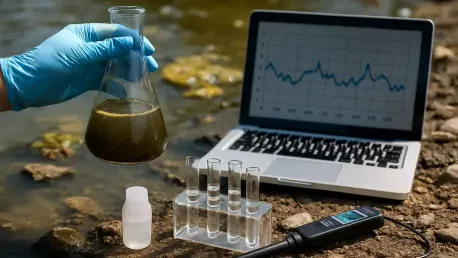
The transition from fixed, high-cost laboratories to portable spectrophotometer instrumentation is the ultimate goal of this research. These handheld devices, equipped with nanoparticle-coated sensors and integrated AI software, allow for immediate analysis in the field. This portability is essential for monitoring remote Superfund sites or responding to sudden industrial accidents where every hour counts. By optimizing the nanoparticle composition for specific classes of pollutants, such as heavy metals or organic solvents, technicians can customize their tools to the specific needs of a given location.
The framework for a two-stage screening process involves a broad initial identification followed by a more refined modeling stage. In the first phase, the sensor identifies the general classes of contaminants present in a water or soil sample. If a hazard is detected, a more specialized nanoparticle array and a refined machine learning model are used to pinpoint the exact molecular structure and concentration of the toxin. This tiered approach ensures both speed and accuracy, allowing for a rapid first response while maintaining the high standards required for legal and environmental compliance.
Beyond water monitoring, these strategies are being adapted for air and soil analysis, providing a comprehensive view of environmental health. Future pathways for technology transfer to environmental and public health agencies are already being established through patenting and collaborative agreements. The integration of these tools into standard government protocols will ensure that communities are better protected from the long-term effects of industrial pollution. By providing a faster, more reliable way to detect hazards, this technology set the stage for a more proactive and effective era of environmental stewardship.
The team achieved its goals by successfully integrating nanoparticle sensitivity with the predictive power of machine learning algorithms. They developed a method that reduced the typical multi-week waiting period for water analysis down to just a few hours. Through rigorous testing at various contaminated sites, the researchers demonstrated that their portable system could identify complex mixtures of carcinogens without traditional separation. This advancement provided a clear pathway for public health agencies to monitor environmental safety more effectively. The project concluded with a filed patent, ensuring that the technology was preserved for future implementation by regulatory bodies tasked with protecting the water supply.