
The silent hum of intelligent machines and the fluid motion of autonomous robots are increasingly defining the operational landscape of the American economy, signaling a technological transformation that is not on the horizon but is actively unfolding in warehouses, hospitals, and farmlands. This evolution, powered by the synergy of artificial intelligence and advanced robotics, is propelling industries far beyond the traditional confines of automotive assembly lines. As these innovations mature, they are transitioning from niche tools into indispensable partners, fundamentally re-engineering business processes, amplifying human potential, and establishing new benchmarks for efficiency and safety. The integration of these intelligent systems marks a pivotal moment, laying the groundwork for a new industrial era where data-driven automation becomes the cornerstone of competitive advantage and operational excellence across a diverse spectrum of economic sectors.
The Dawn of Collaborative Workspaces
The historical dynamic between humans and industrial robots, once defined by physical separation and rigid barriers, has undergone a radical transformation. For decades, robots were colossal, stationary machines operating within caged enclosures, their sheer power and lack of environmental awareness posing a significant risk to human workers. This model of isolation is rapidly becoming obsolete, replaced by a new paradigm centered on direct and safe collaboration. The modern workplace is being reimagined as a shared environment where humans and robots work in close proximity, each leveraging their unique strengths to achieve common goals. This integration fosters a synergistic partnership, moving away from the concept of automation as a mere replacement for labor and toward a model of augmentation, where technology enhances human capabilities and creates a safer, more productive work environment for everyone. This fundamental shift from segregation to integration is not just a technological advancement but a philosophical one, redefining the very nature of work.
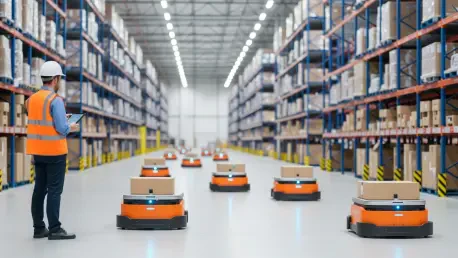
The tangible benefits of this human-robot partnership are being realized across an expanding array of industries, demonstrating its practical value far beyond the factory floor. In the sprawling logistics and e-commerce fulfillment centers that power modern commerce, Autonomous Mobile Robots (AMRs) have become essential collaborators. These intelligent vehicles tirelessly handle the physically demanding and repetitive tasks of lifting and transporting heavy goods, navigating complex facility layouts with precision. By shouldering this physical burden, AMRs significantly mitigate the risk of musculoskeletal injuries among human employees, who are then free to concentrate on more intricate responsibilities such as quality control, problem-solving, and customer service. This collaborative model is also making significant inroads in other sectors. In retail, major players like Walmart utilize autonomous floor-scrubbing robots to manage janitorial duties, allowing staff to devote more time to enhancing the in-store customer experience. Meanwhile, in the high-stakes environment of healthcare, sophisticated robotic systems like Intuitive Surgical’s da Vinci platform act as a seamless extension of a surgeon’s hands, enabling greater precision and control during complex procedures, which ultimately leads to improved patient outcomes and accelerated recovery times.
AI: The Brains Behind the Brawn
Artificial intelligence serves as the crucial cognitive engine propelling robotics into a new era of unprecedented capability and autonomy. Without AI, a robot is merely a pre-programmed machine, capable only of executing a rigid sequence of repetitive commands within a controlled environment. The integration of AI, however, imbues these machines with the ability to perceive, learn, and adapt to the dynamic and often unpredictable real world. Sophisticated algorithms, machine learning models, and advanced sensor fusion enable robots to interpret visual data, understand spoken commands, and make intelligent decisions in real-time. This cognitive leap transforms them from simple tools into sophisticated partners capable of undertaking complex tasks that require judgment and flexibility. This AI-driven intelligence is the single most significant catalyst in the evolution of robotics, unlocking a vast potential for automation to handle nuanced and variable work that was previously the exclusive domain of human cognition.
In practice, this infusion of intelligence is already delivering substantial value and driving operational excellence in key sectors of the U.S. economy. Within the manufacturing industry, for instance, leading companies like GE are leveraging AI-powered robotic systems to implement predictive maintenance protocols. These intelligent systems continuously analyze data from machine sensors to identify subtle anomalies and anticipate potential equipment failures before they can cause catastrophic breakdowns, thereby preventing costly unplanned downtime and maximizing production uptime. In the fast-paced world of logistics, industry giants such as FedEx employ sophisticated AI algorithms to orchestrate their vast and complex package sorting and distribution networks. This AI-driven optimization ensures that millions of parcels are routed with unparalleled speed and accuracy, meeting ever-tighter delivery windows and enhancing overall network efficiency. The intelligence provided by AI allows these robotic systems not just to perform physical actions but to execute them with a level of strategic insight that dramatically improves the performance of the entire operation.
Beyond orchestrating physical tasks, artificial intelligence is fundamentally revolutionizing the strategic and data-management layers of modern industry, particularly within warehousing and logistics. The immense volume of data generated by a modern fulfillment center provides fertile ground for AI algorithms to uncover powerful insights and drive continuous improvement. These sophisticated systems can analyze historical data and real-time inputs to optimize the physical layout of a facility, ensuring that high-demand items are stored in the most accessible locations. AI also calculates the most efficient picking routes for both human workers and robotic assistants, minimizing travel time and maximizing the number of orders fulfilled per hour. Furthermore, these intelligent platforms maintain a flawless, real-time inventory count, eliminating the errors and discrepancies that often plague manual tracking systems. This meticulous data management leads to a marked reduction in costly mistakes, a significant increase in operational throughput, and a more resilient and responsive supply chain, proving that AI’s greatest contribution may lie in its ability to bring intelligent order to immense operational complexity.
The New Face of Automation
Leading the charge in this new era of automation are Autonomous Mobile Robots, a technology that is fundamentally reshaping workflows and unlocking new levels of flexibility. Unlike their traditional, stationary counterparts, which are typically bolted to the factory floor and limited to a single, repetitive task, AMRs possess the remarkable ability to navigate complex and dynamic environments without the need for direct human intervention or fixed infrastructure like magnetic strips. This inherent adaptability makes them perfectly suited for the fluid operational demands of modern industry. In advanced manufacturing settings, such as Tesla’s Gigafactory, fleets of AMRs are critical for transporting materials, components, and sub-assemblies between workstations, creating a more agile and responsive production floor. Their most prominent and transformative application, however, has been within the logistics and e-commerce sectors. Here, companies like Amazon have set the global standard, deploying thousands of AMRs in their fulfillment centers to manage inventory, retrieve items for orders, and streamline the entire process from click to shipment, optimizing every square foot of warehouse space.
This technological revolution was not born out of a desire for futuristic aesthetics but from pragmatic business needs and a clear-eyed focus on measurable results. While popular culture often envisions robots in a humanoid form, the reality of industrial and commercial automation is guided by the principle of “form follows function.” Businesses invest in robotic solutions that are custom-engineered to perform specific tasks with maximum efficiency, reliability, and safety. This has led to a diverse ecosystem of specialized machines that bear little resemblance to humans but are perfectly optimized for their designated roles. For example, in the agricultural sector, John Deere has developed autonomous tractors and robotic planters designed exclusively for the rigors of precision farming. Similarly, drones used for inspecting critical infrastructure and submersibles for exploring underwater pipelines have highly specialized forms tailored to their unique operational environments. The ultimate catalyst for the adoption of these technologies has always been the ability to demonstrate a clear and compelling return on investment, whether through cost savings, productivity gains, improved product quality, or enhanced worker safety. This pragmatic, results-driven approach has made automation increasingly accessible and essential for businesses of all sizes, ensuring its continued expansion across the economic landscape.