
The long-held paradigm of a designer working in isolation with a static digital drafting tool is rapidly giving way to a collaborative ecosystem where artificial intelligence acts as a co-pilot, fundamentally reshaping the creative and engineering landscape. AI-driven Computer-Aided Design (CAD) represents a significant advancement in the manufacturing and engineering sectors. This review will explore the evolution of this technology, its key features, performance metrics, and the impact it has had on various applications. The purpose of this review is to provide a thorough understanding of the technology, its current capabilities, and its potential future development.
An Introduction to AI in Computer-Aided Design
The integration of artificial intelligence into traditional CAD platforms marks a pivotal evolution from passive, instruction-based software to an active, intelligent partner. At its core, this transformation is driven by machine learning models trained on vast datasets of design processes, enabling them to understand context, anticipate user needs, and automate complex tasks. This shift fundamentally alters the relationship between the designer and their software.
No longer merely a digital canvas, the CAD environment is becoming a source of proactive guidance and automated problem-solving. This transformation is unlocking new levels of efficiency and innovation. By handling repetitive operations and offering data-driven insights, AI allows engineers and designers to focus on higher-level conceptual challenges, fostering a more creative and productive workflow.
Key AI Capabilities Reshaping CAD Workflows
Turbocharging Reverse Engineering and Design Iteration
A significant bottleneck in manufacturing and maintenance has historically been the reverse engineering of physical parts that lack digital blueprints. AI is directly addressing this challenge by accelerating the conversion of 3D scan data into fully parametric, editable CAD models. Technologies from innovators like Backflip AI use cloud-based processors to analyze a scanned mesh and generate multiple parametric variations for the user to select. The AI then automatically reconstructs the entire design, complete with a detailed and modifiable feature tree.
This process dramatically reduces the manual rework required to create usable models from raw scan data, which in turn minimizes costly equipment downtime when replacement parts are needed. Furthermore, by providing a step-by-step reconstruction history—detailing every cut, extrude, and pattern—these tools serve an educational function. They allow engineers to learn from the AI’s construction logic, enhancing their own understanding and improving future design strategies.
Providing Real-Time Assistance and Intelligent Feedback
AI-powered features embedded directly within CAD software are now offering real-time support that refines the design process from start to finish. Leading platforms are integrating conversational interfaces that allow users to ask for help, find features, and receive step-by-step suggestions without breaking their creative flow. This intelligent assistance helps enforce engineering best practices, troubleshoot potential issues, and guide designers toward more optimal solutions.
The concept of an immediate feedback loop extends beyond the digital realm and into the physical manufacturing process. For instance, AI-enabled laser programming software can now detect misaligned components on the factory floor and automatically pause or adjust machine operations to prevent errors. Whether in a digital model or on a production line, this real-time corrective feedback is crucial for maintaining tight quality control, preventing material waste, and avoiding expensive production mistakes.
Democratizing CAD Through Intuitive Text-to-3D Generation
The high barrier to entry for professional CAD software, which often requires extensive training, is being dismantled by AI. Emerging text-to-3D applications empower users to generate complex models from simple, natural-language prompts. This innovation makes powerful design capabilities accessible to a much broader audience of creators and entrepreneurs who may lack formal engineering expertise.
While these tools are opening doors for new users, they are also providing immense value to seasoned professionals by automating mundane and time-consuming tasks. Beta testers are already exploring features that can apply a single design change across hundreds of related CAD files simultaneously, an operation that would traditionally require hours of manual effort. By offloading such repetitive work, AI frees up experienced engineers to concentrate on the more complex and innovative aspects of product development.
The Next Frontier: Autonomous AI Design Agents
The most forward-looking developments in this field center on the creation of autonomous AI agents capable of understanding and operating CAD software in a human-like manner. Research is focused on developing models that can interpret high-level commands, such as a 2D sketch or a verbal description, and then translate them into a sequence of user interface actions to build the corresponding 3D object.
A primary hurdle has been the lack of context in existing datasets of finished CAD models, which do not reveal the process behind their creation. To overcome this, researchers have developed systems to capture and catalog the entire design journey. By creating massive datasets of videos showing human designers at work, with each click and command annotated, AI models can learn the direct relationship between interface interactions and design outcomes, paving the way for truly autonomous design partners.
Applications and Impact in Manufacturing and Engineering
The real-world impact of AI-driven CAD is already evident across the manufacturing and engineering industries. In maintenance and repair, the ability to rapidly replicate parts for legacy equipment without original schematics is a game-changer. Using AI to convert a 3D scan of a worn or broken component into a production-ready model keeps critical machinery operational and extends its lifespan.
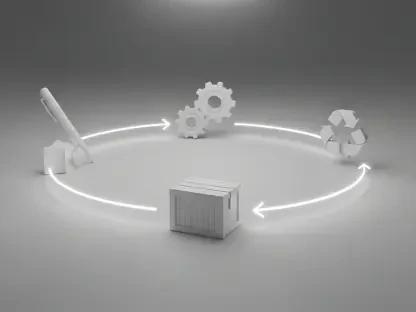
Moreover, AI is closing the loop between design and production. On the factory floor, quality control systems use AI to analyze manufactured parts and feed data back into the original CAD models, suggesting design modifications to improve manufacturability and reduce defects. This intelligent feedback cycle ensures continuous improvement, prevents material waste, and ensures that designs are optimized for real-world production constraints.
Challenges and Developmental Hurdles
Despite rapid progress, the widespread adoption of AI-driven CAD faces significant challenges. The technical complexity of creating AI models that can comprehend the intricate, multi-step logic of engineering design remains a primary obstacle. These models must not only recognize geometry but also understand design intent, material properties, and manufacturing constraints.
Furthermore, training effective AI agents requires massive, context-rich datasets that are difficult and expensive to create. The development of sophisticated autonomous agents depends on capturing not just the final product but the entire sequence of actions and decisions made by human designers. Overcoming these data and complexity hurdles is essential for moving the technology from a promising tool to a ubiquitous industry standard.
Future Outlook: The CAD Landscape Beyond Today
Looking ahead, the integration of AI is set to become a standard, indispensable feature of the CAD toolkit. The technology will continue to mature, moving from a supportive assistant to a true collaborative partner for designers. This evolution promises a future where the design process is significantly faster, more intuitive, and less prone to human error.
The long-term impact will be a profound democratization of creation. As AI lowers the technical barriers to entry, a more diverse population of innovators will be empowered to bring their ideas to life. This expansion of the creative talent pool, combined with the efficiency gains realized by professionals, is expected to drive a new wave of innovation across all sectors of manufacturing and engineering.
Concluding Assessment: The Dawn of a Collaborative Era
The evolution of AI in CAD confirms its role not as a replacement for human ingenuity but as a powerful augmentation tool. The technologies reviewed here demonstrate a clear trajectory toward making the entire design-to-manufacturing lifecycle more efficient, intelligent, and accessible. From accelerating reverse engineering to providing real-time feedback and enabling text-to-3D creation, AI has already begun to reshape fundamental workflows. While developmental hurdles remain, the progress made has established a foundation for a future where the partnership between human designers and intelligent systems unlocks unprecedented levels of productivity and creativity.