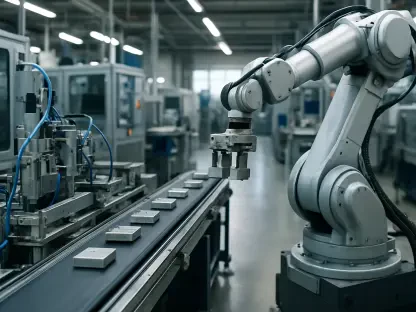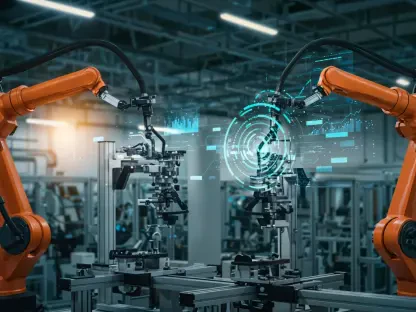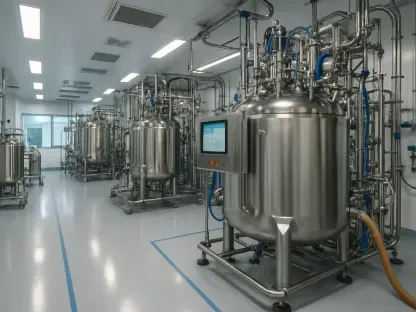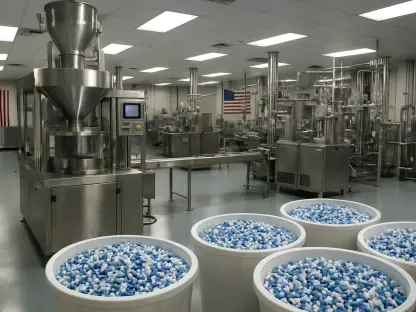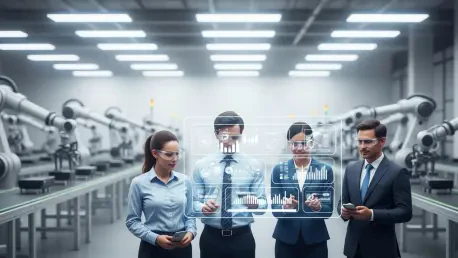

The global manufacturing landscape is on the cusp of a monumental transformation, with the smart factory market projected to surge from its 2025 valuation of nearly $142 billion to an astounding $265.42 billion by 2031. This rapid expansion, representing a compound annual growth rate of 10.99%, is redefining the very essence of production. A smart factory is no longer a futuristic concept but a present-day reality—a highly digitized and interconnected manufacturing facility where physical production systems and connected devices work in concert. These intelligent environments continuously gather and analyze data, creating a feedback loop that drives perpetual process optimization and operational excellence. The primary impetus for this shift is the dual demand for greater industrial automation to enhance efficiency and the critical need for improved energy conservation in an increasingly resource-conscious world. This evolution marks a significant departure from traditional manufacturing, promising not just incremental improvements but a complete overhaul of how goods are made.
The AI Catalyst for Manufacturing Evolution
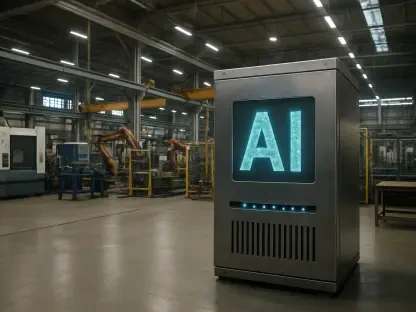
At the heart of the smart factory revolution lies the integration of Artificial Intelligence (AI) and Machine Learning (ML), which are acting as powerful catalysts for change. These technologies are fundamentally altering manufacturing paradigms by introducing capabilities that were once unattainable. The most significant of these is predictive maintenance, a data-driven approach that allows companies to anticipate equipment failures before they occur. By continuously analyzing data streams from the production line, AI algorithms can identify subtle anomalies and patterns that signal impending malfunctions. This foresight enables maintenance teams to intervene proactively, scheduling repairs during planned downtime and avoiding costly, unexpected interruptions. The impact is profound, minimizing production bottlenecks and optimizing the allocation of resources. The widespread adoption of this technology is underscored by a recent Microsoft report, which found that 77% of large manufacturing firms with over $10 billion in revenue are already deploying AI, cementing its role as an indispensable tool for modern industry.
Navigating Financial Hurdles and Seizing Opportunities
Despite the compelling benefits, the path to a fully realized smart factory is not without its obstacles, chief among them being the substantial upfront capital investment required. Upgrading a facility involves a comprehensive overhaul of its infrastructure, including the installation of advanced sensors, the establishment of robust connectivity networks, and the acquisition of new, compatible machinery. This high initial cost presents a formidable barrier to entry, particularly for small and medium-sized enterprises that may lack the financial resources of their larger counterparts. The sheer scale of this industrial modernization is reflected in data from the International Federation of Robotics, which reported a record global stock of 4,281,585 industrial robots just two years ago. However, these challenges are matched by significant opportunities. Market players who successfully navigate the financial hurdles can capitalize on AI and ML for advanced analytics, leverage the Internet of Things (IoT) for greater energy conservation, and adopt emerging Industry 5.0 models to address persistent labor shortages, ultimately securing a competitive edge.
A Blueprint for Future Production
The transition to intelligent manufacturing represented a pivotal moment for the industrial sector, driven by a clear understanding of long-term value. The initial financial outlay, though significant, was increasingly viewed as a strategic investment rather than a prohibitive cost. Companies that embraced this transformation discovered that the gains in overall efficiency, product quality, and sustainability far outweighed the early expenditures. The adoption of AI-powered predictive maintenance and IoT-enabled energy management provided a robust framework for creating resilient, agile, and environmentally responsible operations. This strategic shift in perspective became the blueprint for future production, where data-driven insights and automation were no longer optional but essential components of a successful and competitive manufacturing enterprise.