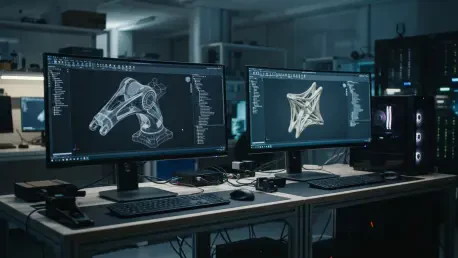

While AI can generate watertight 3D solids, translating those digital shapes into mechanical solutions that withstand physical stress remains a challenge. In a groundbreaking exploration of the intersection between artificial intelligence and functional manufacturing, developer Yadullah Abidi conducted a comparative experiment to evaluate the efficacy of three leading AI models—Claude, ChatGPT, and Gemini—in the realm of 3D computer-aided design. The objective was highly specific: to design a functional, 3D-printable replacement clip for a hydration bladder’s drinking tube that attaches to a closed webbing loop on a backpack shoulder strap. This was not merely a test of creative output but a rigorous assessment of how these large language models interact with specialized software environments through the Model Context Protocol. Each AI agent was integrated with FreeCAD, allowing them to generate geometry, execute Python scripts, and export standardized manufacturing files like .STEP and .STL. This study highlights the current capabilities and significant limitations of AI when tasked with solving real-world mechanical problems that require a deep understanding of material science, ergonomics, and spatial logic. By observing how these digital minds navigate the transition from abstract code to physical hardware, the industry gains a clearer picture of the maturity of generative design as of mid-2026.
Engineering Constraints and Design Requirements
The technical challenge presented to the AI models was designed to minimize ambiguity while testing their ability to adhere to rigid engineering constraints. To ensure a fair comparison, the AI agents received precise measurements for the webbing loop and the hydration tube. The design had to accommodate a closed webbing loop measuring 57 mm by 24 mm and securely hold a 14 mm tube. Because the webbing loop was sewn shut at both ends, the AI had to conceive a mechanism that could either snap around the strap or use a rotate-to-lock system to pass through the narrow gap behind the webbing. This forced the models to think beyond simple shapes and consider the physical installation process, a hurdle that often stymies purely visual generative systems. Furthermore, the prompt required the designs to be optimized for Polylactic Acid (PLA) filament, which possesses specific mechanical properties like rigidity and a tendency to creep under stress. Adhering to these physical realities meant the AI had to prioritize durability and ease of installation in a way that traditional text generation never requires.
Building on these structural requirements, the experiment also imposed strict manufacturing specifications to ensure the final parts were actually usable. The models had to optimize their designs for a 0.4 mm FDM printer nozzle, which dictated minimum wall thicknesses of 1.6 mm and specific clearances of 0.2 mm to ensure moving parts did not fuse together during the print. A primary requirement was the total avoidance of sacrificial support structures, necessitating clever orientation of overhanging features to allow for successful printing on standard consumer hardware. Usability was equally critical; the hydration tube needed to be removable and reinsertable with a single hand, and the clip had to remain stationary during vigorous physical activity like walking or running. These multi-faceted demands transformed the prompt into a genuine engineering test, requiring the models to balance material science, manufacturing logic, and user ergonomics. By setting such a high bar, the test sought to identify which AI could best synthesize these competing priorities into a single, cohesive mechanical solution.
ChatGPT: The Minimalist Architectural Execution
ChatGPT, utilizing its specialized Codex engine, approached the design challenge with a focus on technical cleanliness and administrative efficiency. It was remarkably quick to produce a valid, “watertight” 3D model that the FreeCAD environment could interpret without errors or geometric inconsistencies. Its proposed solution featured a minimalist T-shaped head designed to slide through the webbing gap and rotate into a locked position, paired with a standard C-shaped cradle for the hydration tube. The resulting Python code was concise, well-documented, and executed perfectly on the first attempt, demonstrating the model’s proficiency in translating high-level instructions into functional CAD commands. From a purely administrative standpoint, Codex excelled, managing file exports and generating accurate axonometric previews that allowed for immediate visual inspection. This level of technical fluency suggests that for simple, non-load-bearing components, the model is already capable of handling the heavy lifting of geometric programming with minimal human intervention.
However, the design philosophy of Codex revealed a significant gap between geometric perfection and mechanical utility. While the part was technically flawless as a digital solid, it lacked the “positive lock” mechanism necessary for real-world reliability. In a field test, the T-head design could easily rotate back to its entry orientation and detach from the backpack when the hydration tube was pulled. The model treated the problem as a static geometric puzzle rather than a dynamic mechanical challenge involving friction, movement, and varying angles of force. This outcome highlights a core limitation of the model: it can write the code to draw a shape, but it does not yet possess the mechanical foresight to ensure that shape functions safely in a physical environment. For engineers, this means that while ChatGPT can drastically speed up the drafting process, its designs still require a thorough review to address potential failure points that the AI simply does not perceive.
Claude: The Methodical Engineering Evolution
Claude took a markedly different and more sophisticated path, engaging in a self-critical and iterative design process that prioritized function over simplicity. Rather than settling for its initial concept, the model analyzed its own logic and identified potential failure points in the rotate-to-lock mechanism. It eventually discarded the simple T-head design in favor of a robust, carabiner-style body that wrapped entirely around the webbing strap. This iterative approach demonstrated a level of internal reasoning that surpassed its competitors, as Claude attempted to calculate the insertion forces required for the tube and the structural integrity of the clip’s spine. It was the only model to explicitly consider the orientation of 3D-printed layer lines, recognizing that the part’s strength depends on how the plastic is deposited by the nozzle. This attention to detail suggests that Claude has a deeper “understanding” of the relationship between digital design and physical material behavior.
While Claude’s final product was undoubtedly the most secure and mechanically sound, it suffered from a clear tendency toward over-engineering. The resulting clip was significantly larger than necessary, consuming nearly three times the material of the other designs and greatly increasing the total print time. Its robust spine and dual locking tongues provided excellent security, but they resulted in a bulky pedestal that sat high off the backpack strap, potentially snagging on other equipment. This “overkill” approach highlights a different kind of limitation: the inability to optimize for material efficiency and sleekness without specific guidance. Nevertheless, Claude’s ability to track unresolved issues and revise its design based on structural logic made it the most reliable partner for complex tasks. It demonstrated that while it might produce a heavier part than a human engineer would, that part is far more likely to survive the rigors of actual use than a more minimalist AI-generated alternative.
Gemini: The Intuitive Conceptual Struggles
Gemini’s performance during the experiment was characterized by a mixture of technical inconsistency and flashes of genuine design intuition. Its initial attempts were frustratingly unsuccessful, at one point even reverting to ASCII art rather than the required Python CAD code, highlighting a lack of stability in its task-specific processing. However, once the model was switched to its “Argon” task mode, it produced a design that was conceptually the most balanced of the three candidates. It avoided the mechanical flimsiness of the Codex design and the unnecessary bulk of the Claude model, instead opting for a compact, snap-around clip that closely mirrored the aesthetics and logic of a professional human-made product. This intuitive leap suggested that Gemini could perceive the ideal “form factor” for the task, balancing the need for security with the desire for a low-profile, lightweight attachment.
Despite this strong conceptual grasp, Gemini ultimately stumbled on the most critical aspect of parametric design: mathematical and dimensional accuracy. The final measurements it produced for the clip were incorrect, meaning the printed part would not actually fit the physical webbing or the hydration tube without manual intervention from a human designer. This disconnect between the “visual idea” of the object and the precision required for manufacturing made Gemini the least reliable tool for high-precision engineering tasks. It proved that a good idea is useless in manufacturing if the dimensions are off by even a fraction of a millimeter. Gemini’s performance serves as a reminder that generative design requires a perfect synchronization of creativity and calculation. While the model showed great promise in understanding what a clip should look like and how it should feel, its failure to execute the underlying mathematics illustrates the current gap between AI-driven concept art and functional engineering.
Bridging the Gap Between Geometry and Function
A synthesis of the results from all three models reveals a consistent theme: AI is currently excellent at creating shapes but still struggles with the nuances of functional engineering. While all the agents successfully generated valid 3D solids that passed manifold checks, they lacked the tactile intuition required to understand how materials like PLA behave under real-world stress. For instance, the models could be told that a material is brittle, but they could not “feel” the exact point at which a snap-fit joint would fracture or how much a clip might wobble on a nylon strap during a run. This lack of physical experience remains the “black box” of AI design. The models rely on patterns found in their training data to propose mechanisms, but they cannot simulate the complex interplay of friction, material fatigue, and user ergonomics with the same depth as a seasoned human engineer who has handled the materials personally.
The experiment underscored that in the current landscape of 2026, AI functions best as a high-level assistant rather than an autonomous design professional. The ability to write complex Python scripts for FreeCAD saves a designer significant time, allowing them to focus on high-level architecture rather than the minutiae of geometric commands. However, human oversight remains an absolute prerequisite for verifying dimensions, assessing the feasibility of a print, and ensuring that a mechanism serves its intended purpose without failing. The “intelligence” of these models is largely derivative; they can recombine existing engineering concepts into new forms, but they struggle to innovate based on first principles when faced with unique physical constraints. As the industry moves forward, the focus will likely shift toward training these models on more specialized mechanical datasets to help them bridge the gap between digital modeling and the physical realities of the workshop.
Final Results: Insights for Future Implementation
The physical models produced by the 3D printer provided a definitive verdict on the performance of the three AI agents. Claude emerged as the procedural winner because its iterative logic resulted in the only part that was truly “ready for the trail” right off the print bed, despite its oversized dimensions. Its design was the most resilient and showed a clear understanding of mechanical security. ChatGPT was the champion of administrative efficiency, producing a clean and printable file in record time, making it an ideal tool for generating simple brackets or non-critical spacers where security is not a primary concern. Gemini showed the most potential for human-like design intuition, but its persistent lack of dimensional consistency remained a significant barrier to its use in professional engineering workflows. These results indicated that the choice of an AI partner depends heavily on whether the designer prioritizes speed, security, or conceptual aesthetics.
The experiment demonstrated that AI has successfully transitioned from a curiosity to a powerful tool in the 3D parametric design space. It showed that the “heavy lifting” of geometry generation can be outsourced to these models, allowing for a much faster transition from concept to prototype. However, the study also proved that the human in the loop remained essential for the final review of fit, finish, and function. The most successful designers of the near future were those who learned to treat AI as a junior engineer—capable of doing the work quickly but requiring constant supervision to ensure the results are safe and accurate. As these models continue to evolve from 2026 onward, the integration of real-world physics engines directly into the AI’s reasoning process will likely be the next major milestone. For now, the most reliable path to innovation involves a hybrid approach, where AI handles the complexity of the code while humans provide the wisdom of physical experience.