
The familiar aroma of freshly baked bread wafting through supermarket aisles has long been a key driver of the customer experience, but behind this sensory appeal lies a complex operational challenge fraught with inefficiency and waste. Retailers constantly struggle to balance supply and demand, leading to empty shelves during peak hours or, conversely, a surplus of unsold goods at the end of the day, contributing significantly to food waste. This delicate balancing act is further complicated by persistent labor shortages, which make it difficult to staff the early morning shifts required to prepare for the day’s shoppers. A groundbreaking automated system, born from a unique collaboration between leaders in robotics, oven technology, and retail solutions, now promises to solve these issues by introducing unprecedented precision and intelligence to the in-store baking process, ensuring optimal freshness while minimizing operational burdens and environmental impact.
A Symphony of Automation and Intelligence
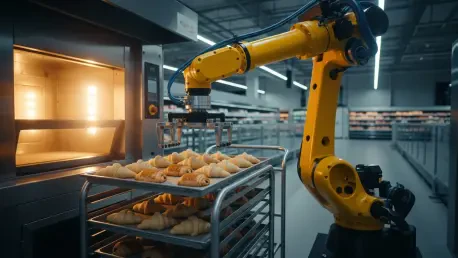
At the heart of this transformative solution is a powerful synergy between three specialized technologies, seamlessly integrated to create a fully autonomous baking cell known as “Bakisto.” The system is the result of a strategic partnership between robot manufacturer FANUC, oven specialist WIESHEU, and retail expert Wanzl. It features a FANUC collaborative robot, or cobot, designed to work safely alongside human employees, WIESHEU’s advanced “Dibas blue2” networked oven equipped with the innovative “TrayMotion” automatic loading and unloading mechanism, and Wanzl’s “BakeOff i” smart display. Rather than acting as separate pieces of equipment, these components function as a single, cohesive unit. The cobot serves as the physical operator, the oven provides the precision baking environment, and the smart display acts as the brain, initiating and managing the entire workflow from start to finish. This holistic approach, first showcased at the EuroShop 2023 trade show, represents a significant leap forward from piecemeal automation to a fully integrated, intelligent production system for the retail environment.
The true innovation of the “Bakisto” system lies in its sophisticated, AI-driven core, which elevates it beyond simple mechanical automation to a predictive and adaptive production powerhouse. The process begins not with a pre-set schedule, but with intelligent forecasting powered by the “BakeOff i” smart display. This AI platform continuously analyzes a vast array of data points, including historical sales figures for specific products, current stock levels within the display, and even external variables like weather patterns or local community events that might influence customer traffic and purchasing habits. By processing this information, the AI can accurately predict peak demand times and calculate the precise quantity of each baked good needed throughout the day. This data-driven approach allows the system to proactively initiate the baking cycle, ensuring that popular items are always available when customers want them most, while preventing the overproduction that has long plagued in-store bakeries. It transforms the process from reactive to predictive, laying the foundation for maximum efficiency.
Redefining the Baking Workflow
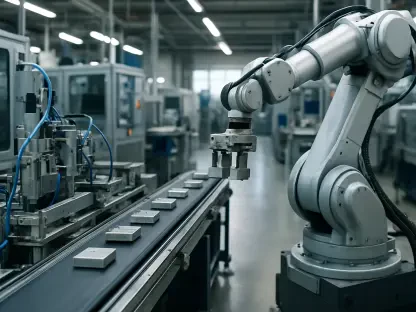
Once the AI has determined the optimal production schedule, the FANUC cobot executes the entire baking cycle with remarkable precision and autonomy, eliminating the need for manual intervention. The workflow begins as the cobot navigates to a designated refrigeration unit to retrieve trays of frozen, ready-to-bake products. It carefully places these trays onto a specialized transport trolley, which is then moved into position in front of the WIESHEU oven. At this point, the oven’s “TrayMotion” system takes over, automatically extending to pull the trolley’s shelves into the preheated baking chamber. This seamless handover between the robot and the oven mechanism ensures a smooth, efficient loading process. After the baking program is complete—a process also managed by the central system—the “TrayMotion” mechanism automatically unloads the trays of hot, finished products back onto the trolley. The entire sequence is performed without human assistance, guaranteeing consistency and freeing up staff for other value-added tasks within the store.
The system’s intelligence extends beyond the oven to encompass the entire product lifecycle, from cooling to final sale. After the “TrayMotion” system unloads the freshly baked goods, the transport trolley is automatically moved to a designated cooling area. This crucial step not only ensures the products reach the perfect temperature for consumption but also immediately clears the space in front of the oven, allowing the cobot to prepare and load the next batch without delay, maximizing the oven’s uptime. Once the products have cooled sufficiently, the cobot performs its final task: carefully stocking the finished goods into their designated compartments within the “BakeOff i” smart display. As each item is placed, the smart display’s inventory is updated in real time. This sales data is then fed directly back into the AI algorithm, creating a closed-loop learning system. With every sale, the system refines its understanding of consumer behavior, perpetually optimizing its production forecasts for even greater accuracy in the future.
The Future of Freshness and Efficiency
This integrated robotic system offered a compelling solution to some of the most pressing challenges in the retail sector, particularly the widespread shortage of skilled labor. By automating the entire baking process, “Bakisto” removed the need for employees to perform repetitive, physically demanding, and time-sensitive tasks like loading ovens and monitoring baking times. This automation not only reduced the physical strain on workers but also created a more attractive work environment. For instance, the cobot could be programmed to begin the first baking cycle in the early hours of the morning, entirely unsupervised, ensuring a full selection of fresh products was ready by the time the store opened. This capability allowed for more flexible and appealing staff schedules. The system ultimately enabled employees to shift their focus from routine production to higher-value activities, such as customer service, merchandising, and other in-store responsibilities that directly enhance the shopping experience.
For businesses, the adoption of the “Bakisto” system marked a pivotal shift toward a more reliable, consistent, and sustainable operational model for in-store bakeries. The automated process ensured that every product was baked to the exact same standard, eliminating the variability that often resulted from human error or differing skill levels among staff. This consistency enhanced product quality and built customer trust. More importantly, the system’s AI-driven, demand-based production model proved to be a powerful tool in the fight against food waste. By aligning production precisely with predicted consumer demand, retailers were able to drastically reduce the amount of unsold baked goods discarded at the end of each day. This not only improved the company’s bottom line by minimizing lost revenue but also reinforced its commitment to environmental sustainability. The successful integration of robotics, AI, and specialized hardware demonstrated a future where in-store freshness and operational efficiency were no longer competing priorities but unified goals achieved through intelligent automation.