
The intricate web of global manufacturing, once a testament to efficiency, has been severely tested by persistent supply chain bottlenecks that began in 2019, forcing industries to innovate or face crippling delays. In this challenging environment, aerospace giant Airbus has executed a remarkable strategic pivot, embracing 3D printing, or additive manufacturing, not merely as a temporary workaround but as a core component of its production philosophy. This transformative approach, developed in close collaboration with technology firm Stratasys, is proving to be a powerful antidote to logistical fragility. By fundamentally rethinking how aircraft components are sourced and created, Airbus is not only navigating the current crisis but is also forging a more resilient, efficient, and sustainable future for aviation, setting a new benchmark for the entire aerospace sector.
A Strategic Pivot to Additive Manufacturing
Building Resilience and Slashing Delays
The traditional aerospace supply chain, characterized by its vast global network and dependence on highly specialized vendors, revealed its inherent fragility when faced with widespread disruptions. In a decisive move to counter this vulnerability, Airbus has implemented a distributed additive manufacturing model that fundamentally alters the logistics of aircraft production. By strategically placing industrial-grade 3D printers at various facilities, the company can now manufacture certified parts on-demand, precisely where and when they are required for assembly or maintenance. This decentralized approach significantly reduces the reliance on complex and often tenuous international shipping routes, thereby insulating production schedules from external shocks. One of the most significant advantages of this model is the complete elimination of Minimum Order Quantity (MOQ) requirements, a long-standing constraint of conventional manufacturing that often forces companies to purchase and warehouse large volumes of components that are not immediately needed. By producing parts only as they are required, Airbus has drastically cut down on physical inventory, reducing storage costs, minimizing waste, and streamlining its overall operational overhead while ensuring that critical components are always available.
Accelerating Production and Boosting Efficiency
The integration of on-demand, 3D-printed components has yielded substantial gains in operational efficiency, allowing Airbus to accelerate its manufacturing timelines and maintain its crucial delivery commitments to airline customers worldwide. The company has reported a staggering 85% reduction in the lead time for parts produced via additive manufacturing compared to traditional sourcing methods, a competitive advantage that cannot be overstated in the fast-paced aviation market. This technological leap has been deployed at an impressive scale across several of the company’s most critical aircraft programs, including the workhorse A320neo family, the technologically advanced A350 long-haul jet, and the robust A400M military transport aircraft. The scope of this initiative is reflected in the numbers: Airbus is now producing over 25,000 flight-ready 3D-printed parts annually. Furthermore, with a global fleet now incorporating more than 200,000 certified polymer parts provided through its partnership with Stratasys, it is clear that additive manufacturing has transitioned from an experimental concept into a mature, indispensable element of the company’s core production strategy, directly contributing to its ability to build and deliver aircraft more reliably and efficiently than ever before.
More Than Just a Solution: A Paradigm Shift
Enhancing Performance and Sustainability
The benefits of Airbus’s strategic adoption of additive manufacturing extend far beyond solving logistical challenges, delivering tangible improvements to aircraft performance and environmental sustainability. A prime example can be found in the A350 program, where the use of 3D-printed parts has resulted in a remarkable 43% weight reduction for those specific components compared to their conventionally manufactured predecessors. In the world of aviation, weight is a critical variable that directly dictates fuel consumption, operational range, and payload capacity. Lighter aircraft are inherently more fuel-efficient, which translates into lower operational costs for airlines and, crucially, a smaller carbon footprint. This alignment with environmental objectives is a cornerstone of the company’s long-term vision. As articulated by Serge Senac, Airbus’s Industrial Leader for Polymer Additive Manufacturing, this technology is a direct and vital contributor to the company’s ambitious roadmap for achieving carbon neutrality by the year 2050. By leveraging 3D printing to build lighter, more efficient aircraft, Airbus is not only enhancing its product line but is also taking a significant step toward a more sustainable future for the entire industry.
Maturing from Prototype to Certified Production
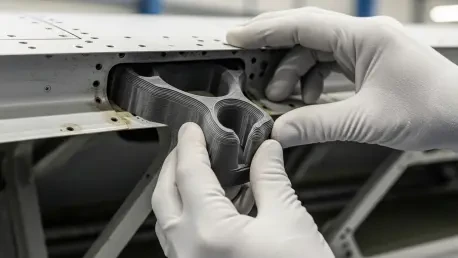
The successful integration of 3D printing into the Airbus production line is underpinned by the significant maturation of the technology itself, which has evolved far beyond its origins as a tool for rapid prototyping. The components being installed on operational aircraft are not experimental test pieces; they are fully certified, flight-ready parts manufactured on industrial-grade Stratasys printers using filament Certified Grade (CG) materials. These advanced polymers are engineered to withstand the extreme temperatures, pressures, and stresses encountered during flight, ensuring they meet the exceptionally rigorous safety, quality, and performance standards mandated by international aerospace regulatory bodies. According to Rich Garrity, Chief Business Unit Officer at Stratasys, it is this proven ability to produce highly consistent, repeatable, and certifiable parts that has enabled the technology to make the crucial leap into true, at-scale production. This milestone has transformed additive manufacturing from a peripheral, niche application into a mainstream industrial process, providing Airbus with the confidence to integrate it deeply into its manufacturing ecosystem as a reliable and indispensable tool for building the next generation of aircraft.
An Industry-Wide Inflection Point
Airbus’s pioneering efforts in additive manufacturing are not occurring in isolation but are instead a leading indicator of a significant “inflexion point” for the entire aerospace industry. The consensus is clear: certified 3D printing is no longer an emerging novelty but a mainstream production method being adopted by major players globally. The Swedish aerospace and defense company Saab, for example, is pushing the technology’s boundaries to an unprecedented level with its development of a five-meter aircraft fuselage that was entirely 3D printed. This groundbreaking project, which is targeting a first flight in 2026, signals a monumental shift from producing individual components to creating large-scale structural elements. If successful, Saab’s initiative could usher in a new industrial model where aircraft are designed, built, and iterated with the agility of software development, seamlessly integrating additive manufacturing with AI-driven design and model-based engineering. This trend toward greater adoption and innovation demonstrates that the industry is collectively recognizing and harnessing the transformative potential of additive manufacturing to redefine how aircraft are conceived, constructed, and maintained.
Forging a New Era in Aviation
The practical applications of this technology have also extended beyond the factory floor and into active military operations, highlighting its versatility and immediate value. The United Kingdom’s Royal Air Force (RAF) provided a compelling demonstration of this by successfully manufacturing and installing a 3D-printed component on an operational Eurofighter Typhoon. While initially intended as a temporary fix to keep the advanced fighter jet mission-ready, this application proved the immense potential of additive manufacturing for rapid-response maintenance and logistical support. The ability to fabricate necessary spare parts on-site, or at forward operating bases, effectively bypasses the often-lengthy wait times associated with traditional spare parts procurement from a centralized supply chain. This capability not only enhances the operational readiness and availability of critical military assets but also points toward a future where maintenance, repair, and overhaul (MRO) operations for both commercial and military aviation become more agile, cost-effective, and self-sufficient. The collective evidence from innovators like Airbus, Saab, and the RAF has firmly established that the aerospace industry had reached a pivotal moment where additive manufacturing solidified its role as a foundational enabler of a more resilient, efficient, and sustainable future for flight.