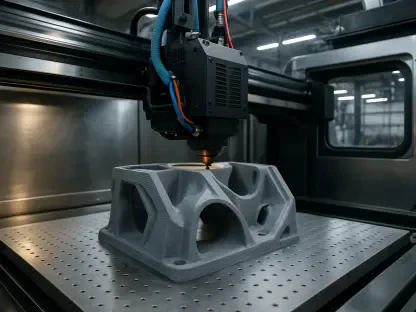

The very research labs and university halls that fuel America’s reputation as the world’s innovation engine may inadvertently be masking a profound economic vulnerability that threatens its long-term global leadership. While the nation excels at pioneering groundbreaking technologies, a critical and widening gap has emerged between creation and practical application. This disconnect is not a minor inefficiency but a systemic challenge hindering progress across vital sectors, including manufacturing, government, healthcare, and finance. The central issue is no longer the ability to invent; it is the will and capacity to implement.
The Innovation Paradox: Leading in Creation, Lagging in Application
For decades, the United States has been the undisputed global leader in technological research and development. Its ecosystem of world-class universities, dynamic startups, and federally funded laboratories consistently produces a torrent of innovation, from artificial intelligence algorithms to advanced materials. This pipeline of discovery has long been the bedrock of the nation’s economic strength and a source of national pride. However, this leadership in invention is creating a paradox where groundbreaking ideas are born in America but often mature and scale elsewhere.
The consequence is a growing “adoption gap,” where transformative technologies fail to move from the lab to the factory floor, the government office, or the hospital ward. This is not a failure of the technology itself but a breakdown in the transition to widespread use. Key industries that form the backbone of the American economy are missing crucial opportunities to boost efficiency, enhance services, and secure a competitive edge. The result is a nation rich in intellectual property but increasingly poor in its practical deployment.
Charting the Adoption Deficit and Its Economic Impact
The Widening Gap: How Competitors Are Winning with American Ideas
While American firms deliberate, global competitors act. Nations like China, South Korea, and Germany have become remarkably adept at deploying advanced technologies, many of which originated in the U.S. These countries are aggressively integrating robotics, Internet of Things (IoT) sensors, and sophisticated digital management systems into their industrial bases, particularly within small and mid-sized enterprises that are often the most resistant to change in America.
This trend highlights a stark contrast in strategic priorities. Competitor nations view technology adoption not as a costly risk but as an essential investment for market dominance. By building ecosystems that support and incentivize implementation, they are effectively capitalizing on American ingenuity. As a result, U.S. companies find themselves competing against foreign firms that are more efficient and agile precisely because they have embraced the technologies American innovators created.
Quantifying the Cost of Inaction: From Untapped Potential to Strategic Liability
The failure to adopt new technologies carries a steep economic price. On a national scale, it leads to stagnating productivity growth as companies continue to rely on outdated processes. This directly impacts global competitiveness, making it harder for American businesses to compete on cost and quality. Without a concerted effort to close the adoption gap in the coming years, the nation risks ceding leadership in key strategic industries.
Innovation that is not deployed is merely dormant potential. Left untapped, this potential transforms into a strategic liability in a rapidly evolving global economy. The long-term consequences extend beyond market share to national resilience, as a less technologically advanced industrial and governmental base is more vulnerable to supply chain disruptions and other systemic shocks.
Beyond Technical Hurdles: Unpacking the Cultural Barriers to Adoption
The most formidable obstacles to technology adoption are rarely technical; they are deeply ingrained in organizational culture. A pervasive fear of disruption often paralyzes leadership, who may see the short-term costs and operational headaches of implementation as outweighing the long-term strategic benefits. This risk aversion is compounded by a systemic underestimation of the true cost of maintaining the status quo, which in today’s economy is a recipe for gradual decline.
This organizational inertia is reinforced by employee resistance. Without a clear vision from leadership and robust change-management initiatives, workers may view new technologies as a threat to their job security rather than a tool for empowerment. Overcoming this requires a fundamental shift in mindset, where training and upskilling are treated as continuous investments and technology is framed as a collaborative partner in augmenting human capability.
The Government’s Dual Role: From Bureaucratic Bottleneck to Adoption Catalyst
The government itself embodies the adoption paradox. On one hand, its complex bureaucracy and cumbersome procurement processes often stifle its own internal digital transformation, making it a case study in technological lag. This internal resistance sets a poor precedent and fails to model the kind of agile, forward-thinking behavior needed in the private sector.
On the other hand, the government also holds the key to unlocking a national adoption movement. By shifting its focus from solely funding research to incentivizing implementation, it can become a powerful catalyst for change. Strategic tools such as targeted tax credits for technology acquisition, grants for workforce training, and investments in regional centers of excellence can significantly de-risk the adoption process for private companies, particularly small and mid-sized firms that lack the capital for large-scale investments.
Forging a New Path Forward: The Future of American Competitiveness
The metrics used to measure American technological success must evolve. For too long, the number of patents filed or research papers published has been the primary benchmark of progress. In the current global landscape, however, the true measure of a nation’s technological prowess is the speed and scale at which it translates new ideas into tangible economic and societal impact. Future competitiveness will be defined not by who invents a technology but by who deploys it most effectively.
Embracing adoption as a national priority can unlock the vast stores of potential energy currently sitting on shelves in labs and research centers across the country. This requires a collective reorientation toward implementation, where the final step of innovation is not the patent but the widespread use of the invention. By making adoption a central pillar of its economic strategy, the U.S. can secure its long-term leadership and ensure that its creative genius translates into shared prosperity.
A Call to Action: A Collaborative Blueprint for Closing the Gap
The analysis makes clear that America’s challenge is one of execution, not imagination. The path forward requires a unified effort to dismantle the cultural and systemic barriers that have slowed the nation’s technological metabolism. It is understood that innovation without adoption is a promise unfulfilled, leaving critical economic potential on the table.
To address this, a three-pronged solution is proposed, built on coordinated action from the pillars of the economy. Industry must prioritize change management and invest in upskilling its workforce to embrace new tools. The government must create a fertile ground for risk-taking through smarter financial incentives and public-private partnerships. Finally, academia can lead by leveraging its expertise and infrastructure to bridge the gap between discovery and deployment, creating a robust ecosystem that turns American invention into an American advantage.