
The relentless pressure on global supply chains to deliver with unprecedented speed and precision has pushed traditional warehouse automation to its breaking point, revealing a critical need for systems that can think and adapt rather than merely repeat pre-programmed tasks. In the intricate dance of modern logistics, where even minor delays can cause significant disruptions, the limitations of conventional robotics have become increasingly apparent. This has catalyzed a bold exploration into the realm of “embodied AI,” a new frontier where cognitive intelligence is fused with physical machinery to create truly autonomous collaborators. A pioneering initiative, Project Embodied AI, has taken center stage in this evolution, seeking to embed advanced artificial intelligence directly into the robots that power manufacturing and distribution centers. This ambitious endeavor moves beyond simple automation, aiming to develop cognitive robots capable of independent decision-making and seamless interaction within dynamic, human-centric environments, potentially unlocking a new paradigm of operational efficiency and resilience.
The Dawn of Embodied AI in Manufacturing
A Strategic Leap Beyond Automation
The strategic move toward embodied AI represents a fundamental rethinking of the role of machines in the industrial landscape, shifting the focus from tools that execute commands to partners that solve problems autonomously. Unlike traditional automation, which excels at performing highly structured, repetitive tasks in a controlled setting, embodied AI introduces a layer of cognitive capability that allows robots to perceive, reason, and act within complex and unpredictable environments. This evolution is driven by the integration of sophisticated sensor technologies, machine learning algorithms, and advanced robotics, creating systems that learn from their interactions and adapt their behavior in real time. The goal is not simply to replace human labor but to augment it, creating a symbiotic relationship where cognitive robots handle physically demanding, monotonous, or hazardous tasks, freeing human workers to focus on more strategic, creative, and value-added activities. This approach promises to enhance not only efficiency and productivity but also workplace safety and overall operational intelligence by introducing a new class of intelligent physical agents into the workforce.
Addressing Critical Business Challenges
For manufacturers operating in highly competitive global markets, the ability to respond swiftly to fluctuating customer demand is paramount, a challenge that legacy warehouse processes often struggle to meet. BITZER, a leading producer of essential refrigeration and air conditioning compressors, provides a compelling case study of this operational friction. As a critical link in the global cold chain, the company faces immense pressure to maintain high-precision production schedules while navigating the complexities of a labor-intensive warehouse environment. Recognizing that process optimization is as crucial as product innovation, the company sought to transcend the limitations of its existing systems. By participating in a pilot program as a RISE with SAP customer, BITZER aimed to leverage the power of artificial intelligence to cultivate a truly demand-driven production model. The central challenge was clear: how to build the agility and flexibility needed to adapt to rapid market shifts without compromising on the quality and reliability that define the brand, making it an ideal candidate to test the real-world impact of cognitive robotics on core business imperatives.
The Proof of Concept in Action
Seamless Integration and Autonomous Operation
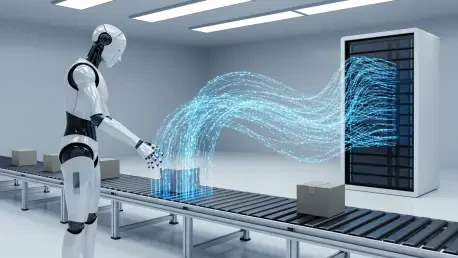
The success of the pilot program at BITZER’s facility hinged on a groundbreaking technical achievement: the direct and seamless integration of a sophisticated robotic system with enterprise-level management software. A NEURA 4NE1 humanoid robot was deployed and successfully connected with SAP Business AI and managed through the SAP Extended Warehouse Management (EWM) system. A pivotal outcome of this proof of concept was the elimination of the need for complex and costly middleware, a common barrier to the adoption of advanced robotics in industrial settings. This direct communication pathway streamlined the implementation process significantly, demonstrating a more accessible and scalable model for integrating physical AI into existing digital ecosystems. The project definitively confirmed that the robot could execute its assigned tasks with a high degree of independence, functioning entirely without manual guidance or human intervention. This validated the core premise of embodied AI—that a machine could be endowed with the cognitive capacity to operate autonomously within a live production environment, marking a significant milestone in the journey toward the intelligent warehouse.
Redefining Operational Agility
The deployment of the autonomous robot ushered in a new level of operational capability, fundamentally reshaping the standards for warehouse efficiency and responsiveness. By operating continuously, 24/7, the robot introduced an element of perpetual motion into the facility, providing the agility and flexibility essential for a truly demand-driven manufacturing model. This newfound capability allows a production environment to adapt seamlessly to sudden shifts in demand, maintain operational continuity during off-peak hours, and significantly reduce the potential for human error in repetitive tasks. The result is a more resilient and dynamic supply chain, characterized by faster response times and enhanced precision. The project, meticulously guided by SAP’s Physical AI and Cognitive Robots Exploration Council, was deemed a successful first step in extending the transformative impact of business AI from the digital realm into the physical world of operations. The positive outcomes have paved the way for further proofs of concept, which will continue to assess and quantify the immense business value this technology holds for customers across various industries.
Charting the Future of Warehouse Logistics
The successful pilot initiative at BITZER provided a clear and compelling vision for the future of warehouse logistics, one where intelligent, autonomous systems became integral components of the operational fabric. The project conclusively demonstrated that the integration of embodied AI was not a distant theoretical concept but a practical solution with measurable benefits for efficiency, agility, and resilience. The ability of the NEURA 4NE1 robot to function independently within the SAP EWM framework, without the need for cumbersome middleware, represented a significant technical breakthrough that lowered the barrier to entry for other organizations. This initial success laid the groundwork for a broader exploration into how cognitive robots could reshape manufacturing and supply chain processes. The initiative confirmed that extending business AI into physical operations was a viable and valuable strategy, setting a new benchmark for what could be achieved through the fusion of digital intelligence and advanced robotics. The council planned further deployments to continue validating the business case across diverse industrial environments.