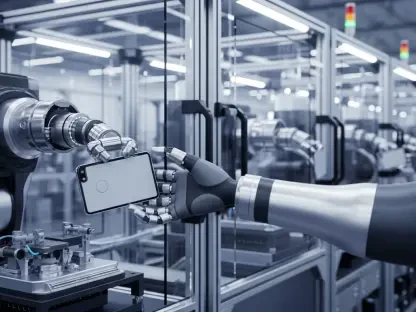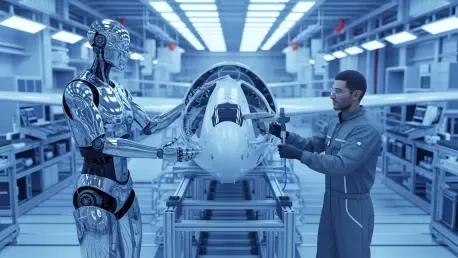

The landscape of high-tech manufacturing took a significant leap forward as Chinese robotics innovator UBTech Robotics announced a strategic partnership with aviation giant Airbus, a move that immediately sent UBTech’s Hong Kong shares soaring by 8.6%. This landmark collaboration signals a pivotal moment for both the robotics and aerospace industries, as Airbus has committed to deploying UBTech’s Walker S2 humanoid robots within its aircraft production facilities. For an initial testing phase, Airbus has acquired an undisclosed number of these advanced robots to evaluate their potential to transform the assembly line. The pilot program will focus on assessing the robots’ performance in high-precision, repetitive, and safety-critical tasks, all under the careful supervision of human operators. This initiative is not just an experiment but a calculated step toward integrating a new form of automation designed to work alongside, rather than replace, the existing skilled workforce, potentially revolutionizing efficiency and precision in one of the world’s most complex manufacturing environments.
Pioneering a Robotic Workforce
At the heart of this groundbreaking initiative is the Walker S2, a sophisticated humanoid robot engineered for complex industrial applications. Standing at an impressive 1.75 meters (nearly 5 feet 9 inches) and weighing approximately 70 kilograms (about 154 pounds), the robot is built to navigate and operate in spaces designed for humans. It possesses a notable carrying capacity of up to 33 pounds, enabling it to handle various tools and components essential in aircraft assembly. What truly sets the Walker S2 apart are its advanced technological features. It is equipped with high-tech tactile sensors that provide a delicate sense of touch, which is crucial for tasks requiring fine motor skills and precision. Furthermore, its autonomous battery-swapping feature is a game-changer for manufacturing, allowing for continuous, uninterrupted operation without the need for manual intervention during charging cycles. These capabilities are precisely why Airbus is exploring its use for tasks that demand unwavering consistency and a high degree of safety, ensuring that the integration of this technology enhances, rather than complicates, the intricate process of building modern aircraft.
Broader Implications for the Industry
The strategic alliance between UBTech and Airbus underscores a much broader industry trend toward integrating advanced robotics to solve persistent manufacturing challenges. This move is widely seen as a proactive measure to enhance operational efficiency, address potential labor shortages in specialized fields, and elevate the standard of precision in aerospace construction. While a specific timeline for full-scale implementation has not been announced, the partnership aligns perfectly with the industry’s trajectory. UBTech, which had already established itself as the third-largest entity in the global humanoid robotics sector, further solidified its position through this high-profile collaboration. The company has also forged significant supply agreements with other major corporations, including Texas Instruments, BYD, and Foxconn, demonstrating the growing industrial versatility and acceptance of its technology. This series of partnerships supports UBTech’s ambitious production target of 10,000 units by 2026, signaling a future where humanoid robots become an increasingly common and vital component of advanced manufacturing ecosystems worldwide.