
The prevailing narrative that manufacturing work is simply becoming more technical fundamentally misrepresents the profound transformation underway on the factory floor. It is not merely the tasks that have changed, but the entire production environment, which has evolved into an intensely complex, data-rich, and interconnected ecosystem. In this new paradigm, the value of human contribution is shifting dramatically from the execution of physical, repetitive actions to the application of cognitive, decision-driven responsibilities. Within an intelligent factory, every role, regardless of its traditional description, now involves a degree of system-level thinking. Workers are no longer just operators of machinery but interpreters of complex signals, tasked with understanding nuanced context and making critical judgment calls that can impact the entire production line. Automation is not a tool for human replacement but a catalyst that fundamentally alters how people add value. As machines increasingly handle tasks that are dangerous, physically demanding, or require monotonous precision, the human contribution has naturally gravitated toward higher-value activities such as advanced troubleshooting, complex problem-solving, and driving continuous improvement initiatives. The work is fundamentally less about physical motion and more about cognitive judgment.
A New Paradigm of Integrated Production
A crucial trend driving this evolution is the necessity of viewing the factory as a single, integrated system rather than a collection of disparate machines and siloed processes. In this deeply interconnected environment, every action and decision has cascading effects, meaning each role directly influences the facility’s overall quality, material flow, safety standards, and operational performance. Consequently, skills that were once considered specialized, such as situational awareness and broad digital fluency, are no longer optional but have become essential competencies for all personnel. The true potential of smart manufacturing is unlocked only when humans and intelligent systems work in a complementary partnership, creating a synergy that neither could achieve alone. Machines provide unparalleled speed, consistency, and a continuous stream of data, while people contribute the irreplaceable elements of contextual understanding, creative problem-solving, and nuanced judgment based on experience. In this new era, the most valuable human capability is not a specific physical skill but the agile ability to understand, interpret, and act effectively within a dynamic and complex system in real time, turning raw data into actionable intelligence.
Designing for the Cognitive Workforce
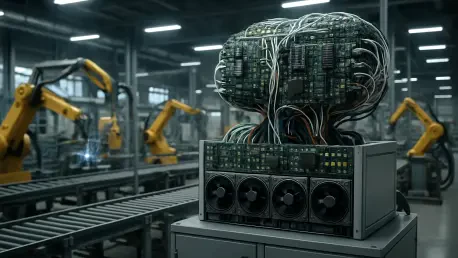
The most successful implementations of smart factory principles were those that recognized this new reality and were designed to empower it from the ground up. It became clear that treating workers as interchangeable labor was a relic of a past industrial age and a direct impediment to progress. The facilities that thrived were those built around the concept of the human as an integral decision-maker and a critical node in the information network. This required a fundamental shift in both physical and digital infrastructure, creating systems that provided clear, contextualized information and tools that augmented human cognitive abilities rather than simply automating tasks away. The focus moved from optimizing isolated processes to fostering a holistic environment where human insight and machine efficiency could merge seamlessly. Ultimately, the factories that unlocked their full potential were those that invested not just in technology, but in cultivating a workforce capable of wielding that technology with creativity and critical judgment. They proved that the “brain” of the smart factory was not a central computer, but the distributed intelligence of its empowered human workforce.