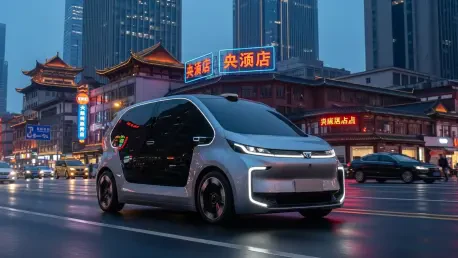

Kwame Zaire is a leading voice in manufacturing and autonomous systems, focusing on the critical layers of predictive maintenance and vehicle safety. With an eye for the technical intricacies of electronics and production management, he has analyzed the growing pains of driverless technology as it moves from controlled pilots to bustling urban centers. Today, we discuss the recent mass malfunction in Wuhan, where over 100 robotaxis simultaneously stalled, highlighting the vulnerabilities in the current generation of autonomous fleets and the risks facing passengers in high-speed environments.
When over 100 autonomous vehicles simultaneously experience a driving system malfunction, what specific hardware or software redundancies are typically bypassed? How can a centralized cloud failure be prevented from paralyzing an entire fleet at once, and what metrics determine if a fail-safe mode was successful?
When a mass shutdown occurs, such as the event involving more than 100 vehicles in Wuhan at 9 p.m., it suggests a failure in the centralized orchestration layer rather than individual hardware. Typically, local hardware redundancies should allow a car to “limp” to a shoulder, but a “system malfunction” of this scale often bypasses local logic via a corrupted cloud update or a network handshake failure. To prevent this, developers must implement “edge” autonomy, where the vehicle can complete its current maneuver safely even if the main server goes dark. We determine a successful fail-safe not by a simple stop, but by the vehicle’s ability to reach a “minimal risk” location rather than stopping dead in a middle lane.
Vehicles occasionally strand passengers in the middle lanes of high-speed ring roads where exiting is dangerous. What protocols should be in place for passenger extraction in fast-moving traffic, and how do you weigh the risk of staying in a stationary car versus walking across active lanes?
Stranding passengers on elevated ring roads—fast-moving routes designed without traffic lights—creates a high-risk environment where standard evacuation rules are severely tested. Statistically, passengers are safer inside the vehicle’s steel frame than attempting to walk across multiple active lanes with cars passing on both sides. However, the emotional toll of sitting in a dead machine while traffic zooms past is a major design flaw that needs addressing. We need technical protocols that allow for low-speed “emergency crawling” via secondary power to get the vehicle to a safer exit point during a system-wide freeze.
Onboard screens sometimes promise technician arrival within minutes, yet passengers often resort to SOS buttons when help fails to materialize. How should the communication loop between remote centers and stranded passengers be restructured, and what step-by-step training ensures staff can actually reach complex highway locations?
The onboard promise of a five-minute technician arrival is a specific metric that, when missed, forces passengers to use the SOS button out of genuine desperation. This reveals a dangerous gap in the communication loop; the remote center must provide real-time, transparent updates instead of optimistic, canned estimates. Training recovery staff requires specific drills for elevated highways where access points are limited and U-turns are impossible. Effective recovery depends on technicians having priority access routes and specialized “rescue” protocols mapped out long before a fleet-wide failure occurs.
As driverless services expand from initial pilot cities into regions like the Middle East and Europe, what regional infrastructure differences pose the greatest challenge? How must these AI systems adapt to varied traffic laws and different environmental factors to maintain consistent reliability?
Expanding Baidu’s Apollo Go from China to regions like Abu Dhabi or Europe introduces massive variability in road geometry and environmental stressors. In the Mideast, extreme heat affects the electronics of a 1,000-plus vehicle fleet, while European cities offer narrower streets and different right-of-way customs. AI systems must be retrained on these local “road dialects” to maintain the consistency seen in initial pilot projects. Global success will depend on how quickly these systems adapt to varied traffic laws without requiring a constant, uninterrupted connection to a central server.
What is your forecast for the robotaxi industry?
I predict a pivot toward “decentralized intelligence” where vehicles act as independent agents rather than nodes in a fragile central network. While the expansion into Switzerland and Britain is a bold move, these companies must first solve the “Wuhan problem” of mass shutdowns to gain public trust. Within the next decade, we will likely see specialized autonomous tow units that can clear stalled cars faster than any human crew could navigate a ring road. Ultimately, the industry will thrive only if it can guarantee that a software glitch won’t turn a high-speed urban artery into a parking lot.