
The promise of the smart factory, a fully interconnected and intelligent manufacturing ecosystem, has captured the imagination of industries worldwide, yet its successful realization depends on an often-underestimated element: robust automation standards. These meticulously developed frameworks are far more than just technical rulebooks; they are the essential infrastructure that enables seamless communication, ensures operational safety, and drives global innovation. Expert analysis reveals that the journey toward Industry 4.0 is not merely a race to adopt the latest technology, but a strategic endeavor to build a holistic system where cutting-edge automation is balanced with a deep understanding of human operational dynamics, all supported by universally recognized standards.
The Collaborative Architecture of Modern Standards
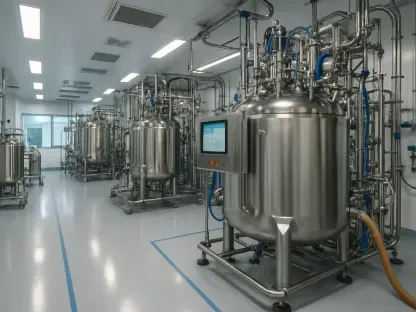
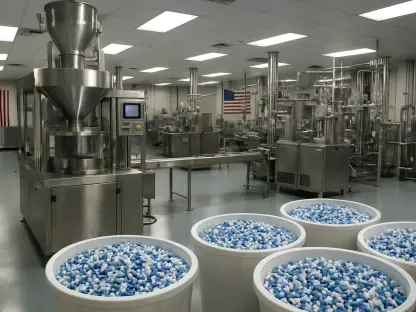
The development of industrial automation standards is a fundamentally collaborative and multi-sectoral endeavor, born from the need to eliminate the pervasive inconsistencies, variations, and exceptions that inevitably arise in their absence. Without a common framework, engineering teams often develop bespoke solutions to common problems, leading to redundant efforts, increased complexity, and significant challenges in system integration and maintenance. By establishing a comprehensive and consistent set of guidelines, international standards bodies provide engineers and technicians across the globe with a unified language and a shared approach to tackling complex operational scenarios. This significantly reduces ambiguity and creates a stable, predictable platform upon which true innovation can be built. This collaborative spirit is evident in the development of standards for batch control, which are critical for ensuring procedural consistency and repeatability in industries where precision is paramount, such as pharmaceuticals, food and beverage manufacturing, and even specialized automotive processes. Similarly, specific standards have emerged to address the immense challenge of life cycle assessment in industrial plants, facilities that can remain operational for nearly a century. These standards provide structured methodologies for integrating obsolete legacy systems with newer technologies, ensuring a smoother and more efficient technological evolution within these long-lasting and vital infrastructures. This harmonization effort also extends to physical components like electrical cabling, where differing regional manufacturing codes can result in conflicting wiring approaches, making troubleshooting a time-consuming and arduous process. The ultimate aim is to create a globally ratified set of practices that empowers engineers to design and implement systems that are not only more efficient but also far easier to maintain, regardless of their location.
Navigating the Complexities of Automotive Automation
The automotive industry currently serves as a powerful case study for the critical importance of standards, as it navigates a period of intense transformation defined by the difficult shift to multi-powertrain production lines and persistent labor and skills shortages. These pressures have amplified the demand for flexible and highly efficient automation, yet several significant hurdles stand in the way. One of the most prominent is the fragmentation of Human-Machine Interfaces (HMIs). The market is saturated with platforms from various major manufacturers, each with its own distinct design philosophy and operational logic. This diversity results in a lack of standardization in HMI templates and layouts, as integration engineers often prioritize different approaches. For operators on the factory floor, this creates a disjointed and often confusing experience. They are forced to navigate steep learning curves and mentally switch between different system logics at various workstations, a situation that increases cognitive load and heightens the potential for costly errors. Furthermore, controls engineers responsible for system updates face a crucial decision regarding communication technology. While modern, high-speed protocols like Ethernet and EtherCAT offer superior performance and modularity, there is a prevalent conservative tendency among professionals to opt for familiar, proven legacy systems like CAN and Modbus. This reluctance often stems from a deep-seated resistance to disrupting established, functional systems and a managerial focus on immediate, short-term cost savings over long-term operational efficiency and future scalability. Overcoming these challenges requires a more strategic, forward-looking perspective that embraces a holistic view of technological integration to fully understand the nuanced trade-offs between short-term expenditures and enduring gains in productivity and adaptability.
The Transformative Impact of AI and Advanced Robotics
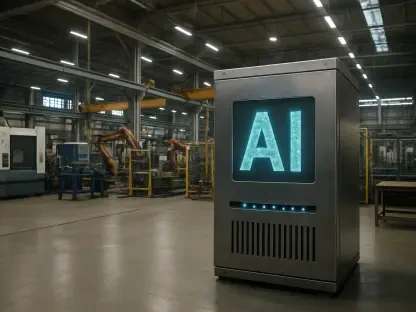
Artificial Intelligence is rapidly emerging as a transformative force in industrial automation, offering unprecedented opportunities for innovation and optimization. Rather than simply replacing human tasks, AI is evolving into a sophisticated companion for engineers, capable of bridging critical skills gaps and streamlining complex processes. One of its most promising applications lies in AI-powered programming assistance. Such intelligent systems could seamlessly translate between complex programming languages, effectively creating a communication bridge between software developers and controls engineers and thereby democratizing access to advanced automation. In the realm of HMI development, AI holds the potential to revolutionize the creation of templates and simplify the intricate configurations of cybersecurity, offering intelligent suggestions and automating what is traditionally a complex, manual process. Perhaps most compelling is AI’s capacity for predictive equipment analysis. By processing and analyzing vast datasets from Programmable Logic Controller (PLC) operations, these systems could empower organizations to make highly informed decisions about equipment necessity, identifying redundant systems and optimizing resource allocation with an extraordinary level of precision. This powerful drive toward intelligent automation is perfectly complemented by recent technological breakthroughs in industrial robotics, which have dramatically enhanced factory adaptability. Advanced vision systems now enable robots to recognize and differentiate between similar products with greater accuracy, automatically adjusting vision offsets to continue operations with minimal human intervention. Simultaneously, lightweight robots have developed sophisticated path-learning capabilities, which are especially valuable in high-mix, low-volume manufacturing scenarios, allowing for more dynamic and flexible production workflows. Another significant leap forward is the ability for robots to change end-of-arm tools dynamically, seamlessly switching between grippers, welders, or other implements based on specific recipe requirements, enabling a level of manufacturing agility that was previously unattainable.
Forging a Human-Centric and Secure Foundation
The successful transition to a fully integrated smart factory necessitated a delicate balance between ambitious technological innovation and pragmatic, resource-conscious management. It became clear that when a system’s mechanical design was fundamentally sound and predictable, organizations should prioritize digitization and software optimization over costly and disruptive wholesale mechanical replacements. While software-based solutions offered a more cost-effective and flexible path to modernization, a critical lesson learned was the danger of blind trust in AI-generated solutions. The human review process remained an indispensable step to ensure that technological innovations aligned perfectly with real-world operational requirements and stringent safety protocols. This focus on human oversight was part of a broader, people-centric approach to automation that prioritized user experience and operational intuition. HMI design, for instance, shifted toward principles of clarity and simplicity, establishing a neutral color palette as the default and reserving bright, attention-grabbing colors exclusively for critical faults that required immediate operator intervention. Systems became more accessible through integrated visual guides with step-by-step instructions, reducing reliance on dense documentation and lowering the cognitive load on operators. This human-centric philosophy was ultimately protected by a sophisticated, multi-layered cybersecurity strategy that meticulously managed information flow and access from the foundational sensor networks all the way up to enterprise resource planning systems, ensuring that a compromise in one area could not cascade and disrupt the operational integrity of the entire facility.