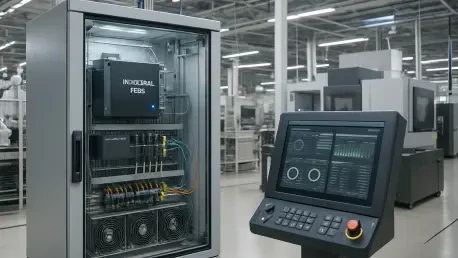

The global telecommunications landscape is currently undergoing a radical transformation as major carriers transition from being mere providers of connectivity to becoming the primary orchestrators of sophisticated industrial intelligence. AT&T has recently moved to the forefront of this evolution by unveiling its comprehensive “Connected AI” strategy, a multi-layered initiative designed to redefine how artificial intelligence operates within the industrial sector. By integrating high-capacity fiber optics and advanced 5G networking with the specialized computing power of giants like Nvidia and Microsoft, the company is effectively decentralizing the power of AI. Instead of relying on distant data centers that often introduce latency, this new framework pushes heavy workloads directly to the factory floor and the warehouse edge. This shift is not merely about faster speeds; it represents a fundamental change in operational philosophy where real-time data processing becomes a standard utility rather than a luxury. As Industry 4.0 matures, the ability to bridge the gap between massive AI training models and localized, high-speed inference is becoming the decisive factor for enterprises looking to maintain a competitive advantage in an increasingly automated global market.
Integrating Generative AI with Smart Manufacturing
A primary component of this strategic rollout is the introduction of a specialized platform that merges the high-speed reliability of 5G with the intuitive capabilities of generative artificial intelligence. Developed in close collaboration with Microsoft and Nvidia, this solution is specifically engineered to handle the unique demands of smart manufacturing environments where downtime is measured in thousands of dollars per minute. The technical architecture leverages the Microsoft Azure OpenAI service to bring sophisticated language models into the local industrial environment, allowing human workers to interact with complex machinery using natural language queries. This means a technician on a production line can simply ask a system about its current thermal efficiency or upcoming maintenance requirements without needing to navigate archaic software interfaces or manual logs. By grounding these AI capabilities in the actual physical context of the factory, the system moves beyond passive data collection into a realm of proactive operational awareness.
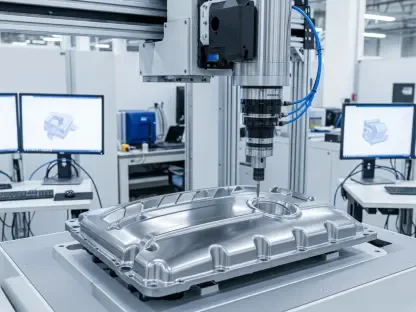
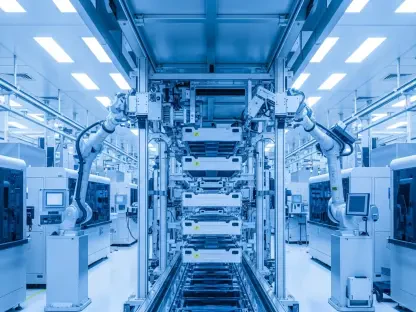
The underlying hardware stack provided by Nvidia plays a critical role in ensuring that these interactions happen with the ultra-low latency required for high-stakes industrial tasks. Utilizing Nvidia’s accelerated computing resources, the platform can perform high-speed video search and complex telemetry analysis at the edge of the network. This capability is essential for modern vision systems that monitor product quality or worker safety in real-time. When a machine produces a slight vibration or a visual defect that would be invisible to the human eye, the AI identifies it instantly by processing massive streams of sensor data locally. This eliminates the need to send heavy video files to a central cloud for analysis, which would otherwise create a bottleneck. Consequently, the integration of generative AI and edge computing allows manufacturers to achieve a state of “seeing and knowing” that was previously impossible, turning every piece of equipment on the floor into an intelligent, communicative participant in the production process.
Strengthening the Network Backbone with AWS
While the intelligence at the edge provides immediate value, the integrity of the entire system depends on a robust and high-capacity network backbone capable of moving vast amounts of information. AT&T’s strategic alliance with Amazon Web Services is specifically focused on addressing this infrastructure challenge by expanding fiber capacity to an unprecedented 1.6Tbps across major routes. This massive increase in bandwidth is necessary to support the “AI factories” of the modern era, which require constant and seamless synchronization between localized edge engines and centralized cloud environments. This partnership ensures that as AI models become more complex and data-heavy, the network remains a facilitator rather than a constraint. By linking its fiber and 5G systems directly into the AWS cloud ecosystem, the carrier allows enterprises to treat their network infrastructure as a transparent extension of their existing cloud architecture, simplifying the management of distributed assets.
Furthermore, this collaboration introduces the concept of “agentic AI” into the realm of network management itself. By utilizing specialized AI agents to automate and optimize service enablement, the network becomes self-healing and more responsive to the fluctuating demands of industrial clients. The partnership also involves migrating internal workloads to AWS Outposts, which are hardware solutions that bring cloud-native services directly into physical on-premises facilities. This move is particularly significant for industries operating in remote or extreme environments, such as offshore oil rigs or isolated mining sites. To ensure these locations are never cut off from the AI grid, the agreement explores the integration of Project Kuiper satellite services. This multi-path approach ensures that regardless of geography, an industrial site can maintain the high-speed connection necessary to feed its AI models, creating a truly global web of interconnected intelligence that functions as a single, cohesive unit.
Tracking Rugged Assets in Harsh Environments
The expansion of the industrial edge often extends far beyond the controlled environment of a modern factory, reaching into the “rugged edge” where equipment must operate without consistent power or shelter. To address the needs of sectors like construction, rail, and energy, a new partnership with Geoforce has been established to provide specialized tracking for non-powered assets. By integrating Geoforce’s ruggedized hardware into the existing LTE-M network, enterprises can now monitor the location and status of every piece of equipment, from shipping containers to heavy-duty trailers, within the same digital ecosystem used for their smart factories. This level of visibility is crucial for logistics managers who need to coordinate complex movements across vast distances. The ability to manage both high-tech production lines and low-tech rugged assets through a single enterprise-aligned system represents a significant step toward the total digitization of the industrial supply chain.
This movement toward a standardized tracking platform is a direct response to the historical fragmentation that has plagued industrial asset management for decades. In the past, organizations often relied on a patchwork of standalone tools that did not communicate with one another, leading to data silos and operational inefficiencies. By leveraging a network that handles over one exabyte of data daily, these organizations can now scale their tracking solutions across hundreds of countries using a unified framework. This standardization allows for more sophisticated data analytics, as information from a remote construction site in one part of the world can be compared directly with performance metrics from a facility in another. As industrial players move away from experimental pilots and toward long-term enterprise systems, the reliability of the underlying carrier network becomes the primary factor in determining the success of their digital transformation efforts.
Measuring Efficiency Gains and Security Improvements
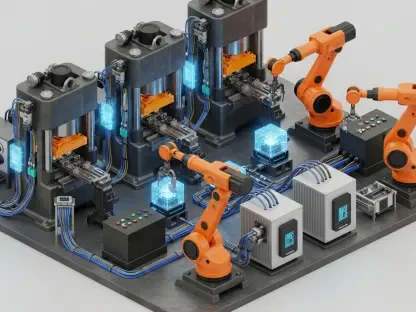
The practical impact of these integrated technologies is best observed through the measurable results achieved in recent pilot deployments across various industrial sectors. In high-volume manufacturing environments, such as injection molding lines, the implementation of edge AI has led to a remarkable 70% reduction in material waste. By identifying microscopic anomalies in the production process before they result in defective products, the system allows for real-time adjustments that save both money and resources. Additionally, the time required to detect mechanical faults has been significantly reduced, often by two to four hours, which provides a critical window for maintenance teams to intervene before a catastrophic failure occurs. These efficiencies do not just improve the bottom line; they enhance the overall resilience of the production cycle, ensuring that fulfillment centers can operate with a much higher degree of predictability and speed.
Beyond the obvious operational benefits, the “Connected AI” framework provides a sophisticated new layer of cybersecurity that is specifically tailored for the industrial shop floor. By using artificial intelligence to establish a behavioral baseline for every machine and sensor on the network, the system can instantly flag any activity that deviates from the norm. This is particularly important as industrial assets become more connected and, therefore, more vulnerable to cyberattacks that could disrupt critical infrastructure. If a machine suddenly attempts to communicate with an unauthorized external server or begins operating outside of its programmed parameters, the AI can isolate the threat immediately. This proactive security posture treats mechanical malfunctions and cyber threats with equal urgency, providing a comprehensive safety net that protects high-value physical assets and sensitive operational data. The result is an industrial environment that is not only smarter and faster but also inherently more secure against modern digital threats.
Future Outlook for Edge Orchestration
The transition toward a fully integrated industrial edge is no longer a theoretical concept but a practical necessity for enterprises looking to thrive in the current technological era. Moving forward, the focus for industrial leaders should shift from individual technology pilots toward the comprehensive orchestration of their entire digital architecture. The success of the current strategies suggests that the most effective way to implement AI is to ensure it is supported by a robust, high-capacity network that spans from the localized edge to the global cloud. Organizations are encouraged to prioritize partnerships that offer standardized, scalable solutions rather than proprietary systems that create long-term vendor lock-in. By embracing a “Connected AI” approach, companies can ensure that their infrastructure remains flexible enough to incorporate future advancements in machine learning and robotics without requiring a complete overhaul of their existing networks.
In conclusion, the strategic pivot toward an AI-ready infrastructure has demonstrated that connectivity is the fundamental bedrock upon which all modern industrial intelligence is built. The collaboration between telecommunications leaders and cloud hyperscalers has successfully closed the gap between data generation and actionable insights. Throughout the recent deployments, it was observed that the integration of 5G, fiber, and generative AI provided a tangible path for reducing waste and improving equipment uptime. The previous reliance on centralized data processing was replaced by a distributed model that prioritizes low latency and localized control. These developments established a new standard for Industry 4.0, where the network itself acts as an intelligent layer that monitors, protects, and optimizes every aspect of the industrial lifecycle. As these systems continue to evolve, the focus will remain on refining the synergy between human operators and their increasingly autonomous mechanical counterparts.