
The global automotive industry finds itself at a critical juncture in 2026, grappling with a profound dual transformation as manufacturers simultaneously navigate the seismic shifts towards electrification and advanced digitization. This complex evolution is dangerously compounded by a looming demographic crisis: a massive wave of retirements among veteran engineers and technicians, threatening a catastrophic loss of invaluable institutional knowledge. This impending exodus is actively creating a “knowledge chasm” between the departing generation of experts and the incoming workforce. These veterans, who possess an intuitive, experience-based understanding of manufacturing processes developed since commissioning production lines in the 1980s, hold wisdom that is often unwritten, existing more as a deeply ingrained philosophy than a formal manual. The central challenge is therefore clear and urgent: a company’s ability to effectively capture, encode, and transfer this tacit knowledge will be the primary determinant of its long-term survival and competitive advantage. The year 2026 is poised to be the watershed moment where the industry’s winners and losers are defined by their success in this high-stakes race against time and attrition.
The Human-Technology Symbiosis
Redefining the Role of AI
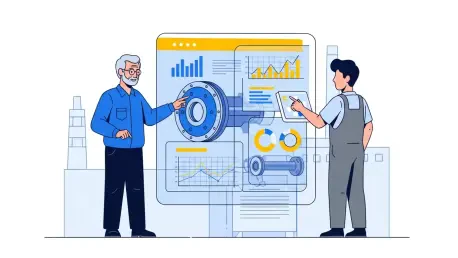
A powerful consensus has emerged among industry leaders that technology, particularly artificial intelligence and large language models, should not be viewed as a simple replacement for human expertise but rather as an essential vessel for its preservation and dissemination. This perspective marks a fundamental paradigm shift where the relationship between worker and machine is effectively inverted. Instead of AI rendering human experience obsolete, seasoned workers must now actively “edify” these advanced systems, a process that involves transforming their invaluable intuition, diagnostic reasoning, and problem-solving methodologies into a digital, accessible format. This is not about creating static databases of procedures but about capturing the nuanced logic—the “why” behind the “what”—that allows veterans to solve complex, multi-variable problems that defy simple algorithms. The ultimate goal is to create a living, evolving digital repository of institutional wisdom that can guide, train, and augment the capabilities of the next generation of engineers and technicians, ensuring that decades of hard-won experience become a durable corporate asset rather than a fleeting memory.
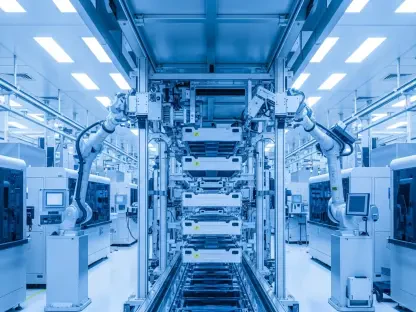
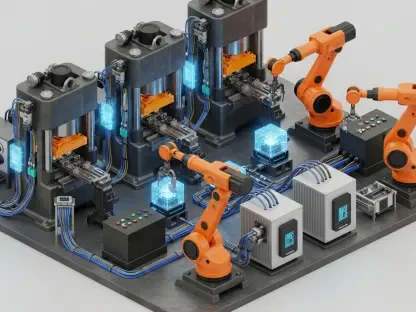
The practical application of this edification process is already taking shape on factory floors, moving from theoretical concept to operational reality. Digital twins, which are sophisticated virtual models of physical production lines, can be populated not just with machine data but with the captured decision-making logic of experienced technicians. When a simulation predicts a bottleneck, the system can offer solutions based on the encoded wisdom of a veteran who solved a similar issue years prior. Likewise, augmented reality training modules can overlay a novice technician’s view with guided instructions and insights drawn directly from a master craftsperson, effectively providing a virtual apprenticeship. AI-powered diagnostic systems are being trained on the troubleshooting processes of seasoned experts, learning to recognize subtle patterns in machine behavior that might indicate an impending failure. This human-centric approach to AI integration is creating a powerful symbiosis, where technology acts as a multiplier for human knowledge, ensuring that the intuitive genius of one generation becomes the foundational intelligence for the next.
Overcoming Workforce Resistance
The human factor remains the most critical, and often underestimated, component of this sweeping technological transformation. Even the most sophisticated and powerful digital tools are destined to fail if they encounter resistance, or what plant managers bluntly call “pushback,” from the frontline workers who are expected to adopt and utilize them. This reality transforms the digitization initiative from a purely engineering challenge into a complex socio-technical one, where success hinges on cultural acceptance as much as on code and hardware. Recognizing this, industry giants like Stellantis and General Motors have pivoted their strategies to center the human element. This approach focuses relentlessly on demonstrating tangible, immediate benefits to the workforce, answering the crucial “what’s in it for you” question by showing how new tools can reduce physical strain, eliminate tedious tasks, and empower workers with better information to do their jobs more effectively. This strategy is reinforced by a top-down commitment from leadership, ensuring the vision is clear and consistent, and a bottom-up integration process that carefully blends new digital solutions with established and trusted lean manufacturing practices.
Achieving this buy-in requires a fundamental shift in corporate culture, moving beyond simple training programs toward genuine empowerment. Success is not achieved by mandating the use of new tablets or software but by fostering an environment where sharing knowledge is actively rewarded and where veterans are celebrated as vital mentors, not as relics on the verge of obsolescence. This involves creating collaborative digital platforms where new and experienced employees can interact seamlessly, allowing a young engineer in a control room to consult a veteran on the factory floor in real-time. This cultural shift is expected to create a clear bifurcation across the industry. Companies that successfully cultivate this collaborative ecosystem, cracking the incentive puzzle and making workers active participants in their own transformation, will see their technological investments compound in value. Conversely, those that pursue a rigid, top-down implementation will face widespread underutilization of tools, the proliferation of inefficient workarounds, and ultimately, a costly and failed transformation.
The Gauntlet of Electric Vehicle Production
The Magnifying Glass of Battery Manufacturing
The immense technical complexity inherent in electric vehicle (EV) production starkly highlights the indispensable need for experience-based knowledge, with battery pack assembly serving as a prime case study. The challenges in this domain extend far beyond the straightforward task of installing new robotic arms; they involve solving intricate logistical puzzles and ensuring microscopic levels of precision that demand deep institutional wisdom. For instance, the logistical complexity of safely and efficiently delivering millions of individual battery cells to their designated assembly stations is a monumental task fraught with risk. Furthermore, the technical difficulty of sorting these cells with unerring accuracy to prevent dangerous thermal imbalances within a pack, along with the critical precision required for thermal management and potting processes to prevent electrolyte leakage and potential fires, are problems that underscore the value of veteran problem-solving skills. These are not simple, programmable tasks but dynamic, multi-variable challenges that experienced engineers excel at solving through years of iterative learning and a highly developed diagnostic intuition that cannot be replicated by a standard operating procedure manual alone.
The consequences of failing to successfully transfer this specialized knowledge are severe and can ripple throughout the entire production process. Without the diagnostic intuition honed by veterans, troubleshooting a seemingly minor issue on the battery assembly line could lead to massive, cascading bottlenecks, potentially halting entire vehicle production lines for extended periods. A slight, almost imperceptible variation in the viscosity of a potting compound, for example, could lead to the formation of microscopic air bubbles, creating a latent defect that could result in catastrophic electrolyte leakage years down the road. A newly trained engineer, following a manual, might overlook such a subtle deviation. In contrast, a veteran, guided by experience, would instinctively know to investigate environmental factors like ambient humidity or recent inconsistencies in materials from a supplier. The transition to EVs, therefore, acts as a powerful magnifying glass, amplifying the cost and operational impact of the knowledge chasm and making its resolution a mission-critical priority for any manufacturer serious about competing in the electric era.
The Scaling Challenge
While many Western manufacturers can currently manage the technical complexities of low-volume EV battery assembly, the true gauntlet lies in the ability to scale that production to millions of units per year while maintaining uncompromising standards of quality and safety. This is the domain where iterative learning and the diagnostic intuition of experienced engineers become absolutely indispensable. Insights from industry experts highlight that success in mass production comes from a continuous cycle of refinement and problem-solving—a process that is greatly accelerated by retaining deep-seated expertise. The observable improvements in efficiency and quality between Tesla’s earlier production facilities and its newer Austin factory serve as a powerful real-world example of this learning curve in action. Each new factory iteration benefits from the lessons learned in the last, a process driven by engineers who have lived through the challenges and understand the subtle interplay between design, materials, and manufacturing processes. Capturing and digitizing this iterative learning process is therefore the key to compressing development cycles and avoiding the repetition of costly mistakes.
The business implications of failing to meet this scaling challenge are profound and far-reaching. A company unable to efficiently ramp up its EV output may be forced to issue public statements blaming external factors like supply chain disruptions or raw material shortages. However, the underlying issue will often be a critical internal capability gap, rooted directly in the loss of experienced personnel who possess the knowledge to overcome complex production hurdles. This failure to scale will directly and negatively impact profitability, erode market share, and tarnish brand reputation as competitors who have mastered high-volume production surge ahead. The intense race to scale EV production is, therefore, fundamentally a race to accelerate the corporate learning curve. In this contest, the most potent and effective tool is not merely capital investment in new machinery, but the systematic preservation and application of the captured knowledge from the very generation of experts who are now heading for retirement.
The Global Competitive Arena
The Legacy vs. New Entrant Divide
The urgency for legacy automakers to bridge their internal knowledge chasm is intensely amplified by the pressures of fierce global competition, particularly from a new wave of agile and digitally native EV manufacturers from China. Companies such as Nio and BYD operate with significant structural advantages that allow them to innovate and execute at a blistering pace. They benefit from building purpose-built “greenfield” factories optimized exclusively for EV production, enabling highly efficient layouts and workflows. Furthermore, their vertically integrated operations and digital-first corporate cultures empower them to bring entirely new vehicle models to market in approximately two to three years—a stark contrast to the five-to-seven-year development cycle that remains typical for their established Western counterparts. This forces legacy manufacturers into a structurally disadvantageous position, compelling them to perform the equivalent of “open heart surgery” on their “brownfield” sites, painstakingly retrofitting century-old facilities for a completely new manufacturing paradigm without halting the ongoing production of their profitable combustion engine vehicles.
Despite these formidable challenges, legacy manufacturers possess one singular, powerful asset that new entrants lack: decades of accumulated institutional wisdom. This deep reservoir of knowledge, spanning the intricate domains of mass production quality control, complex global supply chain management, and the philosophy of continuous improvement, represents their most strategic counterweight to the speed and agility of their new rivals. This experience is not merely a relic of a bygone era but a crucial, defensible asset that holds the key to their future competitiveness. The critical challenge lies in reframing this experience not as baggage but as a strategic weapon. If this deep-seated knowledge can be effectively digitized, systematized, and transferred to the next generation of workers, it can be fused with modern technology to create a powerful and unique competitive moat that will be exceedingly difficult for any newcomer to replicate, regardless of their speed or digital fluency.
Forging a Hybrid Advantage
The ultimate strategic imperative for these storied automotive giants is not to simply mimic the methods of their newer, more agile competitors, but to forge a unique and potent “hybrid advantage.” This strategy centers on the deliberate and intelligent fusion of their deep, legacy manufacturing expertise with the most advanced digital capabilities available. In practice, this means leveraging their profound, Six Sigma-level understanding of quality control within a fully digitized, AI-monitored production environment, allowing for predictive quality assurance at an unprecedented scale. It involves applying their hard-won mastery of global logistics and just-in-time supply chains to navigate the new and volatile complexities of sourcing battery minerals and components from around the world. This approach creates a powerful synergy where traditional strengths are not replaced but are instead amplified by modern technology, leading to a production system that is both incredibly efficient and robustly reliable.
By the end of 2026, the tangible results of this high-stakes race will become starkly evident and quantifiable in the open market. Market share data, particularly in fiercely contested regions like Europe where the aggressive expansion of new EV brands is most pronounced, will provide a clear and unforgiving verdict on which strategies prevailed. This data will reveal which legacy companies successfully managed to weaponize their invaluable experience, transforming it into a decisive competitive edge. Conversely, it will also expose those who failed to act with sufficient urgency, allowing their most valuable and irreplaceable asset—their institutional knowledge—to simply walk out the door with a generation of retiring employees. The narrative of the automotive industry’s future will be written by those who successfully built a bridge between their past and their future, while those who failed will become cautionary tales of an opportunity squandered.
A Verdict on a Year of Transformation
The year’s conclusion painted a vivid picture of an industry whose future had been determined less by capital investment and more by its ability to manage its human and intellectual capital. The “smartest” factories that emerged were defined not solely by the sophistication of their robotics or the power of their data analytics, but by their demonstrated success in creating a culture and a system that treated retiring workers as invaluable libraries of knowledge. The most successful companies were those that moved beyond passive documentation to actively encode the reasoning, intuition, and problem-solving logic of their veterans into the digital twins, AI systems, and training programs that guided the next generation. The financial results and market positioning provided a clear verdict on which companies had mastered this dual challenge. Those who effectively addressed the human equation, cracked the incentive puzzle, and systematically preserved their hard-won expertise had positioned themselves to lead the next era of automotive production, while those who had viewed technology as a panacea and their departing workforce as an inconvenience had become cautionary tales of knowledge irretrievably lost.