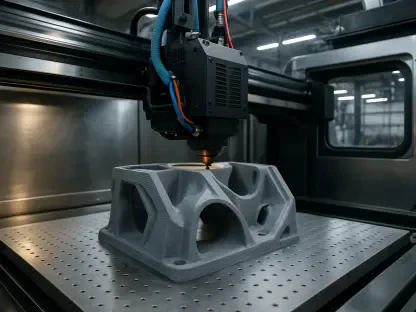

The hum of a precision lathe and the smell of cooling fluid often feel worlds apart from the sleek, glass-fronted offices where the next generation of neural networks is coded. While tech luminaries speak of a future where industrial processes are entirely software-defined, the men and women standing on the concrete floors of modern factories face a much more complicated set of variables. This year at the 3DEXPERIENCE World conference in Houston, the air was thick with a specific kind of tension: the excitement of what artificial intelligence might do tomorrow versus the grueling reality of what a production line must do today.
This disconnect is more than just a difference in professional culture; it represents a fundamental challenge for the global economy. As manufacturing enters a phase of rapid digital transformation, the industry is grappling with how to integrate “miracle” technologies without breaking the systems that already work. Bridging this gap requires moving past the soaring rhetoric of Silicon Valley to find the practical, grounded applications that actually move the needle for a small machine shop or a mid-sized aerospace supplier.
The Tension: Silicon Valley Dreams and the Factory Floor
The dialogue surrounding industrial automation often feels like a collision between two different speeds of time. On one side, leaders like Nvidia’s Jensen Huang and SolidWorks’ Manish Kumar describe a landscape where every physical component is born from a digital twin and managed by autonomous code. They present a roadmap where the most transformative AI breakthroughs are always just over the horizon, promising a world of frictionless efficiency. This vision suggests that the hardware is secondary to the software that defines it, a concept that sounds revolutionary in a keynote but daunting in a workshop.
However, the practicalities of a working production line rarely allow for such radical pivots. For a plant manager, the primary concern is not “software-defined” everything, but rather the reliability of a specific hydraulic press or the consistency of a weld. Balancing the urgency to innovate with the necessity of maintaining operational stability is a delicate act. Manufacturers are wary of “over-automation” that might introduce new points of failure, leading to a cautious approach where new tools are vetted against the unforgiving standards of physical throughput and uptime.
The Great Industrial Divide: Economic Resilience and Small-Scale Anxiety
Market shifts have created a visible rift in how different tiers of the industry approach technological risk. Larger firms, bolstered by deeper pockets and long-term strategic plans, frequently use periods of economic cooling to retool and modernize their facilities. For these giants, a downturn is an opportunity to outpace competitors by investing in the very AI ecosystems that smaller players find intimidating. They view technological adoption as a hedge against future labor shortages and a way to cement their market dominance.
In contrast, smaller shops often operate on razor-thin margins where cash flow is the ultimate arbiter of decision-making. For a business with twenty employees, the threat of market consolidation is a constant shadow, and the appetite for expensive, unproven software suites is low. Economic uncertainty acts as a primary brake on innovation; when a single failed implementation could jeopardize a company’s survival, “good enough” manual processes often beat “cutting-edge” digital ones. This divide suggests that the AI revolution will not be a rising tide that lifts all boats simultaneously, but rather a staggered rollout defined by financial cushion.
AI as an Augmentative Tool: From Design Automation to Micro-Decisions
The narrative of AI as a job-killer is increasingly being replaced by a more nuanced understanding of “augmentation.” In the design phase, AI is currently being deployed to handle the “grunt work” of engineering—automating repetitive geometry tasks and checking for interference in complex assemblies. This shift does not remove the engineer from the equation; instead, it unlocks their creativity by stripping away the clerical burdens of CAD work. The goal is to let the human focus on the “why” of a design while the machine optimizes the “how.”
On the factory floor, the most effective use of intelligence is found in what experts call “micro-decisions.” Rather than replacing a supervisor’s strategic leadership, AI is best suited for real-time machine adjustments, such as slightly altering a feed rate when a sensor detects heat buildup or pausing a cycle before a tool snaps. Devin Malone of DELMIAWorks describes AI as “sunlight”—it illuminates flaws and provides visibility into data that was previously invisible. However, sunlight alone cannot fix a broken part; it still requires a human hand to interpret the light and make the necessary repairs.
The Trust Deficit: Why Hand Calculations Still Rule the Shop
Perhaps the most significant barrier to the software-defined future is a deeply ingrained trust deficit. There is a generational skepticism regarding cloud-based solutions and the “black box” nature of AI-generated data. Many veteran engineers still find comfort in manual “hand calculations” to verify what a computer tells them. This isn’t just stubbornness; it is a form of professional accountability. If a component fails in the field, “the AI told me it was fine” is not an acceptable defense, especially in high-stakes industries where lives are on the line.
A prime example of this cautious approach is found at Best Aviation Products. While the firm utilizes advanced tools like SolidWorks for high-profile projects—including a spaceship transport platform for Virgin Galactic—they do not blindly follow the digital output. They maintain rigorous manual verification processes for every critical load-bearing calculation. This psychological barrier highlights a universal truth: for AI to truly permeate manufacturing, it must move toward transparency and verifiability, allowing users to see the logic behind the algorithm rather than just the final answer.
A Roadmap for Grounded Innovation: Building the Foundation for Future Tech
Looking ahead, the manufacturers who will thrive are those who prioritize data structure over technological “miracles.” Before a shop can leverage complex AI, it must first ensure its data is clean, secured, and accessible. This foundational work is less glamorous than a robotic arm powered by a neural network, but it is the prerequisite for any scalable digital strategy. Building organizational trust starts with small, successful implementations that prove the software can be a reliable partner rather than a disruptive interloper.
The final strategy for modern manufacturing involved the development of a “Human-in-the-Loop” framework. This approach focused on maintaining clear lines of accountability while leveraging machine speed for high-volume tasks. Industry leaders realized that the transition to a software-defined world was not about the “magic” of the code, but about how well that code served the person on the factory floor. Successful firms moved forward by treating data as a raw material, as essential as steel or aluminum, ensuring that human expertise remained the ultimate authority in the production process.