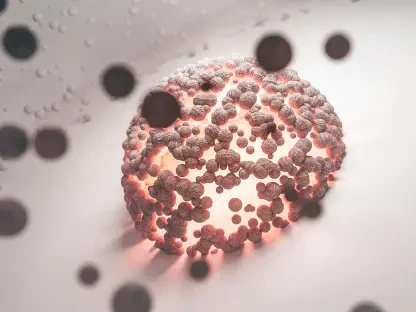

The pharmaceutical landscape is witnessing a profound shift as researchers at the University of Mississippi pioneer a method to deliver toxic chemotherapy agents with surgical precision using 3D-printed spanlastic nanocarriers. This integration of nanotechnology and additive manufacturing addresses a fundamental flaw in modern oncology: the inability to isolate the destructive power of anticancer drugs within the tumor itself without poisoning the rest of the patient’s body. By utilizing a cutting-edge technique known as Freeform Reversible Embedding of Suspended Hydrogels, or FRESH, scientists have successfully engineered biodegradable implants that house microscopic vesicles. These vesicles, known as spanlastics, act as armored transport units that protect their medicinal cargo until they reach the malignant site. This development represents a move away from generalized, “shotgun” approaches toward a localized therapy model that could fundamentally alter survival rates and patient comfort.
The Shortcomings of Traditional Oncological Treatments
Overcoming Systemic Toxicity and Low Selectivity
Standard oncological protocols have long relied on systemic administration, a process where cytotoxic drugs are introduced into the bloodstream to circulate throughout the entire human anatomy. While this method ensures that the medication reaches primary tumors and potential stray cancer cells, it lacks the biological intelligence to distinguish between a malignant growth and healthy, rapidly proliferating tissues such as the gastrointestinal lining or bone marrow. This inherent lack of selectivity causes the debilitating “collateral damage” that has become synonymous with cancer treatment, manifesting as severe anemia, total hair loss, and chronic nausea. These adverse effects are not merely quality-of-life issues; they often force clinical oncologists to reduce drug dosages to sub-optimal levels, which may ultimately allow the primary tumor to survive the treatment cycle.
Beyond the physical toll on the patient, systemic delivery is plagued by extreme inefficiencies related to how the body processes foreign chemicals. When chemotherapy agents move freely through the blood, they are immediately targeted by the body’s natural defense mechanisms, leading to rapid metabolic breakdown and premature enzymatic degradation. This low bioavailability necessitates the administration of much higher doses than would theoretically be required if the drug could be delivered directly to the source. These elevated concentrations increase the likelihood of organ toxicity and systemic shock, creating a dangerous cycle where the cure often feels as damaging as the disease itself. By encapsulating these drugs in spanlastic nanocarriers, researchers are creating a protective barrier that shields the payload from the bloodstream’s harsh environment.
Engineering Spanlastics for Enhanced Cellular Uptake
Spanlastics represent a significant evolution in vesicle technology, measuring a mere 200 to 300 nanometers in length, which allows them to navigate the complex micro-environments of the human body. These nanoscale carriers are uniquely versatile, capable of encapsulating both hydrophobic and hydrophilic molecules, which makes them compatible with a vast array of existing and experimental pharmaceutical agents. Their primary function is to serve as a biological delivery vehicle that can penetrate the dense outer membranes of cancer cells with far greater efficiency than “free” drugs. Because many of the most effective anticancer therapies must interact with molecular targets like DNA or RNA inside the cell nucleus, the ability of these spanlastics to facilitate intracellular delivery is a critical component for therapeutic success.
The precise calibration of these vesicles ensures that they do not just reach the tumor site but actually enter the malignant cells to release their concentrated payload. This mechanism effectively increases the potency of the drug at the microscopic level, meaning that smaller total amounts of medication can achieve a higher level of cancer cell destruction. Furthermore, the spanlastic structure is designed to be elastic and resilient, allowing it to squeeze through the leaky vasculature often found in tumor tissues—a phenomenon known as the enhanced permeability and retention effect. By optimizing this cellular entry, the University of Mississippi team is providing a blueprint for a delivery system that works with the body’s biological pathways rather than fighting against them, paving the way for more efficient drug utilization.
Merging Nanotechnology with Precision Biofabrication
The Role of FRESH 3D Printing in Localized Release
The integration of spanlastic carriers into a physical delivery platform is achieved through the use of FRESH 3D printing, a method that allows for the creation of soft, biological structures within a supporting hydrogel bath. Traditional 3D printing often struggles with the delicate nature of bio-materials, but the FRESH technique enables the fabrication of complex, patient-specific implants that can mirror the exact geometry of a tumor or a surgical cavity. These implants are not merely passive scaffolds; they are engineered drug reservoirs that hold the nanocarriers in place at the site of the disease. This localized approach ensures that the highest concentration of the chemotherapy remains trapped within the tumor microenvironment, preventing the drug from leaching into the general circulation where it would cause systemic harm.
This localized release strategy provides a level of control over dosage that was previously impossible with intravenous or oral medications. Once the hydrogel implant is positioned, it begins a sustained release process, slowly discharging the spanlastic-loaded medication over a period of days or weeks. This consistency eliminates the “peaks and valleys” of drug concentration typically seen with periodic injections, maintaining a steady therapeutic level that keeps the cancer cells under constant pressure. By keeping the medication confined to the target area, the “therapeutic window”—the dosage range that is effective without being lethal—is significantly widened. This allows medical teams to utilize more aggressive chemical formulations that would be too dangerous for traditional systemic administration, potentially leading to faster and more complete tumor eradication.
Validating Efficacy through In Vitro Testing
To confirm the viability of this multi-layered delivery system, researchers conducted extensive in vitro experiments using various breast cancer cell lines. The results of these studies demonstrated that the 3D-printed hydrogel constructs, when loaded with spanlastics, exerted a devastating cytotoxic effect on the targeted cancer cells while maintaining the integrity of the surrounding environment. These laboratory findings highlighted that the localized release mechanism provided superior control over the rate of cell death compared to traditional drug application methods. The study also revealed that the spanlastics remained stable within the hydrogel matrix, retaining their structural integrity and protective capabilities until the moment of release, which is vital for long-term clinical applications.
Furthermore, the data suggests that this method of delivery can overcome some of the physical barriers that often make solid tumors difficult to treat. Many tumors develop a high internal pressure and a dense extracellular matrix that repels systemic drugs, effectively shielding the inner core of the malignancy. However, because the 3D-printed implants are placed in direct contact with or inside the tumor mass, they can bypass these outer defenses. The sustained release of nanocarriers allows the drug to penetrate deeper into the heterogeneous tissue, reaching dormant or resistant cells that might otherwise cause a relapse. This capacity for deep penetration and consistent drug saturation represents a major tactical advantage in the ongoing effort to manage complex, non-operable, or highly aggressive forms of cancer.
The Future of Personalized Cancer Management
Advancing Patient Outcomes and Navigating Clinical Hurdles
The adaptability of 3D printing technology opens the door to a new era of personalized oncology where treatments are tailored to the individual anatomical and genetic profile of the patient. In the near future, clinicians could use medical imaging to map a patient’s specific tumor site and then print a custom-fitted hydrogel implant that fills the void left after a partial resection. This “bespoke” medicine approach would allow for the calibration of drug concentrations and release rates based on the specific aggressiveness of the tumor or the patient’s known drug sensitivities. Such precision minimizes the risk of treatment failure and reduces the burden on the patient’s immune system, which is often already compromised by the disease itself.
Despite the optimism surrounding these breakthroughs, the transition from successful laboratory experiments to widespread clinical adoption involves navigating several significant scientific hurdles. One of the primary areas for future investigation is the long-term biocompatibility and biodegradability of the hydrogel scaffolds. It is essential that these materials break down into non-toxic byproducts that the body can naturally excrete once the medicinal payload has been fully delivered. Additionally, researchers must conduct rigorous animal model testing to observe how these implants interact with a functioning circulatory and immune system. Understanding the pharmacokinetics—how the body absorbs, distributes, and clears these synthetic materials—is a mandatory step before human trials can be safely authorized and implemented.
Implementing Next Steps in Clinical Translation
To move this technology toward real-world application, the focus must now shift to standardizing the manufacturing process of 3D-printed nanocarriers to ensure consistency across different medical facilities. Scaling up from a controlled laboratory setting to a hospital environment requires the development of automated bio-printing systems that can produce sterile, high-quality implants on demand. Furthermore, the medical community must establish clear protocols for monitoring patients who receive these localized treatments, utilizing advanced imaging to track the degradation of the implant and the response of the tumor in real time. This data-driven approach will be necessary to refine the release profiles and ensure that the therapy remains effective throughout the entire course of the treatment.
In the final analysis, the development of 3D-printed spanlastic nanocarriers marks a departure from the one-size-fits-all mentality that has characterized chemotherapy for decades. By focusing on localized, high-potency delivery, the University of Mississippi researchers provided a path toward a more humane and effective oncological framework. Future efforts should prioritize the integration of these implants with existing surgical procedures to provide a dual-action defense against cancer recurrence. As the technology matures from 2026 toward 2030, the focus will likely remain on enhancing the “smart” capabilities of these nanocarriers, perhaps enabling them to respond to specific chemical signals within the tumor for even more precise release timing. These advancements collectively suggest that the future of cancer care was defined by the marriage of structural engineering and molecular biology.