
A critical component failure on a forward-deployed submarine thousands of miles from the nearest industrial depot represents one of the most significant logistical challenges for modern navies, potentially sidelining a billion-dollar asset for weeks or months. However, a landmark achievement under the AUKUS security partnership has demonstrated a powerful new solution to this age-old problem, leveraging shipboard additive manufacturing to produce and install a vital part on a nuclear-powered submarine operating in the Indo-Pacific. This successful initiative involving the USS Vermont not only showcased an unprecedented model for expeditionary repair but also marked a pivotal step toward creating a more agile, resilient, and technologically integrated sustainment network for allied naval forces. The event signals a fundamental shift from relying on long, vulnerable supply chains to embracing on-demand, at-sea production, a capability that could dramatically enhance operational availability and strategic advantage in contested environments.
From Digital Blueprint to Deep-Sea Application
The At-Sea Manufacturing Process
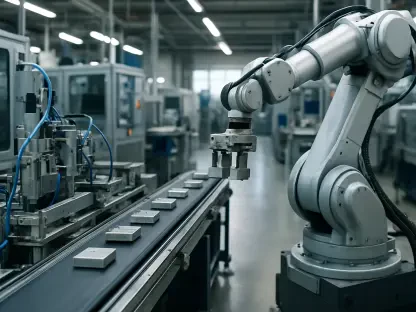
The core of this logistical breakthrough took place aboard the submarine tender USS Frank Cable while positioned in Guam, far from any major naval shipyard. There, US Navy sailors utilized a sophisticated hybrid additive and subtractive manufacturing machine to transform a digital technical blueprint into a mission-critical physical component. The part in question was a stainless-steel handwheel for a diesel fuel oil transfer valve, a seemingly simple but essential piece of equipment. In an impressively short timeframe of just six days, the team executed the entire manufacturing process at sea. This involved layering material to build the part from the ground up and then precisely machining it to final specifications, all within the confines of the tender. The operation confirmed the Submarine Force’s burgeoning capability to receive secure technical data packages remotely, fabricate complex parts in an expeditionary setting, and prepare them for delivery across the vast expanse of the Indo-Pacific, effectively turning a support ship into a mobile micro-factory.
A Seamless Trans-Pacific Installation
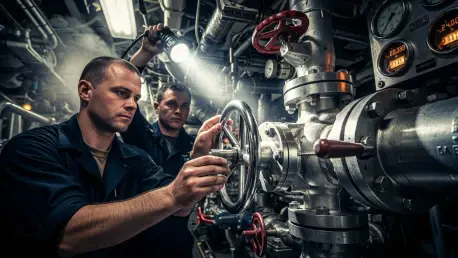
Once fabricated, the newly created handwheel embarked on a journey that further tested this new sustainment model. The component was transported from the USS Frank Cable in Guam to HMAS Stirling, a major naval base in Western Australia, where the Virginia-class fast-attack submarine USS Vermont was operating. The true test of the entire process came during the installation. In a remarkable validation of the technology’s precision, the 3D-printed part fit perfectly onto the submarine’s diesel fuel oil transfer valve on the very first attempt. This success was achieved without the need for a preliminary ship inspection or on-site measurements, a standard procedure that can introduce delays. The flawless fit underscored the high fidelity of converting a digital design into a physical object, proving that parts could be manufactured remotely with complete confidence in their specifications and functionality, thereby enabling rapid, reliable repairs that keep critical assets on station and ready for their mission.
Forging a New Era of Strategic Sustainment
Redefining the Naval Supply Chain
This successful end-to-end evolution from digital file to installed component represents more than an isolated technical victory; it heralds a paradigm shift toward a decentralized and highly responsive military supply chain. For decades, naval logistics have been defined by a centralized model, where spare parts are produced at industrial bases, stored in warehouses, and shipped over long distances to the point of need. This project demonstrated a viable alternative, empowering forward-deployed forces to manufacture their own parts on demand. By shortening part lead times from months to mere days, this capability fundamentally enhances operational readiness and reduces the logistical vulnerabilities associated with trans-oceanic supply lines. It establishes a foundational proof of concept for a more resilient sustainment strategy, one where the fleet is less tethered to its industrial homefront and better equipped to support itself during extended operations in remote regions.
A Foundation for Allied Industrial Integration
The initiative also served as a powerful catalyst for the AUKUS trilateral partnership, advancing the goal of creating a deeply integrated industrial ecosystem among Australia, the United Kingdom, and the United States. A key element of the project was the secure sharing of the component’s technical data, which allowed Australian partners to concurrently manufacture a compatible handwheel using their own traditional subtractive processes. This parallel effort successfully built confidence and established procedures for a shared, interoperable manufacturing network. It laid the practical groundwork for a future where any AUKUS nation could produce a needed part for an allied submarine, regardless of where the vessel was operating. This collaborative success created a tangible foundation for a resilient, shared industrial base, ensuring that AUKUS submarines could be supported and sustained from multiple locations across the globe, a critical step toward realizing the full strategic potential of the alliance.