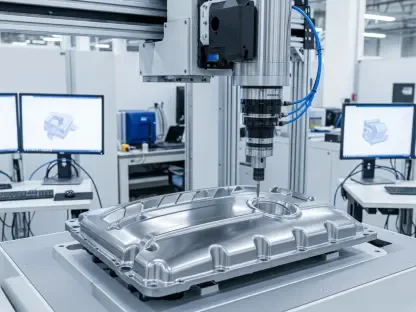

The aerospace industry is no longer merely flirting with the potential of 3D printing; it is now anchoring its most critical supply chains to the reliability of high-performance superalloys. A landmark $1.1 million purchase order from a major original equipment manufacturer for Nickel 718 powder highlights this transition, marking a definitive move toward long-term industrial integration. This commitment to high-precision Laser Powder Bed Fusion applications reflects a growing confidence in additive manufacturing for flight-critical components.
As shipments are scheduled to continue through the end of the year, the pressure on material suppliers has intensified. This single order serves as a microcosm of a much larger industrial shift, where the demand for consistent, high-grade metal powder is reaching a critical inflection point. The ability of the supply chain to meet these exacting standards will determine whether additive manufacturing can truly move from a specialized tool to a primary method of aerospace production.
Bridging the Gap: Niche Production and Industrial Volume
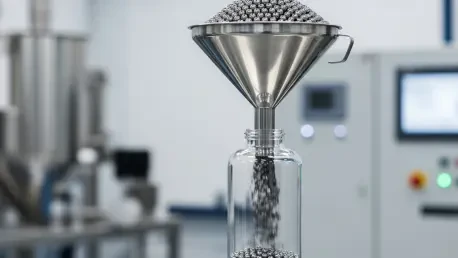
Defense and aerospace sectors are rapidly pivoting toward mass-produced 3D-printed parts, yet they face a significant bottleneck in the availability of spherical metal powders. 6K Additive is positioning itself as the solution to this scarcity by attempting to quintuple its production capacity from 200 to 1,000 metric tonnes. This aggressive expansion is designed to provide the volume necessary for large-scale industrial projects that were previously restricted by material shortages.
Stabilizing the domestic supply of strategic metals is at the heart of this growth strategy. By increasing output, the company aims to ensure that the United States maintains a competitive edge in advanced manufacturing and high-precision sectors. This shift is not just about physical expansion but about maturing the infrastructure required to support a modern industrial base that relies on speed, precision, and material integrity.
The Financial Engine: A 1,000-Tonne Expansion
Scaling a capital-intensive technology firm requires a delicate balance of public investment and private market success to maintain momentum. Following a successful IPO that generated over $31 million in gross proceeds, 6K Additive has managed to narrow its net loss while growing annual revenue to $17.7 million. These figures suggest a trajectory toward stability, providing the necessary foundation for the massive infrastructure upgrades currently underway.
Liquidity for this transition is further bolstered by a $23.4 million DPA Title III grant and a $27.4 million EXIM debt facility. These financial instruments provide a vital cushion, allowing the company to bridge the gap between a growing startup and a high-output industrial supplier. Access to such substantial capital ensures that the firm can invest in the specialized equipment needed to hit its 1,000-tonne target without compromising its research and development initiatives.
Strategic Sovereignty: The Scrap-to-Powder Revolution
Modern defense strategy increasingly prioritizes the ability to convert domestic scrap into certified, flight-ready metal powders to reduce reliance on foreign supply chains. Through a $1.95 million Phase II defense contract and support from the Defense Logistics Agency, 6K Additive has been validating a sustainable material sourcing model. This “closed-loop” approach addresses environmental concerns while simultaneously securing a local pipeline for essential high-performance alloys.
This strategy serves as a vital component of national security by insulating the production of advanced weaponry and aircraft from global trade volatility. By recycling high-value metals back into the manufacturing cycle, the company reduces waste and lowers the cost of raw materials. This circular economy model has proven particularly attractive to government partners who view material independence as a cornerstone of long-term strategic resilience.
Navigating the Execution Risks: Rapid Industrial Scaling
Moving from a pilot plant to a five-fold increase in production capacity presented a unique set of operational hurdles that went beyond mere financing. The company had to maintain rigorous quality standards and equipment reliability at a scale that was largely unprecedented for this specific technology. Successfully converting a $60 million pipeline of qualified demand into actual revenue required flawless execution in cost management and technical consistency.
Operational leaders focused on streamlining the UniMelt plasma process to ensure that the ambition of 1,000 metric tonnes did not outpace the firm’s maturity. They prioritized the standardization of production protocols to minimize downtime and prevent material contamination during high-volume runs. By establishing these robust internal frameworks, the organization laid the groundwork for a more resilient industrial future that favored localized, sustainable production over traditional, fragmented supply chains.