
The long-promised age of advanced, humanoid robotics has remained stubbornly confined to viral videos and research labs, always seeming just over the horizon. At the Consumer Electronics Show, however, an unexpected contender from the automotive world, Hyundai Motor Group, presented a remarkably concrete and comprehensive strategy to finally bridge the gap between concept and reality. Unveiling a vision under the theme “Partnering Human Progress,” the company articulated an ambitious plan to evolve from a manufacturer of cars into a leading architect of our AI-driven robotic future. This isn’t just another tech demo; it is a detailed blueprint for leveraging an entire industrial empire to develop, mass-produce, and deploy sophisticated robots designed to work alongside people in factories and, eventually, our daily lives. By positioning its own global manufacturing operations as the ultimate testbed, Hyundai aims to solve the commercialization puzzle that has eluded the robotics industry for decades, promising to bring intelligent, collaborative machines to market at an unprecedented scale.
A Unified Ecosystem for a New Era
At the heart of Hyundai’s strategy lies a concept it calls the “Group Value Network,” a synergistic integration of its diverse family of companies to forge a self-sustaining, end-to-end robotics ecosystem. This integrated model is presented as the company’s key differentiator, enabling it to control every stage of the robotics lifecycle, from fundamental research and component design to mass manufacturing, global logistics, and lifelong service. This approach directly addresses a common industry bottleneck: while many companies excel in software or hardware design, few possess the vast infrastructure required for large-scale production, validation, and deployment. The network assigns specialized roles to each affiliate to create a powerful whole. Boston Dynamics serves as the technological core, providing its world-leading robotics technology, including the humanoid Atlas robot. Hyundai Motor Company and Kia contribute their extensive global manufacturing infrastructure and sophisticated process control systems, transforming their factories into real-world laboratories for training and validation. Concurrently, Hyundai Mobis collaborates on designing and standardizing critical components like high-performance actuators for efficient mass production, while Hyundai Glovis manages the intricate supply chain and logistics necessary for both production and deployment.
This vertically integrated framework enables Hyundai to offer a complete “Robotics-as-a-Service” (RaaS) solution, a comprehensive package that extends far beyond the initial sale. The RaaS model is designed to provide customers with a one-stop shop for everything from initial deployment and integration to continuous support and maintenance. This includes regular software updates to enhance capabilities, hardware repairs to ensure uptime, and remote monitoring to preemptively address potential issues. By managing the entire lifecycle, Hyundai can guarantee a level of reliability and continuous improvement that is difficult for competitors to match. This comprehensive oversight ensures that the robots not only perform as intended upon delivery but also evolve and become more efficient over time. The data gathered from deployed units feeds back into the development cycle, creating a virtuous loop of innovation. This holistic approach transforms the robot from a simple product into an evolving service, positioning Hyundai not just as a manufacturer but as a long-term partner in its customers’ automation journeys.
Beyond Automation to True Collaboration
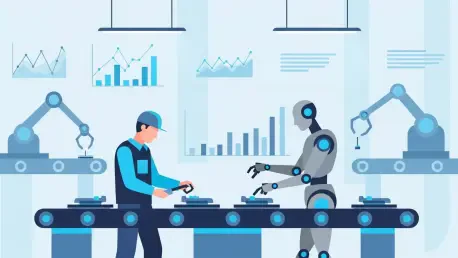
A foundational principle guiding Hyundai’s vision is that AI robotics should serve to augment and amplify human potential, not replace it. The company has carefully branded its creations as “robotics colleagues,” emphasizing a future of collaboration where humans and machines work in concert to create safer, more efficient, and more productive environments. This human-centered philosophy is a deliberate move away from the dystopian narrative of robots taking jobs. Instead, the focus is on relieving human workers of tasks that are physically demanding, repetitive, or inherently dangerous. The Atlas humanoid robot, developed by Boston Dynamics, stands as the prime example of this philosophy in action. It is engineered to perform strenuous activities, such as carrying heavy objects or operating in hazardous conditions, thereby minimizing the risk of injury and physical strain on its human counterparts. This allows people to shift their focus toward more complex, value-added responsibilities that require creativity, critical thinking, and nuanced decision-making—skills that remain uniquely human. The ultimate goal is to foster a symbiotic relationship where robots handle the grunt work, enabling humans to work smarter and safer.
To imbue these robotic colleagues with the necessary intelligence, Hyundai announced a pivotal partnership between Boston Dynamics and Google DeepMind. This strategic collaboration is built on the elegant premise of combining a “highly capable generalist body” with a “general purpose brain.” Boston Dynamics provides the advanced, agile hardware platforms like Atlas, while Google DeepMind contributes its cutting-edge Gemini robotics AI foundation models. This fusion is critical for moving beyond pre-programmed, repetitive tasks and empowering the robots with sophisticated reasoning and problem-solving abilities. The integration of advanced AI will enable the machines to understand and respond to complex, unstructured real-world environments, a crucial step for expanding their utility beyond the predictable confines of a manufacturing assembly line. This cognitive leap will allow robots to interpret ambiguous commands, adapt to unexpected obstacles, and learn from new experiences, significantly broadening the scope of applications to fields like logistics, construction, and facility management, where unpredictability is the norm.
The Path from Prototype to Production
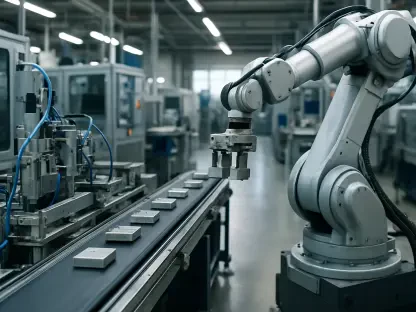
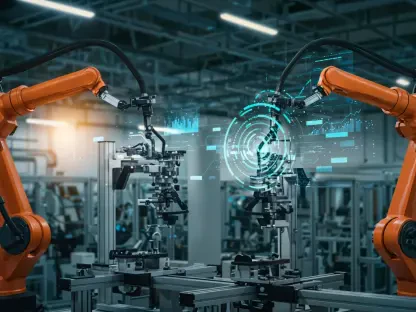
To support its ambitious robotics agenda, Hyundai is investing heavily in a new generation of smart factory infrastructure, fundamentally shifting from traditional hardware-centric manufacturing to a more agile, data-driven model. The company is at the forefront of the transition to the “Software-Defined Factory” (SDF). Unlike conventional factories where processes are locked into physical machinery, an SDF operates on a flexible software layer that allows for rapid adaptation and continuous improvement. This approach offers significant advantages, including the ability to quickly respond to market changes, reconfigure production lines with minimal downtime, and create safer work environments through deep AI integration. Before any robot is deployed into this advanced setting, it will undergo intensive training and validation at the Robot Metaplant Application Center (RMAC), a dedicated facility scheduled to open in 2026. At RMAC, robots will learn and adapt by performing tasks in authentic, simulated factory conditions, ensuring they are prepared for the rigors of the real world. Data collected from their operations in the live SDFs will then be fed back to RMAC, creating a continuous cycle of retraining and optimization that makes the robots progressively smarter, faster, and safer.
Hyundai has meticulously laid out a phased commercialization roadmap that begins with internal validation before expanding to external markets. The first and most critical step is to deploy its AI robotics solutions, including Atlas, across its own global manufacturing value chain. By testing the robots in the most demanding and precise environments imaginable—its automotive plants that aim for 9.8 million annual vehicle sales by 2030—Hyundai can prove their reliability, durability, and effectiveness at an immense scale. This strategy of “eating its own dog food” serves as the ultimate proving ground, allowing the company to refine the technology and iron out any issues before offering it to customers. The timeline for Atlas is specific and aggressive: following training at RMAC, the robots are set to begin performing sequencing tasks at the Hyundai Motor Group Metaplant America (HMGMA) by 2028, with integration into more complex assembly operations slated for 2030. Once thoroughly proven internally, Hyundai will leverage this success to expand its AI robotics applications into other key sectors, including logistics, energy, construction, and facility management, building upon existing operational partnerships with industry leaders who already utilize Boston Dynamics robots like Spot and Stretch.
The Dawn of a Robotic Reality
The comprehensive strategy unveiled by Hyundai Motor Group provided a compelling narrative for the future of AI robotics. The core finding was that the company’s plan hinged not merely on technological innovation but on the construction of an unparalleled, vertically integrated ecosystem—the Group Value Network. This approach was designed to support the entire lifecycle of robotics at a global scale. By leveraging its deep expertise in mass production, its robust network of affiliates, and its own factories as a large-scale testbed, Hyundai positioned itself to solve the commercialization puzzle that had long constrained the field. The strategic collaboration with Google DeepMind further signaled an intent to lead in both the physical and cognitive dimensions of robotics. The vision was clear: to engineer a future where safe, validated, and human-centered robots were not confined to laboratories but became integral, helpful, and trusted partners in both work and daily life.