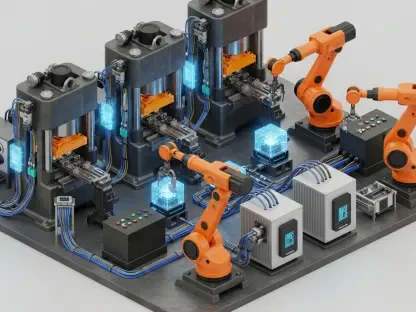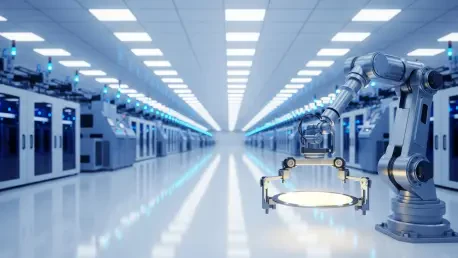

The long-held vision of a fully autonomous semiconductor fabrication plant, a “lights-out” facility operating with minimal human intervention, has often seemed more like science fiction than a practical engineering goal. This concept promises unprecedented efficiency, nearly perfect production yields, and a global supply chain immune to disruption, but the sheer complexity of chipmaking has kept it on the horizon. Now, that future is becoming a tangible reality through a groundbreaking partnership between industrial technology giant Siemens and specialty chip manufacturer GlobalFoundries. This collaboration is not merely an incremental upgrade; it is a foundational effort to build a practical roadmap, transforming the theoretical potential of artificial intelligence into a concrete blueprint for the intelligent, predictive, and resilient semiconductor manufacturing of tomorrow.
A New Blueprint for Smart Manufacturing
The Landmark Partnership Redefining the Factory Floor
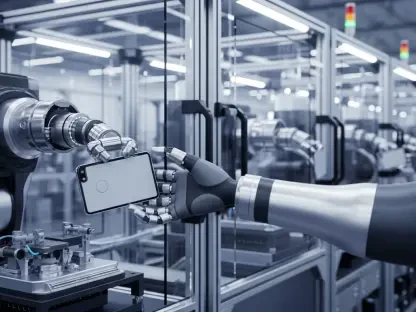
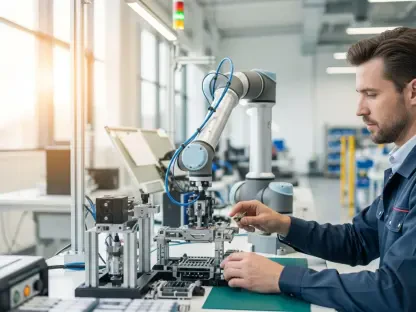
The strategic alliance between Siemens and GlobalFoundries represents a watershed moment for the application of AI in heavy industry, aiming to fundamentally re-architect the factory floor from the ground up. This initiative is built on the fusion of two distinct but complementary areas of expertise: Siemens brings its comprehensive digital industries portfolio, which includes advanced software for chip design (EDA), sophisticated manufacturing execution systems, and its industry-leading digital twin technology. GlobalFoundries, in turn, contributes its deep, specialized knowledge of semiconductor process technologies and manufacturing excellence. The core objective of their collaboration is to move beyond siloed automation and create a deeply integrated, AI-driven ecosystem that acts as a central nervous system for the entire fabrication plant. This intelligent system will be designed to orchestrate every facet of production, from robotic material handling and operational workflows to real-time production scheduling and environmental controls, thereby maximizing efficiency and setting an entirely new industry standard for what constitutes a “smart” factory.
From Reactive to Predictive AIs Paradigm Shift
For decades, the semiconductor industry has operated on a sophisticated but fundamentally reactive model of automation, where complex systems are designed to identify and respond to production issues after they have already occurred. A piece of equipment failing or a process deviating from its narrow parameters would trigger an alert, leading to downtime and potential loss of valuable wafers. The new paradigm being pioneered by Siemens and GlobalFoundries introduces a profound shift from this reactive stance to one that is both predictive and prescriptive. By deploying a vast network of advanced sensors and leveraging AI algorithms to analyze the resulting torrent of data in real time, the system can anticipate problems before they manifest. It can predict when a specific component within a manufacturing tool is likely to fail, identify subtle process variations that could lead to defects, and even initiate self-correcting actions to maintain optimal performance. This move from reacting to failures to proactively preventing them is the central innovation that promises to unlock unprecedented levels of reliability, yield, and efficiency in the complex art of chipmaking.
The Technological Pillars of the AI-Powered Fab
Digital Twins and Predictive Maintenance
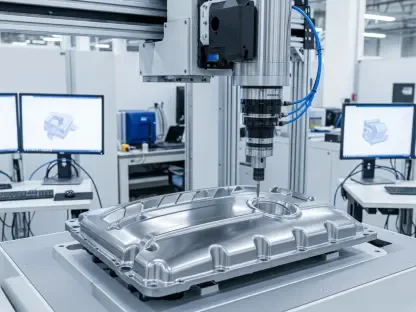
At the heart of this manufacturing revolution are two critical technological pillars: digital twins and AI-powered predictive maintenance. A digital twin is far more than a simple 3D model; it is a comprehensive, dynamic virtual replica of the entire fab, encompassing its physical layout, every piece of equipment, and all of its intricate manufacturing processes. This virtual environment is continuously updated with real-time data from the physical factory, allowing engineers to simulate, test, and optimize new workflows or equipment configurations without disrupting ongoing production. This capability drastically reduces the risk and time associated with process improvements and innovation. Working in concert with the digital twin is predictive maintenance, which uses AI algorithms to constantly monitor the health of critical machinery. Instead of relying on fixed maintenance schedules or waiting for a breakdown, the system can predict the optimal time to service a component, minimizing unplanned downtime, extending the lifespan of expensive equipment, and ensuring the factory operates at peak performance.
Boosting Yield and Sustainability
Ultimately, the success of any semiconductor fab is measured by its yield—the percentage of flawless chips produced from each silicon wafer—and its operational efficiency. Artificial intelligence is poised to deliver significant advancements on both fronts. The manufacturing process for advanced chips involves hundreds of steps, where even the slightest environmental or mechanical variation can render a multi-million dollar wafer useless. By analyzing data to identify and correct for these minute deviations, AI systems can substantially increase manufacturing yields, which is a critical factor for profitability and meeting demand, particularly for the complex processors that power AI and high-performance computing. Moreover, this partnership places a strong emphasis on sustainable manufacturing. Semiconductor fabs are among the most energy-intensive industrial facilities in the world. By implementing AI-guided energy management systems, the facility can optimize power consumption across thousands of tools and support systems in real time, significantly reducing operational costs and the factory’s overall carbon footprint, demonstrating that cutting-edge technology and environmental responsibility can go hand in hand.
Reshaping the Global Semiconductor Landscape
Competitive Edge and Market Disruption
The integration of AI into the core of semiconductor manufacturing is set to dramatically reshape the industry’s competitive landscape. For GlobalFoundries, this initiative provides a powerful competitive differentiator, offering its clients a more reliable, efficient, and predictable supply chain for their custom silicon—a crucial advantage in a market where delays can derail major product launches. This enhanced capability makes them a more attractive partner for tech companies and AI labs that depend on a seamless path from chip design to mass production. For Siemens, the partnership solidifies its position as a leader in industrial digitalization, establishing its platform as a potential industry standard for the smart fabs of the future. The ripple effect on the broader market will be substantial. Competing foundries and industrial automation providers that are slow to adopt similarly integrated, AI-driven strategies may face a significant disadvantage, as this new benchmark for manufacturing excellence could render less intelligent or fragmented factory management systems obsolete.
Geopolitics and Supply Chain Resilience
The strategic importance of this technological leap extends far beyond corporate balance sheets and into the complex arena of global geopolitics and national security. In recent years, the high concentration of advanced semiconductor manufacturing in a few geographic locations has been identified as a critical vulnerability for the global economy. In this context, the Siemens-GlobalFoundries collaboration provides a tangible pathway for Western nations to bolster their semiconductor sovereignty. By leveraging AI to make domestic manufacturing more efficient, reliable, and cost-competitive, this initiative directly supports government-led efforts to “onshore” or “friend-shore” the production of these vital components. A more geographically distributed and resilient supply chain reduces dependence on potentially unstable regions and ensures a secure supply of the advanced chips necessary for critical sectors, including defense, telecommunications, autonomous systems, and artificial intelligence, thereby strengthening both economic and national security.
The Road to Full Autonomy
The Lights-Out Fab A Glimpse into the Future
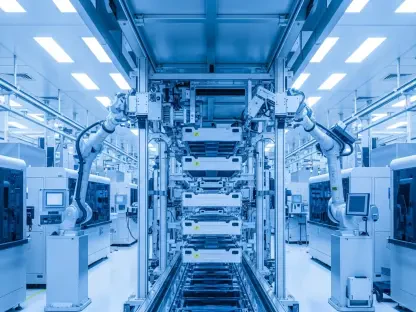
While the immediate focus is on deploying these AI technologies across GlobalFoundries’ existing network, the long-term vision of this partnership points toward the ultimate goal: the fully autonomous, “lights-out” fab. In such a futuristic facility, AI would evolve from an optimization tool to the primary operator, independently managing the entire production lifecycle with minimal human oversight. This AI would handle everything from scheduling and routing materials to real-time quality control and dynamically adapting production lines for new chip designs. The manufacturing agility unlocked by this level of automation could accelerate innovation cycles dramatically, enabling the rapid prototyping and mass production of novel chip architectures like advanced AI accelerators or brain-inspired neuromorphic processors. An even more exciting possibility is the development of “self-optimizing” chips, where real-time data from the manufacturing process is fed back into the design phase, allowing the AI to dynamically adjust parameters to maximize the performance and efficiency of the final product before it is even fabricated.
Overcoming the Hurdles to an Automated Tomorrow
The journey toward this fully automated future was understood to be fraught with significant challenges. The technical complexity of integrating these advanced AI systems with decades of legacy infrastructure in existing fabs presented an immense engineering task that required careful planning and execution. Beyond the technology, a critical hurdle was the cultivation of a new workforce, as the industry faced an urgent need for professionals possessing the sophisticated, interdisciplinary skills required to design, manage, and maintain these AI-driven factories. Finally, the creation of hyper-connected, intelligent manufacturing systems introduced heightened cybersecurity risks. It became paramount that new, exceptionally robust security protocols were developed to protect these critical industrial assets from cyber threats that could not only disrupt production but also compromise the integrity of the global technology supply chain. These were the pivotal obstacles that had to be overcome to turn the vision of the autonomous fab into a reality.