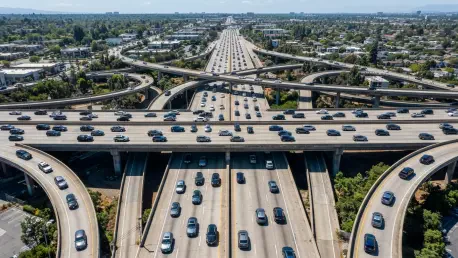

Advanced algorithmic frameworks are now capable of adjusting safety margins in real time based on the current quality of the digital signal. This technological milestone marks a departure from the traditional methods of managing highway congestion, which have long relied on the reactive habits of individual drivers. In the modern landscape of 2026, the focus has shifted toward solving the “phantom” traffic jam—those sudden, ripple-effect slowdowns caused by human reaction times. When one driver brakes, the subsequent drivers often overreact, creating a stop-and-go pattern that can persist for hours and stretch for miles. By integrating vehicles into a networked ecosystem, the industry is moving away from cars acting as isolated islands of sensor data. Instead, cloud-enabled cooperative driving allows vehicles to share their operational intent, such as a planned acceleration or an upcoming deceleration, long before it becomes a physical movement detectable by traditional radar. This proactive approach ensures that the entire flow of traffic remains synchronized, effectively smoothing out the accordion effect that plagues modern roads. As research continues to mature, the emphasis is no longer just on autonomous hardware but on the software-defined coordination that allows thousands of vehicles to move as a single, efficient organism. This transition promises to not only reduce travel times but also to enhance safety and lower the carbon footprint of transportation globally.
The Digital Infrastructure of Connected Mobility
A European Framework: The Foundation of Next-Generation Services
The development of a seamless, cloud-controlled traffic system requires more than just smart cars; it demands a robust and standardized digital backbone. This is currently being realized through the “CUBE-C” project, a vital element of the broader IPCEI-CIS initiative—the Important Project of Common European Interest for Next Generation Cloud Infrastructure and Services. This collaborative framework is designed to bridge the gap between local vehicle operations and massive, high-performance cloud nodes. In the current landscape of 2026, the focus has shifted toward building a decentralized, multi-provider infrastructure that can handle the sheer volume of data generated by thousands of vehicles simultaneously. This cloud-edge continuum ensures that computational workloads are distributed efficiently across the network, preventing any single point of failure and allowing for high-availability services. By utilizing this framework, researchers have successfully moved safety-critical tasks away from the vehicle’s limited onboard hardware and into a more powerful, scalable environment. This approach allows for a level of coordination that transcends the capabilities of individual manufacturers, creating a unified standard for how connected cars communicate with the infrastructure around them. The result is a highly resilient system that supports the complex, time-sensitive demands of modern urban mobility without sacrificing speed or reliability.
The Cloud-Edge Continuum: Balancing Energy and Performance
At the core of this transition is the strategic utilization of 5G and nascent 6G protocols, which provide the ultra-low latency necessary for vehicle coordination. By offloading complex longitudinal control calculations to edge servers, vehicles can significantly reduce their own energy consumption, which is a critical factor for the longevity of electric vehicle batteries. This synergy between connectivity and hardware allows for a thin client approach to automotive design, where the car remains a powerful machine but relies on external intelligence for high-level traffic management. Currently, the integration of these systems is focused on maintaining the continuum, meaning the transition of data between local sensors and remote cloud servers must be instantaneous and transparent. When a vehicle approaches an intersection or joins a high-speed platoon, the system dynamically allocates resources to the nearest edge node to minimize the physical distance data must travel. This geographic optimization is essential for preventing the lag that could lead to safety compromises. Furthermore, this infrastructure allows for real-time updates to control logic, ensuring that vehicles are always operating with the most sophisticated algorithms available. This removes the need for frequent physical software updates and allows the traffic network to evolve as a living ecosystem that improves its efficiency and safety profiles with every mile driven by its connected participants.
Redefining Vehicle Control through Connectivity
Proactive Systems: Moving Beyond Reactive Adaptive Cruise Control
The leap from traditional Adaptive Cruise Control (ACC) to Connected Adaptive Cruise Control (CACC) represents a fundamental change in how vehicles interact with their surroundings. Standard ACC systems are inherently limited because they only see what is directly in front of them using radar or lidar, making them reactive by nature. In contrast, CACC systems leverage the cloud to transmit and receive the intended maneuvers of all nearby connected vehicles. This means that if a car three positions ahead plans to slow down for an exit, every vehicle in the following chain is notified instantly. Instead of a series of delayed, sharp braking actions, the entire group can adjust their speed gradually and in unison. This proactive coordination effectively smooths out the velocity fluctuations that lead to stop-and-go conditions, creating a stable and predictable flow of traffic even during peak hours. Beyond the reduction of congestion, this method drastically improves the fuel and energy efficiency of the fleet. By avoiding the constant cycle of aggressive acceleration and braking, vehicles can maintain their optimal operating range for longer periods. This synchronized movement mimics the efficiency of a train but maintains the flexibility of individual personal transport, offering a vision of highway travel that is both faster and more sustainable. As of 2026, the refinement of these algorithms has reached a point where they can manage dense urban corridors with a precision that human drivers simply cannot replicate.
Robustness by Design: Engineering for Digital Uncertainty
Implementing cloud-based control in the real world requires a solution for the inevitable imperfections of cellular networks. In any digital environment, factors such as packet loss, signal interference, and fluctuating latency are common occurrences. To counter these challenges, engineers have adopted a robustness by design philosophy, creating control systems that do not assume a perfect connection. These systems utilize distributionally robust designs that factor in a range of potential network delays when calculating vehicle paths. Instead of relying on a single, static model of the environment, the software considers a spectrum of probabilities, ensuring that even if a data packet is delayed by a few milliseconds, the vehicle’s behavior remains smooth and safe. This uncertainty-aware control logic is a significant advancement over earlier, more rigid systems. It allows the vehicle to maintain a consistent safety margin that expands or contracts based on the current health of the network. If the connection quality drops below a critical threshold, the system is designed to perform a safe degradation. This process involves a seamless handoff from the cloud-based controller to the vehicle’s local, onboard sensors. The transition is managed so smoothly that the occupants rarely notice a change in driving dynamics, while the car maintains its position using traditional radar-based cruise control until the cloud connection is restored, ensuring constant safety.
Real-World Application and Scenario Validation
Operational Scenarios: Navigating Mixed-Traffic Environments
The reality of the current transition period is that roads are not yet filled exclusively with connected, autonomous vehicles. Human-driven cars, which lack the ability to transmit their intent to the cloud, will remain a staple of the transportation landscape for years to come. To address this, the current algorithmic framework is designed to excel in mixed-traffic scenarios. In these situations, the system utilizes a hybrid approach to perception and control. For other connected vehicles, the car relies on high-speed data exchanges to coordinate movement with millisecond precision. For non-connected vehicles, the car’s onboard sensor suite—comprising high-resolution cameras and long-range radar—takes over the task of monitoring and predicting human behavior. This dual-layer approach allows connected vehicles to act as stabilizers within a traffic flow. By maintaining a steady pace and smoothing out the erratic braking of human drivers, a small percentage of connected cars can prevent the formation of shockwaves for the entire group. This capability is particularly useful in congested city centers where pedestrian activity and unmapped road changes are frequent. The system effectively creates a protective buffer of intelligence around the connected vehicle, allowing it to navigate the unpredictability of human drivers while remaining tethered to the efficiency-boosting power of the cloud-edge network.
Empirical Validation: Success on the Proving Grounds
Moving these sophisticated models from the sterile environment of a computer simulation to the unpredictable conditions of a physical test track was a milestone achieved through rigorous prototyping. Recent trials have demonstrated that cloud-coordinated maneuvers are not only possible but highly effective under real-world constraints. One of the most successful tests involved the connected group start, where a line of vehicles at a simulated traffic light received a simultaneous signal to move. Instead of the typical delay where each driver waits for the car ahead to gain distance, the entire line accelerated in unison, drastically increasing the throughput of the intersection. These trials also focused on synchronized braking maneuvers, where drones were used to capture bird’s-eye footage of the fleet’s response to a simulated hazard. The data showed that the vehicles maintained their safety distances with a precision that exceeded human capability, adjusting their spacing in real time based on their velocity and the quality of the network signal. These empirical results have provided the necessary evidence that proactive-cooperative driving can withstand the rigors of physical deployment. By validating that the cloud-edge continuum can manage safety-critical motion control, the project has moved past the experimental phase and into a period of refinement for broad industrial application. The success of these trials confirms that the infrastructure and the logic are ready for more complex, large-scale deployments.
Strategic Integration and Future Pathways
Actionable Pathways: Scaling for Urban Infrastructure
To fully realize the benefits of cloud-based control, the focus must now turn toward large-scale urban integration. This requires a concerted effort between automotive manufacturers and municipal governments to deploy the necessary edge computing nodes at critical traffic junctions. City planners can leverage this technology to create smart corridors where traffic lights and vehicles communicate to optimize the timing of signals based on real-time demand. Furthermore, the ability to offload computation to the cloud provides an opportunity for smaller, more affordable electric vehicles to utilize advanced autonomous features without the need for expensive, power-hungry onboard processors. As the density of connected vehicles increases from 2026 to 2030, the efficiency gains will become exponential, allowing for the repurposing of redundant road space into green zones or pedestrian walkways. Stakeholders should prioritize the establishment of open data standards that allow for interoperability between different vehicle brands and cloud providers. This openness is essential for creating a truly unified traffic management system that serves the public good. By focusing on modular software architectures, cities can ensure that their infrastructure remains future-proof, allowing for the seamless addition of new features such as automated emergency vehicle prioritization and dynamic lane management.
Strategic Integration: Next Steps for Intelligent Transport
The successful validation of cloud-enabled cooperative control marked a definitive shift in the strategy for managing global traffic congestion. Rather than relying on expensive and invasive physical infrastructure like additional highway lanes, the focus turned toward optimizing the digital relationships between vehicles. Researchers recognized that the key to eliminating traffic jams lay in the reduction of human-induced volatility through shared intelligence. In the recent phases of development, the team proved that a decentralized cloud-edge network could safely manage high-density traffic while remaining resilient to the inherent uncertainties of wireless communication. This transition to proactive coordination paved the way for a more sustainable approach to urban planning, where vehicle throughput was maximized without the need for additional asphalt. Moving forward, the integration of these systems into municipal traffic management centers will be the next logical step for city planners. By allowing the infrastructure itself to communicate directly with vehicle fleets, cities can implement dynamic tolling, intelligent emergency vehicle routing, and automated lane management with unprecedented efficiency. Stakeholders must now prioritize the standardization of data protocols to ensure cross-manufacturer compatibility, as the true power of this technology is unlocked when every car on the road speaks the same digital language. The journey from individual reactive driving to collective proactive intelligence has demonstrated that the future of mobility is not just about the car itself, but about the invisible network that connects us all.