
As the automotive landscape shifts toward deeper integration of artificial intelligence and high-fidelity simulation, the boundary between human intuition and machine precision is blurring. Kwame Zaire, a seasoned manufacturing expert with a profound focus on production management and predictive maintenance, provides a unique lens into how the industry is preparing for a world where drivers can finally look away from the road. At the heart of this evolution is the General Motors Global Technical Center in Warren, Michigan, where the focus has shifted from merely testing a vehicle’s mechanical endurance to dissecting the physiological and psychological limits of the person behind the wheel. By leveraging immersive 360-degree environments and biometric data, Zaire explores how these simulations are paving the way for the next generation of autonomous features. This discussion delves into the transition from hands-free to eyes-off technology, the rigorous testing involving intentional distractions like mobile gaming, and the economic and regulatory hurdles that stand between today’s assistance systems and the fully autonomous luxury of tomorrow.
How do biometric markers like heart rate, sweat, and eye tracking help developers understand human stress during these high-stakes simulations?
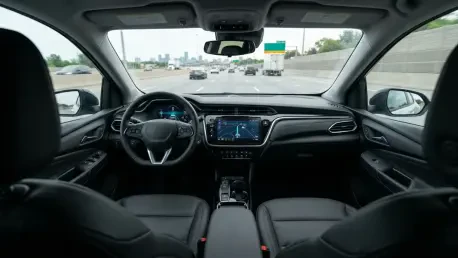
In our 360-degree immersive environments in Warren, Michigan, we are not just observing if a driver stays in their lane; we are looking for the minute, involuntary signals of anxiety or over-reliance. When a volunteer hops into a Cadillac Lyriq within the simulator, we monitor their heart rate and skin conductance to see how they physically react to a sudden downpour of virtual rain or a computer-generated construction zone. If we see a spike in heart rate or if their palms begin to sweat during a scenario where a child or a dog sprints into the road, it tells us exactly where the hand-off between the vehicle’s AI and the human driver becomes a point of friction. Eye tracking is perhaps the most critical piece of this puzzle because it shows us exactly where a driver’s attention lingers and for how long they look away before checking the horizon. By quantifying these stress responses against countless driving tests, we can refine the system’s alerts so they feel intuitive rather than alarming, ensuring the driver feels a sense of calm trust in the vehicle’s capabilities.
What does the shift from “hands-free” to “eyes-off” technology mean for the daily experience of a commuter, and how is the current infrastructure supporting that transition?
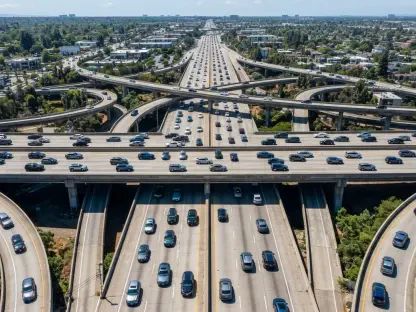
The leap from hands-free systems like the current Super Cruise, which is already operational on over 630,000 miles of roads across the U.S. and Canada, to a true eyes-off experience is the ultimate turning point for consumer value. Currently, even with your hands off the wheel, you must maintain a constant vigil, but by 2028, with the launch of the next-generation systems on the Cadillac Escalade IQ, the car becomes a mobile sanctuary. We are talking about a fundamental shift where the vehicle is so demonstrably safe that you can reclaim your time to watch a movie, answer emails on a laptop, or participate in a video meeting while moving at highway speeds. This transition is less about the mechanics of the engine and more about the sophistication of the software’s “eyes,” which must be more vigilant than any human could be. The goal is to move beyond the 20 or more GM models currently equipped with hands-free tech and reach a level of autonomy where the driver is no longer a monitor but a passenger, allowing the vehicle to handle the cognitive load of navigating complex urban and highway landscapes.
Could you elaborate on why simulation is the preferred battlefield for perfecting responses to unpredictable road hazards compared to real-world road testing?
Real-world testing is invaluable, but you cannot ethically or safely recreate a scenario where a deer jumps in front of a car at 65 miles per hour over and over again to see how a driver reacts. In the simulator, we can throw a multitude of computer-generated scenarios—unforeseen detours, active construction zones, or erratic nearby traffic—at a driver of any experience level without any physical risk. We want to take every chaotic element a customer could experience and run it through a thousand iterations to see how the technology and the human respond in tandem. This data collection, powered by artificial intelligence, allows us to see if a driver can take full control of a moving vehicle within the necessary window of a few seconds when a situation exceeds the car’s current capability. It provides a level of granularity in data—watching a driver’s reaction to a specific roadway sign or a pedestrian’s movement—that would be impossible to capture with such precision on an actual highway.
How does introducing a deliberate distraction, such as playing a mobile game like Candy Crush, serve as a scientific tool for measuring driver engagement and system safety?
It might seem counterintuitive to encourage a driver to play Candy Crush while behind the wheel, but it is actually one of the most effective ways to test how deeply a person can be pulled away from the task of driving. We find that when people are trying to get a high score, they become genuinely engaged in the digital task, which mimics the real-world distractions of a busy professional or a parent in a luxury SUV. By monitoring a researcher like Akilesh Rajavenkatanarayanan as he plays on a mounted tablet, we can measure the exact moment the system needs to issue an alert and how long it takes for him to transition his focus back to the road. We are looking for that “sweet spot” where the driver feels comfortable enough to let the vehicle do what it is capable of doing, but responsive enough to intervene if the simulator throws a curveball. If the participant reports that the system felt intuitive and they didn’t feel a sense of panic when the game was interrupted, we know we are moving closer to a production-ready eyes-off system.
Beyond the technological achievements, what are the primary regulatory and economic hurdles that automakers must overcome to make eyes-off driving a mainstream reality?
The technology is often ready before the laws are, and currently, there is a significant lack of overarching regulation that governs these advanced driver assistance systems across the board. Automakers are essentially forced to go state by state to secure approvals, which creates a fragmented map for where these eyes-off systems can actually be legally operated. From an economic perspective, the race is fueled by the potential for recurring subscription fees, as companies realize that consumers will be much more willing to pay for a feature that truly gives them their time back. Industry analysts like Sam Abuelsamid have noted that 2028 is the broad target for a whole group of companies to launch these highway-speed systems, but the success of that rollout depends heavily on the “value proposition.” If we can provide enough convenience and safety that a driver feels they can safely read a book or text without checking the road, the industry transforms from a one-time hardware sale into a long-term service relationship.
What is your forecast for the evolution of autonomous driving features over the next few years?
I anticipate that by 2028, we will see a decisive shift where the leading luxury electric vehicles transition from assisting the driver to actively replacing the driver’s attention on most major highways. As we move toward the launch of the next generation of Super Cruise on platforms like the Escalade IQ, the focus will intensify on “eyes-off” certification, which will require a level of sensor redundancy and AI processing that we are only just beginning to see in production models. We will see a more aggressive expansion of these features across diverse vehicle lineups—from GMC to Buick—as the cost of the necessary hardware decreases and the software becomes more adept at handling “edge cases” like sudden weather changes. Ultimately, the successful automakers will be those who bridge the trust gap, ensuring that the transition between the car’s AI and the human driver is so seamless that the “driver” no longer feels the need to hover over the controls, effectively turning the morning commute into the most productive hour of the day.