
We’re joined today by Kwame Zaire, a thought leader in production management with deep expertise in electronics, equipment, and advanced manufacturing. His work on predictive maintenance and quality control offers a critical perspective on the industrial challenges facing high-stakes sectors. We’ll be exploring the ambitious goal of transforming additive manufacturing from a prototyping tool into a robust, scaled production engine for the defense and aerospace industries, focusing on how a new, integrated factory model aims to solve long-standing bottlenecks in qualification, speed, and reliability for mission-critical components.
The defense industry has long sought to move additive manufacturing from prototyping to scaled production. What are the primary bottlenecks in this transition, and could you walk me through the specific steps Hadrian Additive will take to ensure its output is qualified, repeatable, and ready for mission-critical systems?
The biggest hurdle has always been trust. For years, additive manufacturing has lived in the lab, excelling at creating one-off prototypes but failing to deliver the consistent, reliable output needed for something like a fighter jet or a missile system. The core bottleneck is the gap between a validated design and a truly industrialized process. It’s one thing to print a part; it’s another thing entirely to print the thousandth part exactly like the first, with a fully traceable and verifiable history. At Hadrian Additive, the approach is to bake qualification into the DNA of the factory from day one. This means engineering the entire system—not just the printers—for repeatability. We will rigorously define and control every variable, from powder sourcing and handling to the thermal management inside the machine, and then lock those parameters down. The goal is a process so disciplined that every component comes off the line with a digital birth certificate, proving it meets the stringent requirements for national security applications.
Your model integrates additive manufacturing directly into a single, end-to-end factory environment. Can you describe how this integration creates efficiencies compared to traditional supply chains? Please provide a step-by-step example of how a part would move from design validation to scaled additive production within this system.
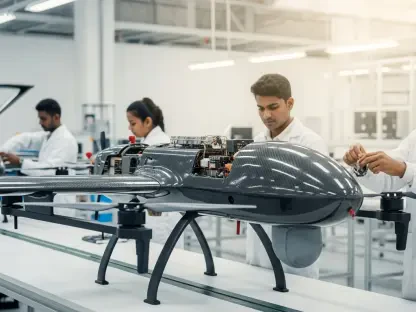
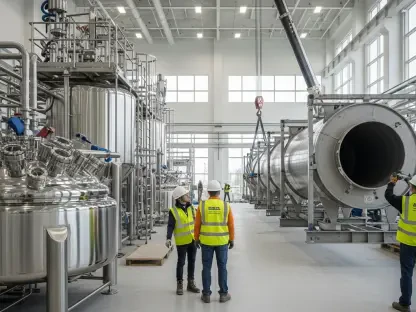
Absolutely. The traditional defense supply chain is incredibly fragmented. A part might be forged at one facility, machined at another, treated at a third, and inspected at a fourth. Each handoff introduces delays, risks, and paperwork. By integrating additive manufacturing directly into our Opus factory platform, we collapse that entire chain. Imagine a critical bracket for a drone needs to be produced. Once the design is validated, it enters our digital system. Instead of sending purchase orders out to multiple vendors, the file is routed directly to a qualified AM machine on our factory floor. The part is printed, and because it’s in the same environment, it can immediately move to post-processing, heat treatment, and final inspection—all under one roof and tracked by a single digital thread. This eliminates weeks, if not months, of logistical headaches and creates a seamless flow from digital file to mission-ready hardware, which is a game-changer for speed and security.
The concept of “industrializing” additive manufacturing is central to your mission. What specific metrics define a truly industrialized AM system capable of meeting defense needs? And, drawing on your experience, could you share an anecdote that illustrates how you will ensure speed and reliability in execution?
“Industrialized” means moving beyond the art and into the science of production. The key metrics are sustained throughput, unwavering quality, and absolute traceability. It’s not about how fast one machine can print a part; it’s about how many qualified parts the factory can deliver per month, every month, without deviation. The system must be capable of scaling on demand. I’m reminded of my time in the Army, where readiness is everything. You can’t tell a commander you need another six weeks to get a part; the mission happens now. That “mission-first” discipline is what we’re building into the factory. It’s about having pre-qualified processes and materials ready to go, so when a defense program says they need to scale production, we can execute immediately. It’s a shift from a reactive, bespoke process to a proactive, reliable production capacity that our partners can depend on when it matters most.
With initial capacity expected in 2026, what are the most critical engineering and process qualification challenges you must solve over the next two years? Please explain the key steps involved in building out a factory stack that ensures the reliability, quality, and traceability required for national security programs.
The next two years are all about disciplined execution. The biggest challenge isn’t just buying machines; it’s building the integrated “factory stack” around them. The first step is deep process industrialization. This involves selecting specific large-format AM platforms and then developing incredibly detailed qualification plans for the materials and parameters we’ll use. We’re talking about characterizing everything to an almost microscopic level to guarantee repeatability. The second key step is building the digital infrastructure. This software layer is the central nervous system of the factory, providing the traceability needed for defense programs. Every batch of powder, every machine calibration, every sensor reading during a build will be logged and tied to the final part. Finally, we must work hand-in-hand with standards organizations and customers to ensure our qualification data is not just robust, but also fully accepted, paving the way for a smooth transition into production for priority programs in 2026.
What is your forecast for the role of additive manufacturing in the US Defense Industrial Base over the next decade?
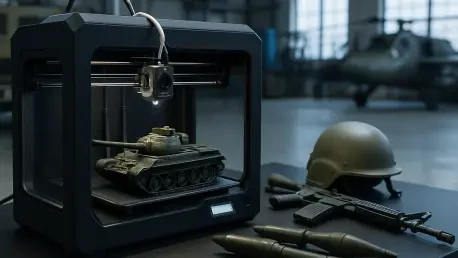
Over the next decade, additive manufacturing will transition from a strategic advantage to a strategic necessity for the US Defense Industrial Base. It will no longer be a niche technology for complex, low-volume parts. Instead, it will become a foundational pillar for strengthening domestic supply chains, enabling rapid innovation, and providing on-demand production capacity that can surge when needed. We’ll see entire subsystems redesigned to leverage the benefits of AM, resulting in lighter, stronger, and more capable military hardware. The ability to print parts in a secure, end-to-end domestic factory will significantly reduce reliance on fragile global supply chains and empower us to respond to national security needs with unprecedented speed and agility. It’s about building a more resilient and responsive industrial base, and industrialized AM will be at the very heart of that transformation.