
The relentless acceleration of Artificial Intelligence is placing an extraordinary and unsustainable demand on the physical infrastructure that powers it, creating a direct confrontation between the digital future and the limitations of the material world. As AI-driven data centers consume energy at an exponential rate, the manufacturing sector responsible for producing their critical power systems is struggling to keep pace, revealing deep-seated vulnerabilities in a supply chain built for a slower, more predictable era. This has created a critical bottleneck where the very progress of the AI revolution is being throttled by the capacity of factories to deliver essential components. To break this impasse and sustain the current trajectory of innovation, the manufacturing industry must undergo a fundamental transformation, leveraging the same intelligent, automated technologies it is being called upon to support, thereby becoming an active enabler of the new digital age rather than a passive constraint.
The Critical Bottleneck: Why Traditional Manufacturing Can’t Keep Up
The Energy Tsunami and the Supply Chain Crisis
The explosive growth in AI has triggered an energy demand of unprecedented scale, with projections indicating that data centers in the United States alone could consume as much as 12% of the nation’s total electricity by 2028. This rapid escalation has sent shockwaves through a manufacturing supply chain that was engineered for steady, incremental growth, not the hyper-scaling required by the current AI boom. The most acute problem lies in the procurement of the foundational power-transmitting equipment essential for any data center. Critical hardware, such as industrial switchgear, Power Distribution Units (PDUs), and backup power generators, which are necessary to manage and deliver safe, reliable electricity, are now in critically short supply. This scarcity has created a chokepoint that directly impedes the construction and expansion of the very infrastructure needed to advance AI technologies, turning a production issue into a direct inhibitor of digital progress.
The consequences of this supply chain disruption are being felt across the technology sector, as lead times for this essential power equipment have dramatically increased from a matter of months to several years. This is not merely a logistical inconvenience; it represents a fundamental brake on the AI revolution, stalling multi-billion dollar data center projects and delaying the deployment of next-generation computational power. The prolonged waiting periods are a direct result of a manufacturing ecosystem that is ill-equipped to handle the sudden, massive surge in demand. This crisis highlights the fragile interdependence between the digital and physical worlds, demonstrating that the speed of AI development is now inextricably linked to the production capacity of factories. Until the manufacturing sector can adapt its processes to match the pace of AI’s growth, this bottleneck will continue to widen, threatening to slow innovation across the board.
Systemic Weaknesses: Legacy Systems and the Labor Gap
The roots of the current manufacturing slowdown extend deep into the operational models that have defined the industry for decades. A significant portion of the sector remains reliant on outdated, legacy production systems that were never designed for the agility and scalability required in the age of AI. These rigid systems lack the flexibility to pivot quickly or ramp up production to meet sudden spikes in demand, creating inherent inefficiencies that are now being exposed. This problem is compounded by a historical dependence on extended, offshore supply chains. While globalized production once offered cost advantages, it has now become a significant liability, introducing logistical complexities, geopolitical risks, and long lead times that are simply untenable when data center developers require components on an accelerated timeline. These systemic weaknesses have left the industry vulnerable and unable to respond effectively to the urgent needs of its fastest-growing customer.
Further exacerbating these operational challenges is a severe and deepening shortage of skilled labor, which poses one of the most significant long-term threats to the industry’s ability to evolve. Recent analysis warns that the manufacturing sector will need to fill as many as 3.8 million new jobs between 2024 and 2033 to keep pace with demand. However, without a major intervention to cultivate new talent, an estimated 1.9 million of these critical roles could remain unfilled. This talent gap is not just about a lack of manpower; it represents a deficit in the specific skills required to operate and maintain the modern, automated systems that are essential for building the factories of the future. The inability to attract and train a new generation of technicians, engineers, and programmers directly constrains production capacity and slows the adoption of the very technologies that could solve the existing bottlenecks.
Building the Solution: The Rise of the Smart Factory
Engineering for Speed and Precision
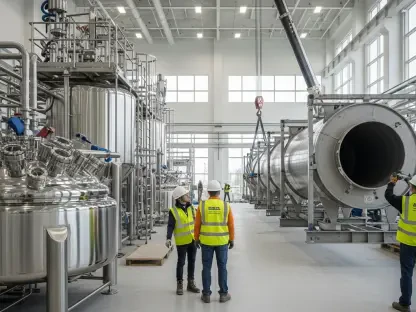
In response to these immense pressures, the manufacturing industry is undergoing a radical re-engineering of its core processes, with a focus on speed, efficiency, and unwavering quality. A cornerstone of this transformation is the widespread adoption of modular and prefabricated systems. Instead of constructing complex power infrastructure entirely on-site, manufacturers are now building standardized, pre-tested power modules in a controlled factory environment. These containerized systems and configurable switchgear are built concurrently with on-site data center preparation, allowing them to be shipped and integrated with remarkable speed. This approach not only slashes project timelines but also enhances quality and consistency by moving complex assembly into a highly controlled setting. Furthermore, the inherent modularity of these designs provides data centers with unprecedented scalability, enabling them to add, swap, or upgrade power components as their needs evolve without requiring a complete system overhaul.
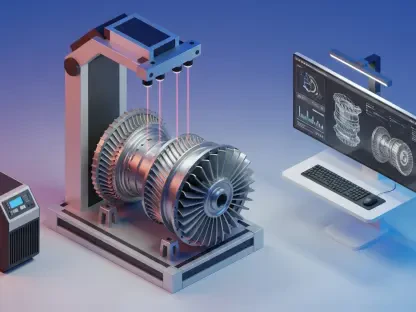
This physical transformation is being mirrored by a digital one, driven by the implementation of AI-powered “digital twins.” These sophisticated virtual replicas of products and production lines allow manufacturers to simulate and analyze the performance of components under a vast range of conditions before any physical manufacturing begins. By subjecting virtual models of switchgear or PDUs to simulated temperature fluctuations, varying voltage loads, and potential fault scenarios, engineers can identify and rectify design flaws with incredible precision. This predictive capability minimizes production defects, optimizes material usage, and ensures that the final products are robust enough to meet the stringent reliability demands of high-density data centers. This shift from reactive, post-production quality control to proactive, pre-production validation marks a fundamental evolution in manufacturing philosophy, ensuring that reliability is engineered into the product from its very inception.
Automating for Efficiency and Reliability
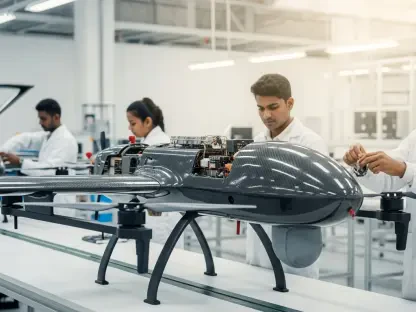
To counteract the persistent labor shortage and dramatically improve production efficiency, factories are integrating advanced automation into every facet of their operations. Technologies such as Autonomous Mobile Robots (AMRs) and Autonomous Guided Vehicles (AGVs) are now navigating factory floors, streamlining heavy assembly processes and handling tasks that could be unsafe or overly strenuous for human workers. This intelligent automation is not about replacing the human workforce but augmenting its capabilities. By taking over repetitive and physically demanding duties, these systems free up skilled technicians to focus on more complex, value-added responsibilities, such as quality oversight, system diagnostics, and process optimization. This collaborative model fosters an environment of upskilling and reskilling, transforming the role of the factory worker and creating a more dynamic and efficient production ecosystem.
The immense financial and operational cost of data center downtime has also catalyzed a revolution in quality control, shifting the emphasis from in-field fixes to rigorous, pre-deployment validation on the factory floor. Modern smart testing and simulation technologies now enable manufacturers to subject power equipment to the same fluctuating, high-density loads they will experience in a live data center environment. This process ensures that every component is “battle-tested” and its performance is validated before it ever leaves the factory, significantly reducing the risk of failure after installation. This commitment to front-loaded quality assurance is critical for building the trust and reliability that the AI industry demands. By ensuring that power systems are proven to be resilient under real-world conditions, manufacturers are not just delivering a product but a guarantee of operational continuity.
Reinforcing the Ecosystem: Resilient Supply Chains and a Skilled Workforce
The intense demand from the data center industry has laid bare the vulnerabilities of long, intricate global supply chains, making agility an imperative for survival. In response, a powerful movement towards regionalization is reshaping the manufacturing landscape. Through strategic onshoring and nearshoring initiatives, companies are creating more compact and resilient supply chain networks that are less susceptible to geopolitical disruptions and logistical delays. This localization, combined with a focus on modular product designs, shortens lead times, reduces transportation costs, and fosters a more robust and responsive supply ecosystem capable of adapting to the fast-changing demands of the technology sector. This strategic pivot is not a retreat from global trade but a calculated effort to build a more secure and reliable foundation for domestic production.
While technology and automation are essential catalysts for change, manufacturers recognize that human expertise remains the indispensable core of the modern factory. To address the critical talent gap, leading companies have stopped waiting for the workforce to come to them and are instead proactively building it. They are forging deep partnerships with vocational schools, community colleges, and technical training programs that specialize in industrial technology, electrical trades, and robotics engineering. Through these collaborations, manufacturers are directly influencing the curriculum, providing state-of-the-art equipment for training, and creating internship and apprenticeship programs. This direct engagement ensures that the next generation of technicians and engineers is equipped with the specific skills needed for modern, automated assembly lines, building a robust and direct talent pipeline that will power the industry’s future growth.