
For decades, industrial automation has been defined by powerful but rigid robots confined to cages, endlessly repeating a single task, a model that has left a staggering 70% of the manufacturing world—the dynamic, high-variation realm of discrete manufacturing—largely untouched. This vast, underserved market represents the industry’s biggest challenge and its greatest opportunity, a space where human dexterity and adaptability have remained irreplaceable. Now, a new generation of mobile, intelligent robots is emerging to fill this critical gap, promising to bring human-like flexibility and intelligence directly to the factory floor. At the forefront of this revolution is Sages Intelligence, a Shanghai-based robotics company that is rapidly proving the commercial viability of this new paradigm. Having recently secured hundreds of millions of yuan in fresh funding, the company is not just developing futuristic concepts; it is deploying advanced multi-arm robotic solutions that are already solving real-world problems for industry giants, signaling a major inflection point where automation’s potential is finally aligning with modern industrial demands.
The Technological Leap Beyond Traditional Automation
The Brains Behind the Brawn
The core of Sages Intelligence’s distinct advantage lies in its proprietary, vertically integrated technology stack, which provides a level of intelligence and responsiveness that traditional systems cannot match. The company made the strategic decision to develop its own robot operating system, SAGE-OS, and an integrated controller, SAGE-Brain, from the ground up. This integration creates a seamless, low-latency closed-loop system where perception, decision-making, path planning, and motion control are unified into a single, cohesive architecture. This approach fundamentally breaks free from the pre-programmed rigidity that has long bottlenecked industrial automation, enabling a new level of operational autonomy. By controlling the entire software and hardware ecosystem, the company ensures that its robots can perceive, decide, and act in real-time, adapting to the dynamic and often unpredictable conditions of a modern factory floor without the delays or compatibility issues that plague systems cobbled together from third-party components.
This advanced software foundation powers a formidable and versatile hardware lineup, including single-arm, double-arm, and even four-arm robots mounted on Autonomous Mobile Robot (AMR) platforms. The true innovation, however, is realized through the sophisticated integration of multi-modal sensory inputs, including high-definition vision, precise mechanics, and even voice recognition. This allows the robots to accurately identify, locate, and manipulate complex parts and workpieces within chaotic and unstructured environments. This capability is further amplified by a self-developed VLAS large model and underlying motion control algorithms, which enable the company’s multi-arm systems to perform intricate assembly and inspection tasks with a remarkable precision of ±0.05mm. This level of accuracy, combined with environmental awareness, rivals the dexterity and adaptability of a skilled human worker, opening the door for automation in tasks that were previously considered impossible to automate effectively.
A New Breed of Worker
The advanced technology developed by Sages Intelligence places its robots in an entirely different category from those produced by traditional manufacturers like FANUC, whose machines have long dominated the industrial landscape. While a classic industrial robot excels in the highly structured, repetitive environment of a fixed production line—such as welding car bodies—it is rendered ineffective when faced with the “small batches, multiple varieties” manufacturing model that defines modern industries from new energy vehicles to consumer electronics. Sages’ embodied intelligent robots are engineered specifically to thrive in these flexible settings. They are not bolted to the floor but are designed to operate more like human workers, possessing the mobility to move between workstations, the versatility to perform a diverse range of tasks, and the intelligence to perceive and adapt to their surroundings. This distinction is crucial, as it addresses the core limitations that have prevented automation from penetrating the majority of the manufacturing sector.
This human-like operational logic represents a paradigm shift in how automation is implemented on the factory floor. Instead of designing a production line around the robot’s limitations, these embodied intelligent robots are designed to integrate into existing human-centric workflows. They can navigate complex spaces, collaborate with human colleagues, and switch between tasks as production needs change. This adaptability is powered by a sophisticated three-layer intelligence framework encompassing “body intelligence, group intelligence, and large-scale intelligence,” allowing individual units to perform complex tasks while also coordinating with other robots as part of a larger, cohesive system. By creating a new breed of robotic worker that combines the strength and precision of a machine with the flexibility and awareness of a person, Sages Intelligence is finally unlocking the potential of automation for the 70% of the manufacturing industry that has been left behind.
From Innovation to Commercial Success
A Proven Business Model
Unlike many high-growth technology startups that operate at a loss while pursuing scale, Sages Intelligence has achieved a rare and impressive feat: it has been consistently profitable for multiple years while maintaining staggering growth. The company has sustained an impressive annual revenue growth rate of between 50% and 120% in recent years and projects an accelerated growth of 300% for the upcoming year, a testament to the powerful and immediate market demand for its flexible automation solutions. This strong commercial performance demonstrates that its embodied intelligent robots are not just a technological marvel but a financially sound investment for manufacturing enterprises. This proven viability, supported by a current annual shipment volume of approximately one thousand units, has fueled an aggressive expansion of its production capacity, with a near-term goal of reaching 5,000 units per year to meet the escalating demand from both domestic and international markets.
This remarkable profitability is underpinned by a shrewd, value-based business model designed to provide customers with a clear and rapid return on their investment. The cost of each robot is carefully benchmarked against the wages of the human workers it is designed to replace or supplement, allowing clients to achieve full cost recovery within an exceptionally brisk timeframe of 1.5 to 2 years. This compelling ROI makes the adoption of advanced automation an accessible and logical financial decision for a wide range of businesses. This attractive pricing is made possible by the company’s disciplined cost controls, which stem directly from its strategic decision to develop its core operating system and controller in-house. Furthermore, a modular, “Lego-like” design philosophy simplifies production and maintenance, while sophisticated algorithms are used to compensate for minor hardware imperfections, reducing reliance on expensive high-precision components and thereby lowering the overall cost of production.
Strategic Market Penetration
Sages Intelligence has executed a methodical and highly effective “Capture, Benchmark, Expand” go-to-market strategy to establish its presence in a competitive landscape. The company began by targeting and successfully penetrating leading enterprises in the most demanding sectors, specifically automotive and 3C electronics, where production needs are complex and constantly evolving. By securing and delivering successful projects for high-profile, blue-chip clients like Li Auto, Johnson & Johnson, and Mitsubishi, Sages established powerful benchmarks and compelling case studies. These initial deployments in challenging, real-world environments served as irrefutable validation of its technology’s reliability, performance, and financial benefits. This success created a powerful ripple effect, building a strong reputation for excellence and driving the adoption of its solutions among a wider base of mid-sized and small customers looking to follow the lead of industry giants.
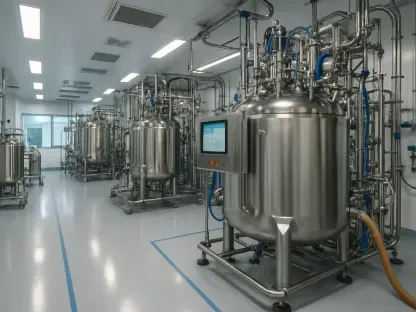
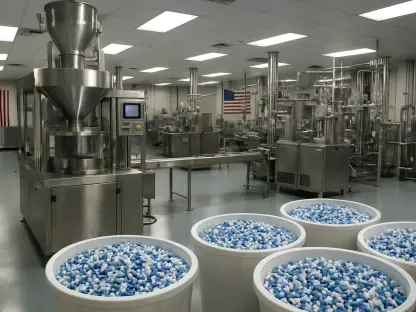
With a strong foothold now established in its initial target markets, the company is systematically expanding its reach into other high-potential industrial scenarios, showcasing the versatility and broad applicability of its robotic platform. Sages Intelligence is now adapting its solutions for new and complex applications in the rapidly growing new energy sector, which requires flexible automation for battery and component manufacturing. It is also making significant inroads into biopharmaceuticals, where its robots are being deployed for critical tasks such as sterile sorting and laboratory automation that demand both precision and compliance with stringent regulations. Furthermore, the company is exploring opportunities in high-end food and medicine production, where consistency and hygiene are paramount. This strategic sectoral expansion not only diversifies the company’s revenue streams but also demonstrates its potential to become a foundational automation technology across the entire manufacturing landscape.
The Road Ahead and Global Ambitions
The company’s future roadmap is firmly focused on deepening its technological leadership while simultaneously accelerating its expansion across the globe. Technologically, Sages Intelligence will continue to advance its “body intelligence, group intelligence, and large-scale intelligence” framework, enhancing the collaborative and autonomous capabilities of its robotic fleets. A key milestone in this endeavor is the planned launch of a next-generation embodied intelligent robot next year, which is expected to introduce even greater multi-task collaboration capabilities for operation in highly complex and dynamic settings. This commitment to continuous innovation ensures that the company will remain at the cutting edge of industrial automation, consistently delivering more value and solving increasingly difficult challenges for its customers.
The strategic moves and technological breakthroughs Sages Intelligence achieved have positioned it for a significant push onto the world stage. A major strategic priority for the coming years is the acceleration of its global layout, with an ambitious goal to increase the share of its overseas revenue from the current 20% to approximately 50%. To realize this vision, the company is actively strengthening its local presence by establishing comprehensive sales, technical support, and service centers in key international markets. This expansion is already underway, with a strategic focus on high-growth regions including Southeast Asia, Mexico, Europe, and the Middle East. By building a robust global network, Sages Intelligence ensured it was not only prepared to meet the rising international demand for intelligent automation but was also cementing its status as a definitive global leader in the new era of manufacturing.