
The precision required to build a rocket engine capable of withstanding the immense forces of a space launch now finds a new home on the automotive assembly line, forging an unexpected but powerful connection between aerospace and the family sedan. This link is being solidified through a landmark partnership between South Korean aerospace firm Innospace and automotive giant Hyundai, promising to infuse car manufacturing with a level of quality control once reserved for orbital mechanics. The collaboration centers on transferring the microscopic precision of aerospace engineering to the mass production of vehicles.
The Pursuit of Perfection on the Factory Floor
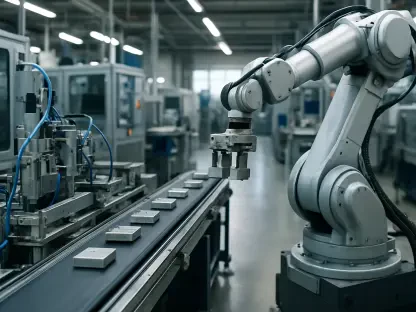
In the hyper-competitive auto industry, consistency is king. Manufacturers constantly battle the challenge of ensuring every component meets identical, stringent quality standards. While advanced methods like metal Additive Manufacturing (AM), or 3D printing, offer incredible design freedom, they also introduce a significant complication. The process generates a flood of data from different machines and processes that is notoriously difficult to track, making uniform quality a considerable hurdle for even the most advanced factories. This data fragmentation prevents a holistic view of the production cycle, creating inconsistencies that can compromise the final product.
A Tech Transfer From Launchpad to Assembly Line
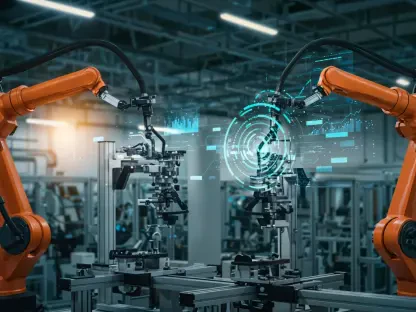
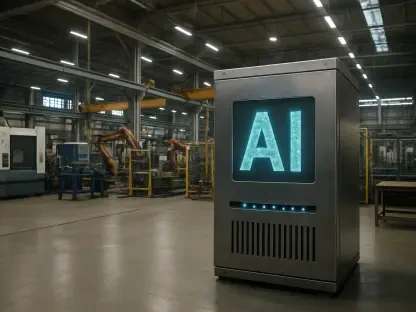
At the heart of the Hyundai deal is Innospace’s INNO AM-X, a sophisticated control solution originally designed for the unforgiving environment of space launch vehicles. It functions as a central nervous system for manufacturing, a unified platform integrating scattered data on equipment status, process conditions, and component quality into a single, real-time dashboard. This system effectively bridges the information gap that plagues modern manufacturing floors by collecting and visualizing data that was previously isolated.
For an automaker like Hyundai, this technology transforms production from a reactive to a predictive process. Instead of relying on fragmented information and post-production checks, engineers can now use a centralized data hub for systematic management and data-driven decision-making. This ensures the reliability once reserved for rockets is applied directly to car parts, raising the bar for quality and safety across the board. The system’s implementation allows for the immediate identification of deviations, enabling corrections before defects are mass-produced.
Validating Rocket Science for Terrestrial Use
This partnership serves as a major endorsement of Innospace’s expertise in process stability and quality tracking. It demonstrates that the meticulous standards required for space travel have tangible, high-value applications here on Earth. The company’s CEO, Kim Soo-jong, views the technology as a “competitive advantage applicable across various industries,” positioning the Hyundai deal as the crucial first step in proving that aerospace precision has a lucrative place in terrestrial manufacturing. The successful deployment in a demanding sector like automotive manufacturing provides a powerful case study for its effectiveness.
A Blueprint for a New Industrial Revolution
The collaboration showcases an astute business model: Innospace is strategically expanding beyond its core focus on space vehicles to establish a new revenue stream by selling its proprietary AM solutions. This move highlights how specialized tech companies can leverage their niche expertise to penetrate and innovate within broader markets, turning highly specific knowledge into a versatile commercial asset. This diversification not only strengthens Innospace’s financial base but also accelerates the adoption of cutting-edge technology in other fields.
This is not a one-off deal. Innospace is actively targeting other high-reliability sectors, including defense and energy, that demand the same uncompromising level of quality management. This strategy signals a wider trend of cross-industry innovation, where the solutions developed for space exploration are becoming the foundational tools for building a more advanced, reliable, and efficient world on Earth. The technology transfer from space to ground-level industries represented a pivotal moment, showing how investments in aerospace yielded dividends far beyond the launchpad.