
Engineers at the Massachusetts Institute of Technology are confronting two of the planet’s most formidable challenges—the escalating plastic waste crisis and the critical need for affordable housing—with a single, paradigm-shifting solution. By pioneering a method to transform discarded, low-value plastic into high-performance structural components, they are laying the groundwork for a future where our refuse could become the very foundation of our homes. This groundbreaking research leverages large-scale 3D printing to create load-bearing floor trusses from recycled materials, presenting a sustainable and robust alternative to traditional timber construction. This initiative not only rethinks the lifecycle of waste but also offers a tangible blueprint for a more resilient and environmentally responsible building industry, addressing urgent socio-environmental issues through advanced engineering and material science.
A New Blueprint for Building Materials
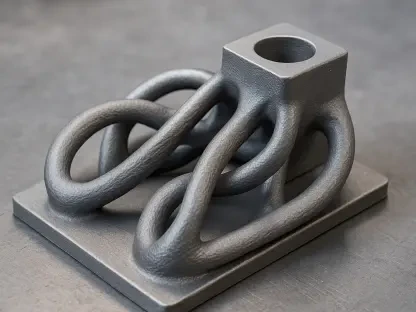
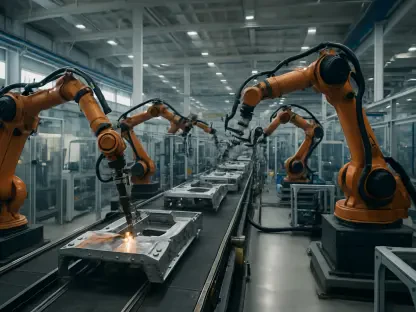
At the heart of this innovation lies a specialized, industrial-grade 3D printer engineered for high-volume output, capable of processing up to 80 pounds of material per hour. The manufacturing process begins with the shredding of recycled plastic, which is then thoroughly mixed with glass fibers to create a novel polymer composite. This blend is crucial, as it enhances both the structural integrity and the printability of the material, resulting in components that are exceptionally strong yet remarkably lightweight. The printer meticulously deposits this composite layer by layer to fabricate complex structural elements with unparalleled speed and precision. This method establishes a scalable and efficient pathway for converting a global environmental liability into a valuable construction asset, demonstrating how advanced manufacturing can provide practical solutions to complex problems.
One of the most significant breakthroughs of this project is its capacity to utilize “dirty” plastic—materials contaminated with residues that typically render them unsuitable for conventional recycling. Most recycling streams require plastics to undergo a thorough and expensive cleaning process, a step that consumes significant resources and energy. The MIT team’s methodology circumvents this requirement, enabling the use of contaminated plastics that would otherwise be destined for landfills. This capability dramatically expands the pool of usable raw material and makes the concept of decentralized micro-factories a viable possibility. Such facilities could be established near sources of plastic waste, converting landfill-diverted materials directly into ready-to-use construction components and streamlining the supply chain.
From Digital Design to Proven Strength
Before any material was printed, the research team employed sophisticated computer simulations to meticulously design a floor truss that optimized its stiffness-to-weight ratio. While its geometry was inspired by the structural layout of a traditional wooden truss, the final design was engineered specifically for the unique properties of the recycled plastic composite. This digital-first approach ensured that the end product would be both materially efficient and structurally superior, allowing for enhanced performance characteristics to be built in from the initial concept. This careful optimization process highlights the synergy between computational design and advanced manufacturing, enabling the creation of components that are not just substitutes for traditional materials but improvements upon them.
The resulting 3D-printed trusses stand as a powerful testament to the efficiency and potential of this manufacturing process. Each truss weighs a mere 13 pounds and can be fabricated in less than 13 minutes, a production speed that showcases the potential for rapid, on-demand construction. This velocity could revolutionize building timelines, enabling the swift assembly of housing frameworks and significantly reducing the logistical complexities and costs associated with transporting conventional, heavier building materials to construction sites. To validate their innovative design, the researchers subjected the plastic trusses to a series of rigorous load-bearing tests. The outcomes were extraordinary: a single truss demonstrated the capacity to support over 4,000 pounds of weight. This level of performance far exceeds the stringent standards for residential flooring set by the U.S. Department of Housing and Urban Development, confirming that these components are a viable and superior replacement for traditional wood beams and metal connecting plates.
Laying the Foundation for a Circular Future
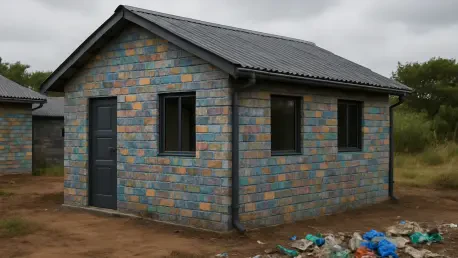
This pioneering project represents a crucial advancement toward establishing a truly circular economy within the construction industry. With a projected global need for one billion new homes by 2050, the continued reliance on timber as a primary building material threatens to accelerate widespread deforestation and its associated environmental consequences. By upcycling the immense and growing reserves of existing plastic waste into a primary feedstock for construction, this technology offers a direct and sustainable solution. It simultaneously addresses the critical challenges of landfill overflow and resource depletion, effectively mitigating the ecological footprint of new development and paving the way for a more environmentally conscious approach to building.
The long-term vision for this technology extended far beyond its initial application, signaling a potential transformation of construction logistics and a direct response to global housing inequality. The capability to print essential structural components rapidly and on-site using locally sourced waste empowered communities to build affordable and resilient housing with unprecedented speed. This model proved especially promising for disaster-stricken regions in need of rapid-response shelters and for underserved areas facing chronic housing shortages. The principles developed in this study, which successfully demonstrated that discarded plastic could be transformed into robust and lightweight housing components, provided a tangible blueprint for the future of sustainable construction. This initiative exemplified how creative technological application could address critical global needs, pointing toward a future where our homes were built not just for shelter but as integral parts of a sustainable economy.