
The immense capital investment required for industrial-grade additive manufacturing has historically created a significant barrier, effectively reserving its most advanced capabilities for large corporations with substantial research and development budgets. Small and mid-sized enterprises, often the engines of innovation, have been left to experiment with desktop-grade printers, unable to bridge the gap between prototyping and true production-level manufacturing. This disparity has stifled growth and limited the ability of smaller firms to compete on a level playing field, forcing them to rely on traditional, often slower and more expensive, manufacturing methods. A new, service-oriented model is now emerging to dismantle this barrier, offering on-demand access to a state-of-the-art 3D printing factory and fundamentally changing how businesses approach product development, tooling, and short-run production. This shift is not just about renting machine time; it represents a strategic pivot toward agile, low-risk innovation for companies of all sizes.
Democratizing Advanced Manufacturing
A New Model for Innovation
A groundbreaking initiative is now providing a low-risk pathway for businesses to harness the power of industrial additive manufacturing without the prohibitive upfront costs. By operating as a fee-for-service provider, a specialized Digital Transformation Center (DTC) has opened its doors to all manufacturers, engineering firms, and tech companies, not just a select group of members. The core mission of this strategic expansion is to help businesses evolve beyond simple experimentation and leverage 3D printing for tangible, real-world production applications. This model effectively democratizes access to cutting-edge technology, allowing small and mid-sized companies to innovate and compete directly with larger industry players. It provides a platform for validating new product designs, scaling manufacturing operations, and producing complex tooling or short-run parts on-demand. This approach removes the substantial financial and operational burdens associated with purchasing, housing, and maintaining sophisticated industrial printing systems, which can often run into hundreds of thousands of dollars.
From Concept to Production Parts
The transition from a theoretical design to a functional, market-ready part has been significantly streamlined through this accessible manufacturing model. Companies can now leverage production-grade capabilities precisely when they need them, allowing them to maintain full control over their proprietary designs and process knowledge without the necessity of owning a fleet of printers. According to Pavan Muzumdar, a key figure in the initiative, this system empowers businesses to tap into advanced manufacturing for specific projects, ensuring they only pay for the services they use. This on-demand access is crucial for validating new products in a cost-effective manner, producing limited runs for market testing, or manufacturing custom jigs, fixtures, and other tooling that would be impractical with traditional methods. By removing the capital expenditure barrier, the model encourages a more agile and iterative approach to product development, enabling companies to respond swiftly to market feedback and bring innovations to market faster than ever before.
Inside the Digital Transformation Center
A Hub of Sophisticated Technology
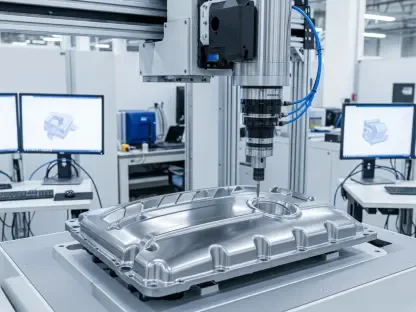
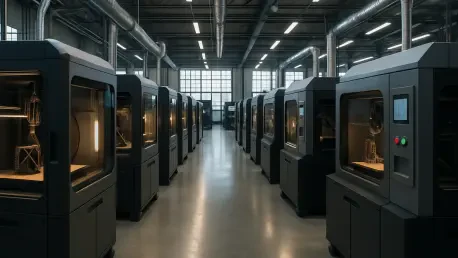
Located in Auburn Hills, Michigan, the Digital Transformation Center stands as a testament to the power of modern additive manufacturing, equipped with a diverse array of industrial-grade systems. The facility offers a range of sophisticated technologies tailored to different manufacturing needs. This includes polymer powder-bed fusion, utilizing SAF® technology for producing durable and detailed plastic parts at scale, and large-format thermoplastic FFF/MEX printing, ideal for creating large components or prototypes. For metal applications, the center provides directed energy deposition (DED), a process capable of printing or repairing complex metal parts with high-performance alloys. The support infrastructure extends far beyond the printers themselves. The center provides a comprehensive suite of services, including professional post-processing to achieve desired surface finishes, as well as advanced inspection and validation tools to ensure every part meets stringent quality standards. A dedicated technical team is also on hand to offer direct support, guiding clients through the entire process.
Seamless and Secure Workflow
The operational framework of the center is meticulously designed to prioritize security, ease of use, and collaboration. Companies can initiate the production process by submitting their digital designs through a highly secure online portal, which ensures that sensitive intellectual property remains protected at all times. Upon submission, clients receive transparent and detailed quotes, eliminating any ambiguity regarding costs. A crucial element of the service is the collaborative partnership with the center’s technical experts, who work with clients to select the ideal materials and manufacturing processes best suited for their specific applications and performance requirements. Every order is meticulously managed through secure digital workflows that not only protect proprietary information but also establish a repeatable, high-quality standard for any future production runs. This structured and secure approach provides businesses with the confidence to outsource critical manufacturing tasks while retaining full ownership and control over their innovation and design data.
The Future of Agile Production
The emergence of accessible, on-demand additive manufacturing hubs marked a pivotal moment for countless small and mid-sized businesses. This model dismantled long-standing financial barriers and fundamentally altered how companies approached innovation and production. It provided a low-risk environment where firms could validate new concepts, produce complex tooling, and execute short-run manufacturing without the burden of massive capital investment. The ability to tap into a state-of-the-art digital factory fostered a new era of agility, enabling businesses to shorten their product development cycles and respond to market demands with unprecedented speed. This shift not only leveled the competitive landscape but also strengthened local supply chains, demonstrating that advanced manufacturing could be a powerful, democratized tool for economic growth and resilience.