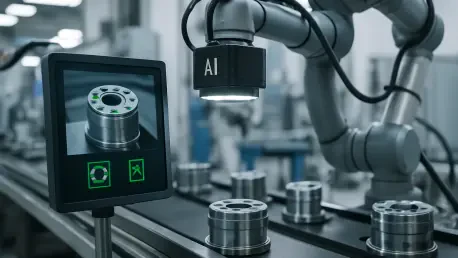

The competitive landscape of global manufacturing is currently witnessing a transformative shift as sophisticated artificial intelligence migrates from the exclusive laboratories of industrial giants into the hands of mid-sized production facilities. For many years, the primary obstacle to achieving zero-defect production was not a lack of desire, but rather the prohibitive cost and immense technical complexity associated with traditional machine vision systems. These legacy setups often required bespoke engineering, clean-room environments, and a permanent staff of vision specialists to maintain fragile, rule-based algorithms. Today, the emergence of compact, self-contained benchtop automated inspection systems, exemplified by platforms like those from Sciotex, is breaking these historical barriers. By consolidating high-resolution imaging, precision lighting, and neural-network-based processing into a single workstation, manufacturers can now implement “incremental automation” that targets specific quality bottlenecks without the need for a total factory overhaul or multi-million-dollar capital expenditures.
Transforming Production Through Versatile Automation
Essential Inspection Capabilities and Technical Roles
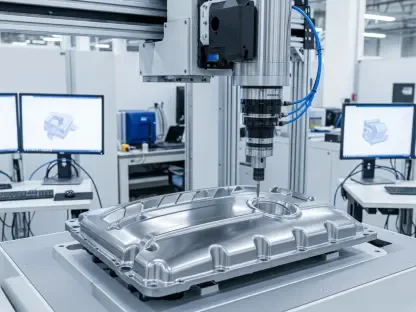
Modern benchtop inspection systems are designed to function as versatile workstations that replace subjective human judgment with repeatable, high-precision analysis across various production stages. One of the most critical roles these systems play is in surface defect detection, where AI-powered vision models are trained to identify subtle irregularities like hairline scratches, microscopic dents, or chemical contamination on complex textures. Unlike older systems that struggled with glare or natural material grain, modern neural networks learn to distinguish between acceptable cosmetic variations and genuine structural flaws. This capability is particularly vital in industries such as aerospace and medical device manufacturing, where a single surface imperfection can lead to catastrophic component failure or non-compliance with stringent regulatory standards.
Furthermore, these systems provide a level of dimensional verification that ensures every manufactured part adheres to strict geometric tolerances through high-resolution non-contact measurement. By utilizing telecentric lenses and advanced edge-detection algorithms, a benchtop unit can verify lengths, diameters, and hole placements with micron-level accuracy in a matter of milliseconds. This prevents “out-of-spec” components from migrating further down the assembly line, which is a major driver of cost savings by reducing the volume of scrapped finished goods. Additionally, feature validation ensures that every secondary component, such as labels, fasteners, or threaded inserts, is present and correctly oriented. This multi-layered approach to inspection transforms the quality department from a reactive gatekeeper into a proactive contributor to the overall efficiency and reliability of the production process.
Strategic Implementation Across the Lifecycle
The strategic deployment of automated workstations occurs at three pivotal junctures to ensure that quality is “baked into” the product rather than just checked at the end. At the initial stage, incoming inspection units verify the quality of raw materials and sub-components received from external suppliers, effectively preventing faulty stock from entering the internal value stream. This is a critical safeguard in an era of globalized supply chains where material consistency can fluctuate significantly. By catching vendor errors at the loading dock, companies avoid wasting labor and machine time on parts that are destined for the scrap bin, thereby protecting their internal margins and maintaining high throughput.
During the actual build process, intermediate inspections act as a “sanity check” between complex assembly steps to detect errors as they happen, allowing for immediate correction or redirection. This real-time feedback loop is essential for high-mix, low-volume production environments where the cost of a mistake grows exponentially with every added layer of assembly. Finally, a rigorous end-of-line check serves as the ultimate safeguard before a product is packaged and shipped to the end customer. This final layer of defense significantly reduces the risk of expensive product returns, warranty claims, and the long-term erosion of brand reputation. By distributing these “inspection nodes” throughout the facility, manufacturers create a resilient safety net that captures deviations at the earliest and least costly point of discovery.
Simplifying the Path to Smart Manufacturing
The Evolution from Programming to AI Training
The transition from traditional rule-based programming to modern AI training represents a fundamental democratization of technology that empowers the existing workforce. In the past, changing a production line required a vision engineer to spend days rewriting thousands of lines of code to account for new part geometries or lighting conditions. In contrast, today’s AI-driven platforms utilize example-based training methodologies that are intuitive enough for floor operators and quality technicians to manage without a computer science degree. By simply presenting the system with a series of images labeled as “good” or “bad,” the underlying neural network autonomously learns the defining characteristics of quality, making the system far more adaptable to the frequent product changeovers common in agile manufacturing environments.
This shift toward autonomous learning also eliminates the “brittleness” that plagued earlier generations of machine vision, where a slight change in ambient factory lighting could trigger a wave of false rejects. Because modern AI models are trained on diverse datasets, they develop a robust understanding of what a part should look like, even under varying environmental conditions. This resilience reduces the time required for system calibration and troubleshooting, allowing the quality team to focus on optimizing the inspection process rather than fighting with the software. Consequently, the barrier to entry for advanced automation is no longer a matter of hiring specialized talent, but rather a matter of leveraging the deep domain expertise of the current staff to “teach” the machines how to recognize excellence.
Building the Foundation for Data-Driven Intelligence
Beyond the immediate task of identifying defects, automated inspection systems serve as critical data nodes that feed into the larger ecosystem of the “Smart Factory.” Every part that passes through a benchtop workstation generates a digital footprint that includes high-resolution imagery and precise measurement data, which is then aggregated for long-term trend analysis. This shift into Industry 4.0 allows manufacturers to move beyond simple “pass/fail” metrics toward sophisticated root-cause analysis and predictive process monitoring. For example, if the system detects that a specific dimension is slowly drifting toward the edge of a tolerance limit over several hours, it can alert maintenance teams to calibrate a specific CNC machine before it ever produces a non-conforming part.
Moreover, the wealth of data captured by these systems provides a level of transparency that was previously impossible in manual inspection environments. Management can now generate detailed quality reports with a single click, providing a factual basis for continuous improvement initiatives and supplier performance reviews. This transition to data-centric manufacturing ensures that every decision on the factory floor is backed by empirical evidence rather than anecdotal observation. As these systems become more integrated with Enterprise Resource Planning (ERP) and Manufacturing Execution Systems (MES), the data they provide becomes the lifeblood of a highly optimized, self-correcting production environment that can respond dynamically to the demands of the modern global market.
Enhancing Human-Machine Synergy
Empowering the Workforce Through Advanced Augmentation
The integration of AI into the quality control process is not a strategy for labor replacement, but rather a sophisticated method of human augmentation designed to eliminate the physical and mental strain of repetitive tasks. Manual visual inspection is notoriously exhausting; studies have consistently shown that human accuracy begins to degrade after only twenty minutes of high-intensity observation due to “vigilance decrement.” By delegating the high-speed, repetitive checks to an automated system, human inspectors are freed from the drudgery of looking for microscopic scratches and can instead focus on higher-value activities. This includes investigating the systemic causes of recurring defects and designing more robust manufacturing workflows that prevent errors from occurring in the first place.
This synergy between machine consistency and human intuition creates a far more resilient quality ecosystem than either could achieve in isolation. While the AI provides 24/7 consistency and high-speed data processing, human experts provide the contextual understanding and creative problem-solving skills necessary to handle “edge cases” or unusual production anomalies. This collaborative approach also improves workplace morale by removing the high-stress, high-consequence burden of manual inspection from the workforce. Instead of being the “bottleneck” at the end of the line, quality personnel become the strategic managers of an intelligent system, using their expertise to refine the AI’s training and drive the facility toward a state of continuous, data-backed operational excellence.
Ensuring Scalability and Future Readiness
As the manufacturing industry continues to evolve, the democratization of AI ensures that high-level quality control remains a standard capability for any firm, regardless of its size or capital budget. The reduced physical footprint of benchtop systems allows even small job shops to implement advanced automation without sacrificing valuable floor space or undergoing expensive facility modifications. This scalability is a vital component of long-term business strategy, as it allows companies to start with a single inspection station and gradually expand their automated footprint as production volumes grow. By lowering the financial risk and technical hurdles associated with entry-level AI, these platforms provide a clear path for small and mid-sized enterprises to compete on an even footing with larger corporations.
Looking ahead, the widespread adoption of these accessible AI tools will likely redefine the global standards for manufacturing quality and supply chain transparency. Companies that embrace these technologies today are positioning themselves to meet the increasing demands for traceability and precision that define the modern industrial landscape. Actionable next steps for manufacturers include conducting a thorough audit of current manual inspection points to identify the most significant sources of human error and “bottleneck” delays. By selecting a pilot project—such as an incoming part check or a complex final assembly validation—businesses can demonstrate the immediate ROI of benchtop automation and build the internal momentum necessary for a broader digital transformation. The shift toward automated, data-centric quality is no longer a distant trend but a present-day necessity for any organization committed to remaining relevant in a competitive, high-tech world.