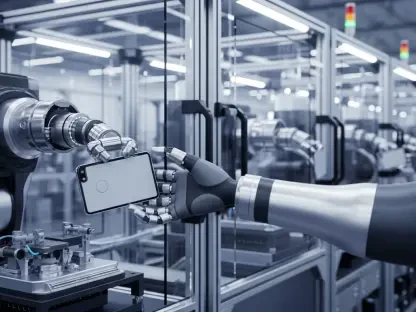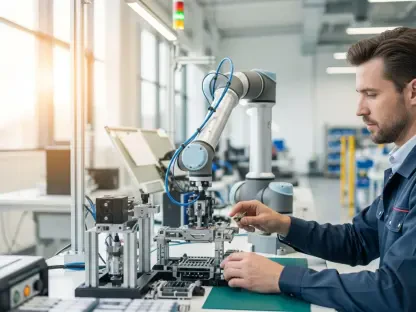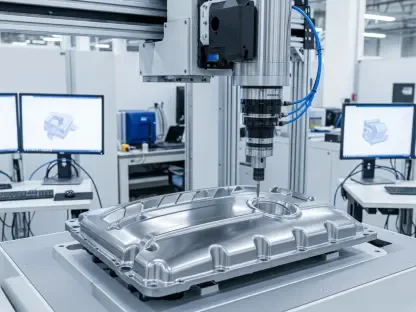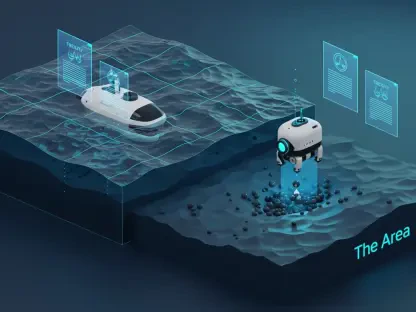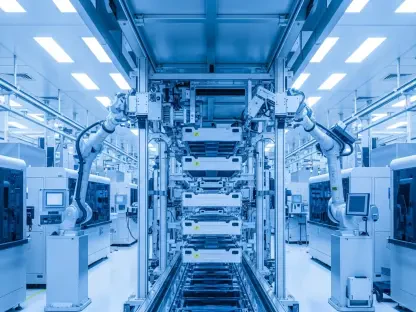

The familiar hum of the factory floor is now accompanied by the silent, powerful data streams of interconnected digital twins, fundamentally reshaping how products are conceived, built, and maintained in an era defined by rapid innovation. Traditional Computer-Aided Design (CAD) workflows, long the bedrock of precision engineering, are proving insufficient to meet the dynamic demands of a hyper-connected industrial landscape. The evolution toward interactive, collaborative, and immersive digital environments requires a parallel evolution in the core competencies of engineering teams. This shift is not a distant future trend but a present-day reality, driven by the practical application of the industrial metaverse—an ecosystem of real-time simulations and virtual platforms transforming the entire product lifecycle. For manufacturing leaders, the decision to upskill their workforce has transcended operational consideration and become a critical strategic imperative. The pressing choice they face is whether to proactively lead this transformation by investing in new capabilities or to react defensively when competitive pressures and shifting market expectations become insurmountable. Embracing this evolution is now foundational to competitive survival, innovation velocity, and the long-term viability of the business in a global marketplace that waits for no one.
The Widening Skills Gap in Modern Engineering
From Documentation to Real-Time Interaction
A significant and growing skills chasm has emerged within the ranks of modern engineering teams, creating a critical bottleneck for innovation. For decades, the pinnacle of CAD proficiency was the ability to create meticulously detailed 2D drawings and precise 3D models destined for the manufacturing line. While these skills remain essential, they are no longer the complete picture. The new industrial paradigm demands engineers who can translate these high-fidelity manufacturing models into lightweight, performant assets suitable for real-time 3D environments. This requires a completely different set of competencies, including a deep understanding of game engine technologies, advanced optimization techniques for interactive performance, and the specialized workflows needed to prepare complex CAD assemblies for use in virtual and augmented reality applications. Most engineering departments currently lack this specialized expertise, forcing them to either abandon ambitious digital projects or outsource critical visualization tasks at great expense, slowing down development cycles and limiting their ability to leverage next-generation platforms for a competitive edge.
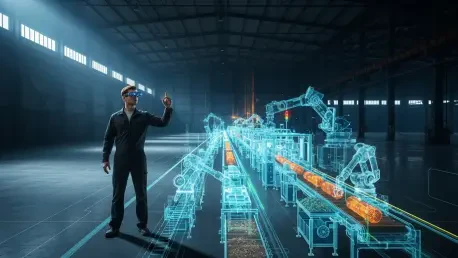
This transformation extends far beyond individual technical abilities, demanding a profound cultural shift in how teams collaborate and communicate. The traditional, asynchronous process of circulating static documents and screenshots for review is being replaced by synchronous, immersive design sessions where stakeholders can collectively interact with and manipulate a photorealistic digital prototype. In these virtual environments, an engineer from Chennai, a marketer from New York, and a client in Berlin can simultaneously walk around, inspect, and even operate a digital twin of a new machine. This dynamic requires engineers to develop new soft skills in real-time communication, cross-functional teamwork, and client presentation. They must move from being creators of documentation to being facilitators of interactive experiences, guiding stakeholders through complex designs in a way that is intuitive and immediately understandable. This new mode of collaboration breaks down departmental silos, accelerates decision-making, and allows for the identification of potential design flaws or ergonomic issues that would be impossible to spot on a 2D drawing, fundamentally changing the nature of product development.
The High Cost of Inaction
Failing to address this burgeoning skills gap carries a steep and immediate price, acting as a powerful brake on innovation and market responsiveness. The most visible cost is financial, manifesting in a heavy and often unsustainable reliance on specialized external vendors and visualization agencies. Every time a company needs a high-quality animation for a marketing campaign, an interactive 3D configurator for its sales team, or a virtual reality training simulation for its technicians, it is forced to export its proprietary CAD data and commission an outside firm. This process is not only expensive, with individual projects often running into tens or hundreds of thousands of dollars, but it is also slow and cumbersome, introducing significant delays into product launches and marketing initiatives. This dependence on third parties creates a reactive posture, where the company is always playing catch-up, unable to produce compelling digital content at the speed the market demands. The cumulative effect is a drain on operational budgets and a significant opportunity cost, as resources are diverted away from core innovation and toward paying for skills that should ideally reside in-house.
Beyond the direct financial drain, the strategic consequences of inaction are far more severe and potentially existential. In an increasingly digitized global supply chain, the inability to participate in collaborative digital workflows can lead to being designed out of major contracts. Competitors who can provide customers with interactive digital twins and immersive product experiences are setting a new standard for B2B engagement, making static PDFs and traditional sales presentations look obsolete. This digital divide risks not just the loss of individual sales but a gradual erosion of market share and brand relevance. Internally, the skills gap stifles the very innovation it is meant to support. Without the ability to rapidly prototype and validate ideas in virtual environments, the product development lifecycle remains slow and risk-averse. The promise of identifying design flaws early, optimizing factory layouts virtually, and training technicians on complex procedures in a safe, simulated environment remains unrealized. Ultimately, the cost of inaction is not merely a line item on a budget; it is a slow and certain path toward obsolescence in an industry that is being fundamentally reshaped by digital transformation.
Mastering the Art of CAD Optimization
Beyond Simple Polygon Reduction
A core technical discipline required to power the industrial metaverse is the sophisticated optimization of complex CAD assets for flawless real-time performance. The models engineers create for manufacturing are marvels of precision, often containing millions of polygons, NURBS surfaces, and intricate internal components designed to guide CNC machines and assembly robots. However, this same level of detail makes them completely unsuitable for interactive applications like VR design reviews or AR maintenance guides. Attempting to load a raw CAD assembly into a real-time rendering engine results in catastrophic performance, with frame rates dropping to an unusable crawl. The solution is a strategic simplification process that goes far beyond rudimentary “polygon reduction” or decimation. True optimization is a craft that blends engineering knowledge with artistic technique to preserve critical visual fidelity and key dimensional accuracy while dramatically reducing the computational load. It is a meticulous process of rebuilding geometry, not just removing it.
This specialized skill set involves a multi-faceted approach to data transformation. One key strategy is the creation of multiple Level-of-Detail (LOD) versions of an asset, where a highly detailed model is shown up close, but the system automatically swaps in simpler versions as the viewer moves further away, maintaining performance without a perceptible loss in quality. Another critical technique is texture baking, where the complex surface details of a high-polygon model—such as rivets, seams, and material textures—are “baked” into efficient image maps, like normal maps. These maps can then be applied to a much simpler, low-polygon model to create the illusion of high detail at a fraction of the performance cost. Furthermore, skilled optimizers must make strategic decisions about which features are essential for visualization versus those only needed for manufacturing, intelligently restructuring assemblies and removing hidden internal components to ensure efficient loading and manipulation in the virtual environment. This is not an automated, one-click process; it requires an engineer who understands both the design intent and the constraints of real-time rendering.
Maintaining the Single Source of Truth
While creating a lightweight, optimized asset is a critical step, its value is immediately compromised if it becomes disconnected from the original engineering data. The most significant risk in digital manufacturing workflows is the creation of divergent data streams, where the beautiful, interactive model used by the sales team does not reflect the latest critical design change made by the engineering department. This disconnect can lead to disastrous consequences, such as a customer configuring a product with features that have been deprecated, or a service technician using an AR overlay that shows an outdated assembly procedure. To prevent this chaos, it is imperative to establish and maintain a robust link between the optimized visualization asset and the master “source of truth” CAD data. This crucial connection ensures that the entire organization is operating from a single, consistent, and up-to-date dataset across the entire product lifecycle, from initial concept to end-of-life servicing.
Achieving this requires more than just careful file management; it demands the implementation of sophisticated data pipelines and product lifecycle management (PLM) systems that automate the flow of information. An ideal workflow ensures that when an engineer checks in a design change to the master CAD file, this action automatically triggers a process to update the corresponding lightweight visualization assets. This maintains data integrity and ensures that all downstream applications—whether it be a sales configurator, a VR training module, or a factory floor digital twin—are always reflecting the most current version of the product. This “single source of truth” philosophy is the backbone of a successful digital transformation. It prevents costly errors, eliminates redundant work, and fosters trust in the digital tools being used across the organization. Without this foundational principle, the industrial metaverse risks becoming a collection of impressive but dangerously inaccurate digital mirages rather than a reliable extension of the physical world.
The Business Case for Upskilling
Quantifying the Return on Investment
Investing in upskilling engineering teams to master CAD optimization and real-time workflows delivers a clear, compelling, and multifaceted return on investment that extends far beyond the engineering department. The most direct financial benefit comes from a drastic reduction in operational expenditures. By bringing visualization capabilities in-house, companies can slash or eliminate their reliance on expensive external agencies for creating marketing animations, trade show experiences, and sales presentations. The ability to repurpose a single, optimized CAD asset for numerous use cases—from a website product viewer to an immersive VR demo—creates incredible efficiency. For a mid-sized manufacturing firm, these savings can easily reach six-figure sums annually, transforming a significant cost center into a streamlined internal process. Moreover, this in-house capability dramatically accelerates time-to-market. Immersive, real-time design reviews allow teams to validate concepts and identify potential flaws in a matter of days, a process that traditionally took weeks of building physical prototypes or circulating static design documents, getting products into the hands of customers faster.
Beyond cost savings, these new skills become a powerful engine for revenue generation and competitive differentiation. In the modern B2B marketplace, customers have come to expect sophisticated digital buying experiences. A company that can provide an interactive, web-based 3D configurator, allowing a potential buyer to customize a product in real-time and visualize it from every angle, holds a significant advantage over a competitor still relying on static catalogs and PDFs. These immersive tools are not novelties; they are powerful sales enablers that increase customer engagement, shorten sales cycles, and demonstrably improve conversion rates. Furthermore, this capability allows a company to build stronger, more collaborative relationships with its clients. By inviting customers into immersive design review sessions, manufacturers can co-create solutions, ensuring the final product perfectly meets their needs. This level of partnership and transparency builds deep client loyalty and positions the company not merely as a vendor, but as an innovative and indispensable partner in their success.
Mitigating Risk and Enhancing Quality
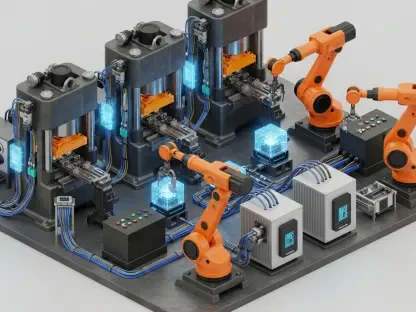
The strategic value of upskilling extends deeply into the realms of risk mitigation and quality assurance, where the ability to simulate and validate processes digitally can prevent costly real-world errors. One of the most impactful applications is in the virtual commissioning of production lines and factory cells. Before a single piece of physical equipment is ordered or installed, companies can build a complete digital twin of their proposed assembly line. Using this virtual environment, they can simulate the entire manufacturing process, testing robotic arm movements, optimizing workflows for human operators, and identifying potential collisions or bottlenecks. This digital rehearsal allows them to debug and refine the line to perfection, avoiding months of delays and millions of dollars in rework that would have been incurred had these issues only been discovered after physical installation. This proactive approach to risk management fundamentally de-risks capital-intensive factory expansions and upgrades.
This enhancement of quality and safety continues throughout the product’s lifecycle. Interactive 3D training simulations provide a safe, repeatable, and highly effective way to train technicians on complex assembly and maintenance procedures. Trainees can practice on a virtual model of a machine, learning to diagnose and repair faults without risking damage to expensive equipment or compromising their own safety. This leads to a more competent and confident workforce, improving first-time fix rates and reducing equipment downtime. In the field, augmented reality can overlay digital instructions and diagrams directly onto a technician’s view of the physical machinery, guiding them through intricate tasks step-by-step and ensuring procedures are followed with perfect accuracy. Finally, these optimized assets form the foundation for predictive maintenance strategies. When linked to sensor data from the physical machine, the digital twin can be used to simulate wear and tear, predict potential failures before they happen, and schedule maintenance proactively, maximizing uptime and enhancing overall product quality and reliability.
The Strategic Imperative of Adaptation
The window of opportunity to gain a decisive competitive advantage through digital manufacturing had been rapidly closing. What were once considered experimental applications, such as virtual factories and immersive sales tools, became baseline expectations in the industrial marketplace. The choice that manufacturing companies faced was stark: they either led the transformation by proactively investing in their workforce, or they were forced into a reactive, catch-up position when competitive pressures became insurmountable. The leaders who chose to invest in upskilling their CAD engineers for the demands of the industrial metaverse gained invaluable experience, developed expertise that compounded over time, and positioned themselves as indispensable innovation partners to their customers. For individual companies and entire manufacturing regions, the decisive factor was not whether digital transformation would reshape their industry, but whether they chose to be the architects of that change or casualties of it.