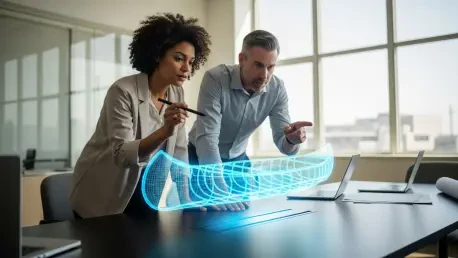

Walt Disney Imagineering has quietly launched a revolution not with a grand new attraction, but with a deceptively simple prop that now sits in plain sight within one of its most cherished legacy rides. The recent permanent installation of a 3D printed outrigger canoe in Disneyland’s iconic Jungle Cruise attraction represents a monumental milestone, marking the first-ever deployment of a large-scale, additively manufactured object within a Disney park environment. This meticulously planned project serves as a critical proof-of-concept, initiated by Imagineering to rigorously test the viability, efficiency, and long-term durability of this cutting-edge fabrication method against traditional techniques. More than just a replacement part, this canoe signals a fundamental shift in the very blueprint of theme park creation, hinting at a future where immersive worlds, from intricate ride components to entire hotel furnishings, are built with unprecedented speed and creative flexibility. It is a quiet debut for a technology poised to make a very loud impact on the future of themed entertainment.
The Landmark Project and a Strategic Alliance
The development of the Jungle Cruise canoe was a deliberate and strategic experiment driven by Imagineering’s forward-thinking Research & Development division. The objective was not merely to replace an aging prop but to validate a new manufacturing paradigm. The process began with a high-fidelity 3D scan of the original boat, meticulously capturing every curve and dimension to ensure absolute authenticity and a seamless integration into the beloved attraction. To guide the aesthetic direction, the creative team referenced a vintage photograph from the 1960s, ensuring the final product would honor the ride’s historical context. After the large-scale printing was completed by an external partner, Imagineers applied the final finishing touches, including weathering and painting, by hand. The result is a prop that is visually indistinguishable from one produced through conventional methods but was created with a fraction of the time and labor. This successful deployment marks a pivotal transition for 3D printing, moving it beyond the realm of small-scale prototypes and into the demanding, real-world environment of a permanent, outdoor attraction subject to constant operational stress and weather exposure.
This technological leap was made possible through a crucial collaboration with Haddy, an emerging Florida-based startup that is redefining the possibilities of large-scale production. Walt Disney Imagineering actively sought a suitable partner by networking at premier industry conventions like the International Association of Amusement Parks and Attractions (IAAPA). It was there they discovered Haddy, whose unique capabilities perfectly aligned with Imagineering’s ambitious goals. Founded in 2022 by U.S. Marine Corps veteran Jay Rogers, Haddy specializes in a proprietary technology they call large-format additive manufacturing. This process utilizes sophisticated, AI-driven robotic arm systems to 3D print massive objects, from custom furniture to, in this case, theme park props. The company operates from what is described as the world’s largest 3D printing factory, based on machine count and production throughput, located in St. Petersburg, Florida. A significant aspect of Haddy’s operation is its deep commitment to sustainability; the company uses advanced materials repurposed from polymer plastics and even reclaimed fishing nets, adding an environmental benefit to its technological advantages.
A Partnership Forged for the Future
The relationship between Disney and Haddy transcends a simple vendor-client dynamic, evolving into a deeply integrated strategic alliance. This was solidified when Haddy was selected as one of just four startups for the prestigious 2025 Disney Accelerator program. This initiative is designed to identify and nurture innovative companies whose technologies align with Disney’s long-term strategic goals. Participants receive financing, invaluable mentorship from Disney’s top executives, and unparalleled access to the vast creative and technical resources of The Walt Disney Company. Haddy’s inclusion signals a powerful vote of confidence from Disney in the transformative potential of its technology and a clear intention to integrate it more deeply into a wide array of future projects across its parks, experiences, and products division. The public reveal of the Jungle Cruise canoe project itself, which took place at the Disney Accelerator Demo Day, served to underscore the importance of this partnership, showcasing it as a prime example of the kind of innovation Disney is fostering.
The most dramatic advantage offered by this manufacturing process is the staggering reduction in production time and labor. Haddy’s CEO, Jay Rogers, effectively illustrates this by contrasting the estimated 1,000 human hours a traditional boat-maker might need for a 20-foot vessel with the mere 70 robot hours Haddy required to print the Jungle Cruise canoe. This incredible speed is achieved by completely eliminating the highly time-consuming and labor-intensive process of mold-making. In traditional fabrication, creating, refining, and testing molds can be a lengthy ordeal, sometimes repeated over 30 times to perfect a single design. Haddy’s additive process bypasses this bottleneck entirely, printing the final object directly from a digital file. This efficiency is at the core of the company’s operational motto: to deliver a finished, large-scale product in “days, not months.” This acceleration of the production timeline not only speeds up project delivery but also introduces a new level of agility to the entire design and construction process for Disney.
Redefining Creative and Logistical Boundaries
Beyond the headline-grabbing speed, large-format 3D printing offers significant cost-effectiveness, which in turn unlocks greater creative potential. By reducing the reliance on expensive materials, specialized labor, and time-intensive processes like mold-making, the technology lowers the overall cost of fabricating large, complex objects. These savings can be strategically reallocated within a project’s budget, allowing Imagineers to stretch their resources further. This could mean enhancing other parts of an attraction with more detailed theming, incorporating more advanced technologies, or potentially enabling the development of more attractions and experiences overall. Perhaps more importantly, this technology provides unprecedented creative freedom and flexibility. Unlike traditional fabrication, where design changes late in the process require the creation of entirely new and expensive molds, 3D printing allows for rapid and low-cost iteration. Imagineers can make adjustments to a digital file, review the changes in a virtual environment, and simply reprint the object. This newfound agility gives designers the freedom to “iterate and play” with concepts, refining details and exploring new ideas in a way that was previously impractical due to time and budget constraints.
The benefits of this digital-to-physical workflow extend far beyond a single theme park, offering powerful solutions for global logistics and brand consistency. Once a digital file for a prop like the canoe is finalized and approved, it can be perfectly and consistently replicated for any Disney park around the world. This ensures that guests in Tokyo, Paris, or Orlando experience the exact same high-quality design, strengthening brand identity across the global portfolio. It also dramatically simplifies the process of replacing or adding props, as a new one can be printed locally or shipped without the need to engage artisans for a custom build. Furthermore, the sustainability aspect of Haddy’s process presents a key advantage. The use of repurposed plastics and old fishing nets not only reduces waste but also points toward a more circular manufacturing economy. This creates the potential for a closed-loop system where a prop, at the end of its operational lifecycle, can be melted down and its raw material can be reused to print something entirely new, minimizing environmental impact and transforming waste into the building blocks of future magic.
Imagineering the Possibilities
For the creative minds at Disney, the Jungle Cruise canoe is merely the first sentence in a long and exciting new chapter of theme park design. Imagineer Michael Hundgen, a Portfolio Executive Creative Producer, envisions a vast array of future uses for the technology across nearly every facet of Disney’s physical projects. The potential applications are limited only by imagination and range from the whimsical, such as a custom-designed closet door in a Monsters, Inc.-themed land like Monstropolis, to the profoundly practical, including large-scale entertainment platforms, highly realistic and durable park rockwork, and even unique, themed furniture for the thousands of rooms across Disney’s resort hotels. This technology provides a new toolkit that bridges the gap between digital design and physical reality, allowing for the creation of complex, organic, and highly customized environmental pieces that were once prohibitively expensive or time-consuming to produce. The canoe stands as a tangible demonstration that this method is ready to move from the workshop to the real world, opening the door to more richly detailed and immersive environments for guests.
The true transformative power of this innovation became clear when considering its application to future, large-scale attractions. A project like the upcoming Monsters, Inc. Doors Coaster, for example, seemed perfectly suited for this manufacturing method. In a high-speed attraction that races through a massive factory setting, 3D printing could have been used to cost-effectively produce the hundreds of background props and architectural elements needed to flesh out the environment. This pragmatic approach would have allowed the bulk of the budget to be concentrated on the high-fidelity Audio-Animatronics figures and intricate show scenes where guests’ attention is most focused. This strategic allocation of resources could have prevented costly and high-profile challenges, such as the famously non-functional Yeti animatronic in Expedition Everest, where a disproportionate amount of the budget was sunk into a single element. Ultimately, the integration of large-scale 3D printing represented a pivotal shift, creating a more balanced and efficient approach that promised more robust, complete, and reliable attraction experiences for guests worldwide.