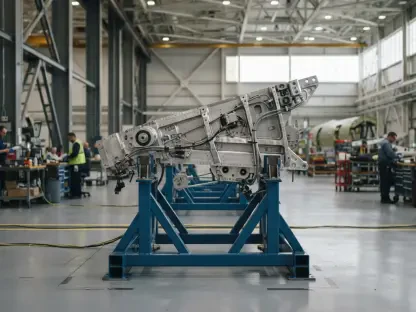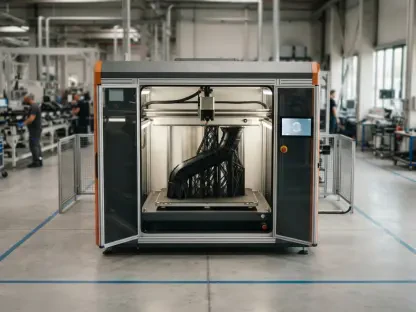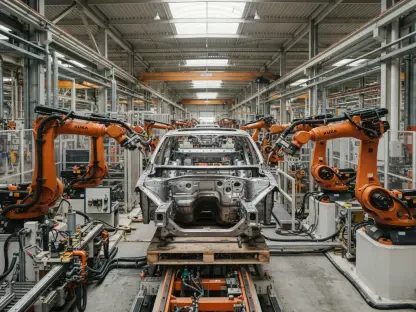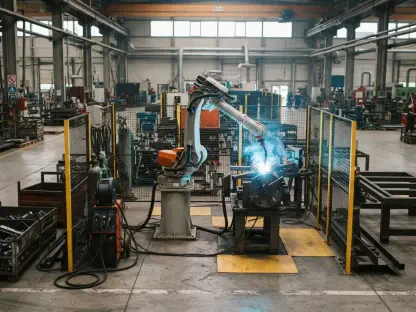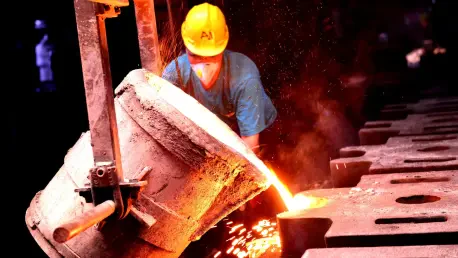

Industrial artificial intelligence and the Internet of Things are no longer conceptual tools but essential components of a transparent and agile production environment. The Georgia Institute of Technology has officially established the Foundry School to bridge the widening chasm between academic theory and industrial application. This initiative, born from a high-level collaboration between Stanford University, Siemens, and the U.S. Department of State, signals a definitive pivot toward a high-tech manufacturing future. As domestic production becomes increasingly reliant on complex data systems, the program serves as a foundational pillar for the next generation of American workers. The inaugural lecture, recently held at Georgia Tech’s Advanced Manufacturing Pilot Facility, underscored the importance of integrating advanced robotics and virtual modeling into the daily operations of modern factories. By centralizing these efforts at a premier research institution, the partnership aimed to create a resilient ecosystem that could effectively withstand global economic shifts and maintain technological sovereignty in a competitive market.
Implementing Digital Factory Technologies: Beyond the Physical
At the heart of this transformation is the deployment of digital twins, which function as precise virtual replicas of physical production assets. These sophisticated models allow engineers and factory floor operators to simulate entire production cycles, testing for inefficiencies or potential mechanical failures before a single machine is ever powered on. By utilizing high-fidelity simulations, manufacturers can achieve a level of precision that was previously unattainable, drastically reducing waste and accelerating the time-to-market for complex products. This methodology encourages a culture of continuous experimentation, where the risks of physical downtime are mitigated by the safety of the digital environment. Furthermore, the integration of these virtual systems into the curriculum ensured that students gained hands-on experience with the exact software suites currently used by global industrial leaders. This direct exposure removed the barriers to entry for emerging talent, fostering a workforce that is inherently fluent in the language of digital optimization and agile production.
Transitioning from simulation to active operation, the program emphasized the critical role of industrial artificial intelligence and connected sensor networks. These technologies transformed isolated machinery into a cohesive, communicating network that provided real-time insights into every stage of the manufacturing process. By leveraging machine learning algorithms, factories could transition from reactive maintenance to a predictive model, identifying wear and tear on components long before they resulted in costly disruptions. This connectivity ensured a higher degree of transparency across the supply chain, allowing for rapid adjustments in response to fluctuating demand or material shortages. The shift also fundamentally redefined the role of the industrial worker, moving human intervention away from repetitive, labor-intensive tasks toward the oversight of complex automated systems. As a result, the domestic workforce was empowered to manage sophisticated data streams, ensuring that the human element remained central to the strategic direction of the digital factory while machines handled the precision execution.
Bridging the National Skills Gap: A Strategic Initiative
The economic impetus for the Foundry School is rooted in the stark reality of a projected labor deficit, with estimates suggesting nearly four million vacancies in the manufacturing sector by the middle of the next decade. To combat this impending crisis, the initiative developed a standardized yet flexible curriculum that spanned seventeen intensive sessions hosted across eight major university campuses. By involving active CEOs and industry founders in the instructional process, the program guaranteed that the knowledge being transferred was grounded in current market demands rather than static academic concepts. This direct link to industry leadership provided students with a unique perspective on the entrepreneurial and strategic aspects of modern production. The curriculum was designed to be scalable, allowing diverse educational institutions to adopt these high-level training modules and tailor them to the specific needs of their local economies. This collaborative approach ensured that the benefits of high-tech manufacturing were not confined to a single region.
Beyond domestic labor concerns, the Foundry School functioned as a vital component of a broader geopolitical strategy known as the Pax Silica framework. This initiative, championed by the U.S. Department of State, aimed to align American technological standards with those of international partners to ensure a secure and transparent global supply chain. Undersecretary of State for Economic Affairs Jacob Helberg highlighted that the ability to translate advanced research into physical products was a critical metric of national security and global competitiveness. By establishing these frameworks now, the United States sought to lead the development of governance models for artificial intelligence and robotics in the industrial sector. Georgia Tech served as the strategic anchor for this effort, bridging the gap between cutting-edge discovery and large-scale industrialization. This role was essential for creating an environment where innovation led directly to economic opportunity, reinforcing the idea that a strong manufacturing base is the foundation of a stable nation.
Future Horizons: Sustaining Industrial Leadership and Sovereignty
The successful launch of the Foundry School at Georgia Tech represented a decisive step toward reclaiming the mantle of industrial leadership. Stakeholders from government, academia, and the private sector recognized that the future of the American worker depended on the mastery of digital tools. This unified effort demonstrated that a multi-sector ecosystem was necessary to solve complex national challenges like the skills gap and technological obsolescence. By integrating digital literacy with traditional engineering, the program established a new standard for vocational training that prioritized adaptability and high-level problem-solving. Leaders from across the country observed how this model effectively synthesized the strengths of different organizations to create a cohesive path forward for domestic production. The initiative proved that when resources were pooled toward a common goal of technological advancement, the potential for economic revitalization was limitless, positioning workers to lead the next generation of global industry.
Looking ahead, the expansion of the Foundry School model should serve as a blueprint for other sectors facing rapid technological disruption. Organizations must prioritize the creation of localized hubs that connect technical colleges with primary research universities to ensure that digital skills remain accessible to all levels of the workforce. It is imperative that industry leaders continue to provide direct input into educational curricula to keep pace with the accelerating rate of software and hardware updates. Furthermore, the focus must remain on fostering a culture of lifelong learning, where workers are encouraged to periodically upskill as new iterations of industrial AI and robotics emerge. National policy should continue to support these collaborative frameworks, treating workforce development as a key pillar of economic resilience. By maintaining this momentum, the United States can ensure that its manufacturing sector remains a global leader in both innovation and output. The transition to the digital factory was a reimagining of production.