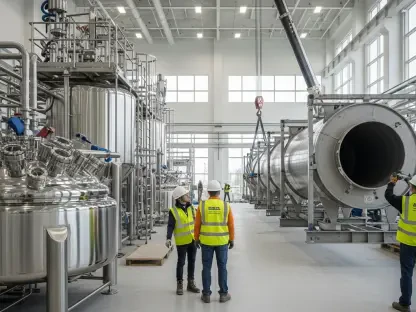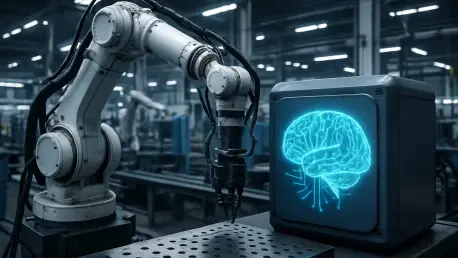

The legendary precision of German engineering is currently colliding with the rapid, often unpredictable demands of the digital era as the nation’s manufacturing heartland enters a high-stakes period of technological reckoning. Historically, the “Made in Germany” label served as a global gold standard for mechanical excellence, but in the current climate of 2026, that reputation hinges on the successful integration of Artificial Intelligence and the sophisticated data frameworks of Industry 4.0. This transition represents far more than a simple equipment upgrade; it is a fundamental reimagining of how value is created, moving away from purely physical craftsmanship toward a model where data-driven insights dictate every step of the production process. As the global industrial market becomes increasingly digitized, German firms find themselves at a crossroads where the cost of hesitation is no longer just a loss of market share, but a complete erosion of their historical competitive advantage in an AI-first world.
The economic stakes associated with this digital metamorphosis are nothing short of staggering, with analysts projecting that the Industry 4.0 market will triple in value over the next decade. While the financial trajectory points toward aggressive growth, this optimism is tempered by deep-seated structural hurdles that threaten to stall progress for many organizations. From a critical shortage of specialized labor to the fragmented nature of industrial data, the path to a fully intelligent manufacturing sector is paved with complex challenges that require more than just capital investment. The current landscape is characterized by a “lighthouse” model of success, where a handful of large conglomerates set the pace while a vast majority of the “Mittelstand”—the small and medium-sized enterprises that form the backbone of the economy—struggle to keep their heads above water in the digital tide.
Market Evolution and Economic Trajectories
The Rapid Acceleration of Machine Learning Adoption
The financial landscape of Germany’s industrial transformation is currently defined by a period of unprecedented investment in intelligent systems and autonomous technologies. Projections for the machine learning sub-sector are particularly aggressive, with the market expected to expand from a 2026 baseline to over $21 billion by the end of the decade. This represents a fundamental shift in corporate strategy, as manufacturers move away from rigid, pre-programmed automation toward flexible, self-optimizing systems that can adapt to real-time changes in the production environment. The drive for this growth is largely fueled by the realization that traditional efficiency gains have reached their physical limits; further optimization can only be achieved through the granular analysis and predictive capabilities offered by modern neural networks and deep learning algorithms.
However, this rapid financial growth masks a deeper complexity within the actual implementation phase of these technologies. While the capital is flowing into the sector, the actual utilization of machine learning models remains concentrated in specific high-value niches rather than being spread evenly across the production floor. This concentration is partly due to the high barrier to entry for training complex models, which requires not only massive computational power but also a continuous stream of high-fidelity data. As a result, the market is seeing a surge in “AI-as-a-Service” offerings designed to lower these barriers, though many German firms remain cautious about third-party dependencies. The next few years will likely see a consolidation of these technologies as the industry moves from the experimental phase into a period of standardized, large-scale deployment.
Bridging the Persistent Deployment Gap
Despite the overwhelming consensus that AI is essential for future competitiveness, a significant gap remains between the strategic acknowledgment of its importance and the active deployment of functional systems. Current surveys indicate that while nearly 60% of manufacturing firms are engaged in active discussions or pilot programs regarding AI, only a fraction of those have successfully transitioned into a full-scale operational phase. This discrepancy highlights a form of “pilot purgatory,” where promising projects fail to scale due to unforeseen technical complexities or a lack of internal buy-in. For many organizations, the move from a controlled laboratory environment to a chaotic, high-pressure factory floor reveals flaws in AI models that were not apparent during the initial development stages, leading to a cycle of constant refinement without actual production.
Bridging this deployment gap requires a fundamental change in how German companies approach the integration of digital tools. Many firms are still treating AI as a “plug-and-play” solution similar to traditional software, failing to recognize that these systems require ongoing maintenance, data curation, and a specialized workforce to remain effective over time. Furthermore, the organizational inertia found in long-standing manufacturing cultures often creates friction when new, data-driven methodologies challenge established human workflows. To overcome this, successful companies are beginning to prioritize the “socio-technical” aspect of the shift, ensuring that the introduction of AI is accompanied by clear communication and retraining initiatives. The goal is to transform the workforce from being mere operators of machines into collaborators with intelligent systems, thereby closing the gap through human-centric digital evolution.
Corporate Leadership and the Verification Gap
The Dominance of Large-Scale Enterprises
In the current industrial climate, the most significant advancements in AI application are being spearheaded by Germany’s largest conglomerates, which have the financial and technical resources to act as pioneers. Companies like BMW have set a formidable benchmark with initiatives such as the AIQX platform, which utilizes advanced computer vision to automate quality assurance across their assembly lines. By employing high-performance NVIDIA DGX systems, these large-scale enterprises have reported massive leaps in productivity, specifically in how quickly their data scientists can train and deploy new models. This “lighthouse” approach provides a blueprint for the rest of the industry, demonstrating that when AI is integrated at the core of the manufacturing cycle, it can lead to tangible reductions in fault rates and significant improvements in resource allocation.
Siemens serves as another prime example of this leadership, focusing its digital strategy on creating a holistic ecosystem that spans the entire value chain. By integrating AI into everything from supply chain logistics to predictive maintenance, these industry giants are creating a “digital twin” of their entire operation. This allows them to run complex simulations and stress tests in a virtual environment before committing to physical changes, drastically reducing the risk associated with innovation. The success of these projects is often cited as proof that Germany remains a global leader in industrial tech, yet it also highlights the growing distance between these leaders and the rest of the manufacturing base. The sheer scale of these implementations is often out of reach for smaller competitors, creating a lopsided landscape where the top tier moves at a completely different speed than the foundation.
The Need for Independent Auditing
A critical yet often overlooked issue in the current narrative of industrial AI success is the lack of independent, peer-reviewed verification of the results reported by major corporations. Most of the data currently available regarding the return on investment for high-profile AI projects comes directly from internal marketing departments or the technology partners who provided the hardware and software. While these reports are undoubtedly impressive, they often omit the failures, hidden costs, and long-term maintenance burdens associated with such complex systems. Without objective, third-party auditing, it remains difficult for the broader industry to determine which AI strategies are truly effective and which are merely the result of massive spending and aggressive branding. This “verification gap” creates a risk where smaller companies might attempt to emulate expensive models that are not actually efficient in the long run.
The absence of a standardized framework for measuring AI performance in manufacturing further complicates this issue. Currently, one company might measure success through reduced downtime, while another focuses on energy efficiency or throughput, making it nearly impossible to conduct an accurate cross-industry comparison. To build a truly sustainable digital economy, there is an urgent need for independent scientific bodies and academic institutions to play a more active role in auditing these “lighthouse” projects. By providing transparent, data-backed insights into what works and what doesn’t, these auditors could help demystify the technology for the rest of the sector. This would not only protect smaller firms from making costly mistakes but also encourage a more honest and collaborative approach to innovation that benefits the entire German manufacturing ecosystem.
The Struggles of the German Mittelstand
Obsolete Data and Cultural Barriers
The “Mittelstand,” which represents the vast majority of German manufacturing power, is currently facing a unique set of challenges that threaten its ability to keep pace with the digital shift. One of the most significant hurdles is the reliance on outdated benchmarks and historical data that often fails to reflect the reality of the 2026 industrial environment. Policymakers and industry analysts frequently base their strategies on data from several years ago, creating a “blind spot” that ignores the rapid advancements and specific pressures of the post-pandemic era. This lack of current, localized data makes it difficult for smaller firms to justify the high costs of AI integration, as they cannot accurately predict the impact on their specific production models. Without a clearer picture of the modern digital landscape, many of these companies remain paralyzed by uncertainty.
Beyond the technical data issues, a deep-seated cultural conservatism continues to hinder the adoption of cloud-based AI solutions among smaller German firms. Many export-oriented SMEs are intensely protective of their intellectual property, viewing the integration of cloud computing and external data sharing as an unacceptable security risk. While larger corporations have the resources to build private, secure clouds, smaller companies often feel they must choose between innovation and security. This fear of “digital exposure” often leads to a preference for traditional, offline processes, even when those processes are clearly less efficient. Overcoming these barriers requires more than just better technology; it requires a shift in mindset where data is viewed as a collaborative asset rather than a liability that must be hidden away at all costs.
Positive Results Amidst Limited Adoption
When smaller enterprises do manage to successfully navigate the hurdles of AI implementation, the results are frequently positive, demonstrating that the technology is not just for the giants of the industry. Limited studies of AI-integrated SMEs show a respectable average return on investment, with improvements noted in areas such as energy consumption and waste reduction. These success stories prove that even modest applications of machine learning, such as optimizing the settings of a single production machine, can lead to measurable financial gains. However, these instances of success are often isolated and lack the necessary visibility to inspire a broader nationwide trend. Because many SMEs operate in specialized niches, their digital victories are rarely shared with the wider community, leaving other firms to reinvent the wheel.
The primary issue is one of scalability and knowledge transfer. A single successful AI project in a specialized tool-and-die shop does not automatically translate into a roadmap for a nearby textile manufacturer or automotive parts supplier. Furthermore, the sample sizes available for studying SME digital maturity are often too small to provide a statistically significant picture of the entire sector. To address this, there is a growing call for more transparent “success sharing” within the Mittelstand, where companies can learn from the practical experiences of their peers without compromising their competitive secrets. If the positive outcomes seen in a few proactive firms can be codified into accessible strategies, it could trigger a much-needed wave of digital adoption across the broader industrial base, ensuring that the Mittelstand remains the engine of the German economy.
Systemic Obstacles in Human Capital and Data
The Critical Labor Shortage
Perhaps the most daunting obstacle currently facing the German manufacturing sector is a severe and persistent shortage of skilled labor capable of managing the Industry 4.0 transition. Roughly 40% of companies report that they are unable to fill critical positions that require a combination of traditional engineering knowledge and advanced AI expertise. This “hybrid” skill set—the ability to understand the mechanics of a high-precision lathe while also being able to tune a neural network—is in incredibly short supply. Despite numerous government-sponsored training initiatives, the education system has struggled to keep pace with the speed of technological change, leaving a generation of workers who are highly skilled in old methods but ill-equipped for the requirements of a data-driven factory.
This human capital crisis is not just a recruitment problem; it is a fundamental threat to the long-term viability of the sector. Without a workforce that can maintain and optimize intelligent systems, the most advanced AI hardware becomes a multi-million-euro liability rather than an asset. Companies are finding that they cannot simply “hire their way out” of the problem, as the competition for global tech talent is fierce and German manufacturing must compete with Silicon Valley and domestic software giants. As a result, many firms are being forced to invest heavily in internal upskilling programs, attempting to teach data science to their veteran engineers. While this is a noble effort, it is a slow and costly process that may not yield results fast enough to counter the immediate pressure from more digitally agile international competitors.
The Challenge of Fragmented Data
Technological progress in the German industrial sector is frequently stifled by the poor quality and fragmented nature of the data generated by existing factory floors. An estimated 70% of manufacturers identify data-related issues as the primary reason for the failure of their AI initiatives. In many older German factories, data is collected by a patchwork of sensors from different eras, many of which use proprietary protocols that do not communicate with one another. This creates “data silos” where information is trapped within specific machines or departments, making it impossible for a centralized AI to gain a holistic view of the production process. For an AI to be effective, it requires a clean, harmonized stream of historical data, which is something that many traditional factories simply do not have the infrastructure to provide.
Furthermore, the issue of data contextualization remains a significant hurdle for machine learning models. A sensor might provide a continuous stream of temperature readings, but without the context of what the machine was doing at that exact moment or what the ambient conditions were, that data is essentially noise to an AI. Many firms have realized too late that they have spent years collecting “junk data” that cannot be used to train reliable predictive models. Addressing this requires a massive investment in data governance and the physical retrofitting of machines with modern, standardized IoT sensors. Until the industry can solve the problem of data quality, the dream of a fully autonomous, self-healing factory will remain a distant goal, regardless of how advanced the underlying AI algorithms become.
High-Impact Use Cases and Performance Metrics
Predictive Maintenance and Quality Control
Where AI has found a successful foothold in German manufacturing, it has most often been in the domains of predictive maintenance and computer vision-based quality control. By utilizing a network of IoT sensors to monitor vibrations, heat, and pressure, companies are now able to calculate the “Remaining Useful Life” of critical components with remarkable accuracy. This transition from reactive maintenance—fixing things after they break—to a proactive model allows factories to schedule repairs during planned downtime, preventing catastrophic failures that could cost millions in lost production. In the high-precision world of German manufacturing, where even a few minutes of downtime can ripple through an entire supply chain, the ability to predict a failure before it occurs is becoming an essential survival tool.
Similarly, deep neural networks have revolutionized the way quality control is handled on the assembly line. Automated computer vision systems can now inspect parts at a speed and level of detail that far exceeds human capability, identifying microscopic defects in welds or assembly deviations that would otherwise go unnoticed. For a company like BMW, this technology ensures that every vehicle leaving the line meets their exacting standards while simultaneously reducing the amount of waste generated by faulty parts. These use cases are particularly valuable because they provide a clear, measurable return on investment, making them the “gateway” applications for firms that are still hesitant about more complex AI integrations. By focusing on these proven areas, companies can build the internal confidence and data infrastructure necessary for more ambitious projects.
Supply Chain and Regulatory Navigation
The volatility of global trade has forced German manufacturers to turn to AI-driven digital twins and demand-fluctuation models to manage increasingly complex supply chains. These tools allow companies to run “what-if” scenarios, simulating the impact of everything from a port strike to a sudden shortage of raw materials, and adjusting their inventory and logistics in real-time. This level of agility has become a major differentiator in an era where supply chain stability can no longer be taken for granted. By using AI to optimize shipping routes and warehouse management, firms are not only reducing costs but also minimizing their carbon footprint, aligning their operational goals with the increasingly stringent environmental regulations of the European Union.
However, navigating the regulatory landscape of 2026 remains a significant administrative burden for firms attempting to scale their AI solutions. The EU AI Act and GDPR provide a strict framework that mandates high levels of transparency, risk assessment, and human oversight for all industrial AI applications. While these regulations add layers of cost and bureaucracy, they also offer a unique competitive advantage for German companies. By strictly adhering to these high standards, manufacturers can market their AI-powered products and services as “ethical” and “secure,” a position that is becoming increasingly attractive to global clients who are concerned about data privacy and the social impact of automation. In this sense, regulatory compliance is being transformed from a hurdle into a badge of quality that reinforces the reliability of the German brand.
Institutional Support and Future Strategy
The Role of Competence Centers
To address the digital divide between large corporations and the rest of the industry, the German government has leaned heavily into a model of regional “Competence Centers” and the “Mittelstand 4.0” initiative. These hubs, located in industrial anchors like Munich, Stuttgart, and Berlin, serve as vital intermediaries that provide smaller firms with access to the kind of R&D resources they could never afford on their own. By offering “test beds” where companies can experiment with new technologies in a risk-free environment, these centers help demystify Industry 4.0 for traditional managers. They play a crucial role in the socio-technical transition, helping firms understand that digital transformation is as much about changing company culture and management style as it is about buying new hardware.
These institutional support systems also act as conduits for knowledge transfer, allowing the lessons learned by “lighthouse” projects to trickle down to the broader industrial base. By providing standardized training modules and access to a network of digital experts, the Competence Centers are helping to mitigate the critical shortage of internal AI talent. For an SME in a rural area, having a local hub where they can see a working digital twin or consult with a data scientist is often the difference between starting a digital project and giving up entirely. This collaborative model is a uniquely German approach to innovation, leveraging the nation’s strong sense of regional identity and industrial cooperation to ensure that no part of the manufacturing sector is left behind in the move toward 2030.
Recommendations for Sustainable Growth
For the German manufacturing sector to maintain its global standing through the end of the decade, it must adopt a more disciplined and systematic approach to AI integration. One of the most important steps is for companies to prioritize “proven” use cases that have high-quality existing data, rather than chasing experimental technologies that are not yet ready for the factory floor. Success in this field is directly correlated with investment in data lifecycle management; firms that spend the time to clean, harmonize, and govern their data before attempting to scale their AI models see a much higher rate of success. This “data-first” strategy ensures that the foundation of the digital factory is solid enough to support increasingly complex autonomous systems as the technology continues to evolve.
Furthermore, the industry must embrace a more collaborative ecosystem that moves beyond the isolationist tendencies of the past. This includes not only working with government competence centers but also engaging in cross-industry partnerships to develop shared standards for AI performance and data exchange. Addressing the human element—specifically the cultural resistance to automation and the need for continuous upskilling—must remain a top priority for leadership at all levels. By treating the digital shift as a holistic evolution of the entire industrial model, rather than just a series of technical upgrades, Germany can ensure that its manufacturing heartland remains vibrant, competitive, and world-leading. The goal is to create a sector that is not only technologically advanced but also resilient enough to withstand the inevitable disruptions of the coming decade.
The German manufacturing sector spent the last several years grappling with the initial shocks of the AI revolution, a period defined by both ambitious “lighthouse” projects and the harsh reality of systemic bottlenecks. While large conglomerates successfully demonstrated the potential of automated quality assurance and predictive maintenance, the broader “Mittelstand” often found itself stalled by obsolete data frameworks and a severe lack of qualified personnel. This era of experimentation highlighted that the transition to Industry 4.0 was never going to be a simple matter of purchasing new software, but rather a profound structural shift that required a complete overhaul of data governance and workforce training. The industry learned through trial and error that AI is only as powerful as the infrastructure supporting it, and that cultural resistance can be just as damaging as a lack of capital.
Moving forward, the focus must shift from pilot projects to the creation of a standardized, nationwide digital framework that enables SMEs to scale their innovations without the need for multi-billion-euro R&D budgets. This will involve the widespread adoption of open data standards and the expansion of regional competence centers to provide continuous, hands-on support for firms in transition. Companies should move toward a “modular” AI strategy, implementing small, high-impact tools that can eventually be integrated into a larger, cohesive system. By focusing on sustainable data practices and aggressive internal upskilling, German manufacturers can finally bridge the gap between their traditional engineering excellence and the requirements of the digital age. The survival of the sector now depends on the ability to turn these hard-won lessons into a resilient, data-driven reality that secures Germany’s industrial future.