
The relentless global expansion of industrial automation has fundamentally reshaped the manufacturing landscape, quietly elevating the role of high-precision component producers from simple suppliers to indispensable strategic partners in the modern industrial ecosystem. As industries from automotive to electronics race to implement intelligent motion control and precision engineering to maintain a competitive edge, foundational components like ball screws are no longer viewed as mere mechanical parts that can be easily commoditized. Instead, they are now correctly recognized as critical enablers of the efficiency, reliability, and accuracy that define the performance of today’s most advanced automated systems. This critical shift in perception is driving entirely new performance expectations and transforming industrial supply chains, placing a significant premium on manufacturers who can deliver unwavering quality and demonstrable long-term value.
The Evolving Demands on Precision Motion
The Foundational Components of Automation
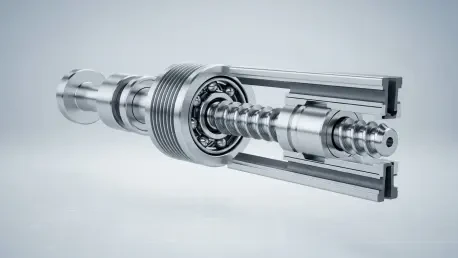
At the core of nearly every sophisticated automated system, ball screw assemblies and linear guideway systems serve as the indispensable backbone, providing the essential mechanism for converting rotary motion from motors into highly precise and repeatable linear movement. This core function is absolutely mission-critical across a wide and growing array of high-stakes applications, including advanced multi-axis CNC machining centers, high-speed industrial robotics, ultra-precise semiconductor manufacturing equipment, and intricately coordinated automated assembly lines. Without these meticulously engineered components, the sophisticated and accurate positioning required to produce everything from microchips to electric vehicles would be functionally impossible to achieve. Their performance is the silent enabler of modern production, dictating the ultimate limits of speed, accuracy, and efficiency for the entire machine. The precision of the final product is directly tied to the precision of these underlying motion components.
The dramatic and sustained surge in global demand for reliable and precise linear motion is a direct and predictable consequence of the worldwide automation push. The ability of these complex systems to deliver smooth, accurate positioning with minimal friction directly and measurably correlates with overall system performance, end-product quality, and total operational efficiency. This has effectively repositioned manufacturers of these precision components from being considered peripheral, interchangeable suppliers to becoming core, strategic partners within a complex and deeply integrated industrial ecosystem. Their specialized expertise has become vital for driving innovation, enabling new manufacturing capabilities, and securing a competitive advantage in a market where precision and speed are paramount. This transformation highlights a deeper understanding of how foundational technology underpins advanced industrial progress and productivity on a global scale.
Rising Performance Expectations
Today’s modern automated equipment is engineered to operate under increasingly demanding and often unforgiving conditions, which are characterized by significantly higher operational speeds, the capacity to manipulate heavier and more complex payloads, and the consistent, unwavering maintenance of micron-level accuracy. Furthermore, these rigorous performance metrics must be sustained over extended and continuous operational periods, often in high-duty cycle applications that run twenty-four hours a day. This new reality places immense and escalating pressure on component manufacturers to design and deliver products that meet exceptionally strict and non-negotiable standards for quality, long-term durability, and application-specific adaptability. The margin for error has shrunk to nearly zero, as any component failure or degradation in performance can lead to costly downtime and compromise the quality of high-value manufactured goods, making component selection a critical aspect of system design.
To successfully meet these multifaceted challenges, industries are actively seeking out precision ball screw systems that are specifically engineered for their ability to minimize or eliminate backlash and significantly enhance transmission efficiency. These are qualities that have become essential for maintaining tight manufacturing tolerances and ensuring consistent, repeatable output across millions of cycles. Concurrently, advanced linear guideway technologies have become crucial for providing the stable, rigid guidance and effective load distribution necessary for achieving smooth, stable, and vibration-free motion. This is especially critical within complex multi-axis robotic arms or high-speed CNC machine tools, where any deviation from the programmed path can result in scrapped parts or damage to the equipment. The synergy between these two component types is fundamental to the performance of next-generation automated machinery.
Reshaping the Industrial Landscape
Transforming the Supplier-Client Relationship
The pervasive global automation trend is not only altering the layout and operation of factory floors but is also fundamentally reconfiguring the complex supply chains that support them. A clear and significant shift is underway in procurement decisions, which are moving decisively away from a historical focus on short-term specifications and initial pricing toward a more strategic and holistic assessment of a supplier’s ability to act as a reliable, long-term partner. This new dynamic explicitly prioritizes proven reliability, demonstrated scalability to meet fluctuating demand, and comprehensive technical support over the immediate, upfront cost of the components. Companies are increasingly recognizing that the total cost of ownership, which includes factors like downtime, maintenance, and performance, far outweighs any initial savings from choosing a lower-cost, lower-quality supplier. This represents a maturation of industrial purchasing strategies.
Key criteria within this new and evolving paradigm now prominently include a supplier’s verified capacity for scalable production, which is essential to meet the growing and often unpredictable demands of a global market, and the absolute assurance of standardized, uniform quality across all production batches and global regions. Industries that rely heavily on automated lines to maintain their competitive edge, such as automotive manufacturing, consumer electronics assembly, and medical device production, demand components that can consistently withstand the rigors of continuous operation, effectively resist wear and tear over millions of cycles, and maintain precise alignment throughout their entire service life. Consequently, the selection of a component supplier has been elevated from a simple purchasing task to a critical business decision that directly impacts profitability, brand reputation, and long-term market viability.
The Criticality of Manufacturing Excellence
A key and undeniable differentiator in the highly competitive high-precision motion industry is the demonstrated ability to maintain absolute manufacturing consistency across large and continuous production volumes. It is a well-understood principle that even minuscule, seemingly insignificant deviations in machining accuracy, base material properties, or final assembly tolerances can cascade and amplify into significant and detrimental performance variations at the system level. Consequently, the implementation of robust, data-driven process controls, the deployment of advanced in-line inspection systems, and the adherence to comprehensive, internationally recognized quality management protocols have become the unshakeable pillars for any leading manufacturer in this space. These are no longer optional best practices but are now fundamental requirements for participation in the global supply chain for advanced automation.
This intense and unwavering focus on manufacturing consistency is directly driven by the globalized nature of modern manufacturing, where large equipment builders who operate facilities in multiple countries expect and demand identical component performance regardless of where or when those components were produced. This has necessitated significant and ongoing capital investment in advanced technologies such as high-precision CNC grinding machinery, sophisticated metrology and inspection equipment, and environmentally controlled clean-room assembly environments. These investments reinforce the immense value of mature, highly standardized manufacturing systems that are designed to align with and often exceed stringent international quality benchmarks. Ultimately, this commitment to excellence ensures that a component made today will perform identically to one made months from now, providing the reliability that global industries depend on.