
Modern industrial sectors currently face an unprecedented demand for components that can withstand extreme mechanical stress while maintaining microscopic dimensional accuracy across massive production runs. Hogge Precision Parts Co., Inc., a veteran in the precision manufacturing industry based in Hartsville, South Carolina, has responded to this challenge by announcing a significant expansion of its stainless steel CNC machining capabilities. With over thirty-five years of experience as a foundation, the company is now solidifying its position as a premier provider of high-complexity components for the aerospace, medical, and industrial sectors. This strategic move integrates a robust technical infrastructure with a deep understanding of specialized material grades to meet the increasingly rigorous demands of modern engineering. By focusing on the intersection of material science and automated precision, the company provides a reliable solution for engineers who require parts that perform without fail in high-stakes environments. The expansion represents more than just a capacity increase; it is a calculated effort to lead the market in handling the most difficult alloys with a level of repeatability that was previously difficult to achieve at scale.
Material Science: Navigating the Complexity of Stainless Steel Alloys
A core element of this service expansion is the mastery of a wide variety of stainless steel alloys, each selected for specific mechanical properties that define the longevity of the final product. For high-volume production, the machining team utilizes Type 303 stainless steel to maximize machinability and speed without sacrificing the dimensional accuracy required for intricate valve stems or aerospace fittings. This particular grade allows for faster cycle times, which is a critical factor for clients looking to balance cost-efficiency with high-performance standards. In contrast, the company employs Type 304 for more versatile industrial applications where a balance of corrosion resistance and formability is necessary. By optimizing the cutting parameters for these specific grades, the facility ensures that every part maintains structural integrity while meeting the fast-paced delivery schedules of the current manufacturing landscape. This granular approach to material selection ensures that the chosen alloy aligns perfectly with the mechanical stresses the part will eventually encounter in the field.
Beyond standard grades, the expansion includes enhanced processing for specialized high-strength alloys such as 17-4 and 15-5, which offer clients tailored solutions for projects with unique chemical or physical requirements. These materials are often chosen for their exceptional heat-treatment capabilities and mechanical toughness, making them ideal for the heavy-duty components used in defense and heavy machinery. For environments where chemical degradation is a constant threat, such as marine hardware or internal medical devices, the company utilizes Type 316 stainless steel. This grade is prized for its superior resistance to pitting and chloride-rich environments, requiring specific tooling and coolant strategies to machine effectively. The technical team has refined these processes to prevent work-hardening and tool deflection, which are common issues when working with tougher stainless alloys. By maintaining a diverse inventory and the expertise to handle these difficult materials, the organization acts as a comprehensive partner for complex engineering projects that demand specialized metallurgical knowledge alongside traditional machining skillsets.
Precision Engineering: Redefining High-Tolerance Manufacturing
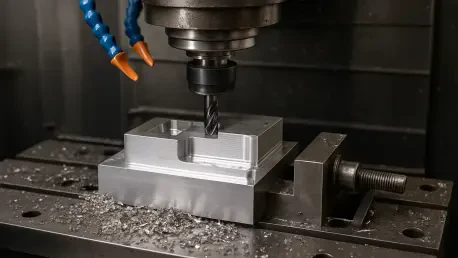
To meet the industry-wide shift toward extreme accuracy, the facility now delivers tolerances as tight as ±.0005″, a specification that is essential for preventing system failures in critical aerospace and medical applications. Achieving this level of precision consistently requires a move away from traditional multi-step manufacturing toward a “single-operation” approach. By utilizing advanced CNC turning and milling centers that can complete complex geometries in one setup, the risk of “tolerance stack-up” is virtually eliminated. This occurs when a part is moved between different machines, introducing minute alignment errors that can compound into significant defects. By finishing the part on a single piece of equipment, the technical team ensures that every feature, from threaded holes to concentric bores, remains perfectly aligned with the primary datum. This methodology not only improves the overall quality of the components but also significantly reduces the labor time associated with manual handling and secondary fixtures, providing a more streamlined path from raw bar stock to the finished, high-precision assembly.
The focus on precision is further bolstered by the integration of multi-tasking machinery and “lights-out” manufacturing operations, which allow for continuous production cycles even during non-working hours. This automation-driven model is designed to handle large orders with consistent quality, as the robotic systems maintain the same level of accuracy on the thousandth part as they did on the first. The transition to high-efficiency production models reflects a broader trend in the United States manufacturing sector where technology is used to offset rising labor costs and shorten lead times. These automated systems are equipped with sensors that monitor tool wear in real-time, allowing for proactive adjustments before a part falls out of specification. This level of technical oversight ensures that the output remains steady and reliable, giving clients the confidence that their supply chains will remain uninterrupted. By leveraging these advanced manufacturing techniques, the company effectively bridges the gap between traditional craftsmanship and the high-output requirements of the modern global marketplace, ensuring that every stainless steel component meets the highest standards.
Quality Assurance: Validating Performance through Advanced Inspection
Technical proficiency in the machining bay is backed by a rigorous commitment to quality management, anchored by a long-standing ISO 9001:2015 certification. This international standard provides a framework for consistent quality, but the company goes beyond basic compliance by employing sophisticated inspection technology to verify every production lot. Coordinate Measuring Machines (CMM) and optical comparators are used to scan parts and compare them against original digital blueprints with extreme precision. These tools allow the quality control team to detect deviations that are invisible to the naked eye, ensuring that every shipment meets the exact specifications provided by the client. This quality-first philosophy is integrated into every stage of the manufacturing process, from the initial inspection of raw materials to the final verification of finished surfaces. By maintaining a documented trail of quality checks, the organization provides the transparency required by sectors like aerospace and medicine, where regulatory compliance and safety are the most important considerations for any vendor.
The strategic expansion of these services provided a clear path for future industrial collaborations by focusing on the elimination of mechanical errors and the enhancement of material durability. Actionable next steps for procurement teams involved the transition toward suppliers who can offer “one-stop” solutions for both complex machining and rigorous quality documentation. Moving forward, the industry likely saw an increased reliance on these vertically integrated providers who reduced the need for secondary processing or external testing. The success of this expansion served as a blueprint for how mid-sized manufacturing firms could remain competitive by investing in high-end automation and specialized metallurgical expertise. By prioritizing the reduction of tolerance stack-up and the mastery of difficult alloys, the company established a standard that encouraged other players in the sector to modernize their own quality protocols. These advancements ultimately ensured that the supply chain for critical components remained resilient, high-performing, and capable of meeting the sophisticated challenges of the current technological era through disciplined engineering and continuous technical improvement.