
The global automotive industry has arrived at a critical juncture where the traditional, time-honored methodologies for manufacturing efficiency are proving increasingly inadequate against the onslaught of modern global volatility. In this new landscape, automakers must pivot from a strategy of incremental improvements to a comprehensive paradigm shift toward “intelligent manufacturing,” a necessary evolution that is far more than a simple technological upgrade. This profound transformation represents a holistic reimagining of processes, organizational structures, and strategic partnerships, all aimed at cultivating the agility and resilience required to not only survive but also to secure a competitive advantage in a market being fundamentally reshaped by disruptive forces. Success is no longer optional; it is the prerequisite for relevance in the coming decade.
The Unavoidable Storm: Navigating a New Era of Disruption
The Convergence of Global Pressures
Automotive manufacturing operations are now perpetually caught in a crosscurrent of external forces that create a highly complex and expensive environment. Geopolitical and economic instability has become the new normal, with shifting tariff policies and persistent trade tensions forcing companies into a constant cycle of re-evaluating production footprints and reconfiguring deeply entrenched global supply chains. These are not minor adjustments but monumental undertakings that carry significant financial costs and operational risks, turning previously stable logistical networks into a source of profound uncertainty. This external pressure forces a defensive posture, consuming resources that could otherwise be directed toward innovation and growth. The need to remain flexible in the face of such volatility has become a primary driver of strategic decision-making, compelling manufacturers to build redundancy and agility into systems that were once optimized purely for cost and just-in-time efficiency.
Compounding these external challenges is a wave of internal and market-driven pressures that are fundamentally altering the nature of the automotive product itself. The industry-wide pivot to electric vehicles (EVs) has dramatically accelerated the pace of new product introductions, demanding unprecedented flexibility on the factory floor. Manufacturers must now master the immense complexity of producing multiple, often technologically distinct, models and powertrains simultaneously without compromising on efficiency or quality. This is happening against a backdrop of increasingly stringent regulatory and sustainability demands from governments and consumers alike. The mandate for a reduced carbon footprint now extends beyond tailpipe emissions to encompass the entire manufacturing value chain, from raw material sourcing to the energy consumption of the plant itself. Furthermore, the competitive landscape is being reshaped by agile, digital-native EV companies and technology giants, whose influence is forcing established automakers to rethink traditional business models and embrace a software-intensive future to meet new consumer expectations for hyper-personalization and continuously evolving vehicle features.
The Economic Paradox of Innovation
This urgent need for radical transformation is occurring under conditions of extreme financial duress, creating a difficult paradox for legacy automakers. The influx of new, lean competitors has aggressively compressed profit margins, often pushing them into the single digits and leaving little room for error. This financial strain creates a fundamental conflict: companies are required to make massive, long-term strategic investments in electrification, autonomous driving, and digital factory infrastructure while simultaneously facing intense short-term pressure from investors to slash costs and maximize immediate productivity. This forces a delicate and often precarious balancing act, where every dollar allocated to future-proofing the business is a dollar not returned to shareholders or used to address immediate operational inefficiencies. The high-stakes nature of these decisions means that a single misstep in capital allocation can have severe consequences for a company’s long-term viability.
This economic paradox extends beyond mere capital expenditure into the realm of human resources and operational priorities. The shift toward software-defined vehicles and intelligent manufacturing creates an immense demand for new and already scarce technological talent in areas like software engineering, data science, and artificial intelligence. Attracting and retaining these professionals requires competitive compensation packages and a forward-thinking corporate culture, adding another layer of cost and complexity to an already strained financial situation. Automakers are therefore caught in a difficult position, needing to fund a complete overhaul of their technological capabilities and workforce skills while managing the day-to-day realities of a highly competitive, low-margin industry. Successfully navigating this paradox requires not just financial discipline but also a clear and unwavering strategic vision that can justify long-term investments in the face of relentless short-term pressures.
The Blueprint for Resilience: Embracing Intelligent Manufacturing
Step 1: Building the Foundation with Converged Intelligence
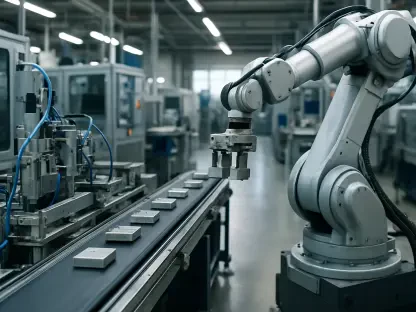
The most effective pathway through these multifaceted challenges lies in the widespread adoption of intelligent manufacturing. This framework does not seek to replace proven methodologies like Lean manufacturing but instead supercharges them with the power of data, analytics, and artificial intelligence. It acts as a powerful accelerator, capable of transforming problem-solving processes that once took weeks of manual analysis into data-driven optimizations that can be achieved in mere hours. The tangible benefits of this approach are already being realized across industries; for instance, a German aerospace manufacturer recently achieved 66 hours of fully autonomous robotic production, while a European automaker managed to cut energy consumption by 50% in a century-old plant by deploying advanced robotic painting systems. A major U.S. original equipment manufacturer similarly boosted throughput by nearly 5% on a specific assembly task by implementing an AI-powered optimization platform, demonstrating the significant gains available through this new paradigm.
At the heart of this transformative potential is the concept of “Converged Intelligence,” a synergistic system that unifies four distinct technological domains into a single, powerful engine for manufacturing excellence. The first of these is Information Technology (IT), which encompasses the high-level orchestrating systems, such as Manufacturing Execution Systems (MES), that manage and direct the flow of production. This is complemented by Operational Technology (OT), which represents the physical layer of the factory where smart manufacturing data platforms connect machines, sensors, and control systems. This connectivity is essential for gathering the real-time data that fuels intelligent insights, but it also necessitates a significant upgrade in OT security to protect critical infrastructure from cyber threats. The third pillar is Network Technology (NT), which serves as the communications backbone. The role of hybrid edge computing is particularly crucial here, as it enables computation to occur at the data source, reducing latency and unlocking new real-time use cases on the shop floor. Finally, Artificial Intelligence (AI) provides the cognitive layer, transforming vast streams of data into actionable insights and intelligent automation through robotics and advanced algorithms that augment the capabilities of the human workforce.
Step 2: Transforming Pain Points into Strategic Advantages
Once the foundation of converged intelligence is established, the next phase involves its strategic application. Rather than pursuing a blanket, one-size-fits-all technology rollout, the most successful automakers are creating a targeted roadmap designed to address their most significant and persistent operational “pain points.” This focused approach allows companies to direct their investments where they will have the greatest impact, systematically transforming chronic weaknesses into unique and sustainable competitive advantages. By prioritizing the resolution of specific, high-priority challenges, they can generate measurable returns on their digital investments while simultaneously building momentum for a broader, factory-wide transformation. This strategy ensures that technological adoption is driven by clear business needs, preventing the deployment of “technology for technology’s sake” and ensuring that every new system contributes directly to key performance indicators like quality, cost, and speed.
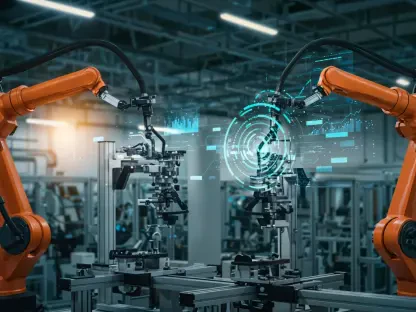
This targeted strategy can be applied to solve some of the most pressing issues facing the industry. To accelerate the painfully slow time-to-market for new vehicle models, for example, manufacturers can implement scalable intelligent manufacturing platforms that enable advanced simulation and virtual commissioning. These “digital twin” environments allow engineers to design, test, and debug entire production lines in a virtual space before any physical equipment is ordered or installed, dramatically reducing setup time and avoiding costly errors. Furthermore, the integration of agentic AI-powered “copilots” can significantly speed up the complex design and integration tasks associated with launching new lines. For improving material flows and bolstering supply chain resilience, AI-driven risk assessment tools can analyze vast datasets to proactively identify potential disruptions, while engineering specifications can be used to rapidly qualify alternative suppliers. On the factory floor, AI-enhanced MES can proactively reduce the risk of assembly errors, while enabling plant-wide traceability for smarter, faster root cause analysis of any defects, moving closer to the ultimate goal of “right first time” production.
The Ultimate Transformation: Becoming a Software-Driven Enterprise
The Final Frontier: Software at the Core
The most crucial and ultimately transformative step in this journey requires automakers to fully embrace a new identity as software-driven enterprises. The entire framework of intelligent manufacturing is fundamentally reliant on the development and deployment of mature, enterprise-grade software capabilities. This recognition necessitates a profound cultural and operational shift that permeates every level of the organization. It means moving beyond the traditional view of manufacturing as a purely mechanical and logistical discipline and instead seeing it as an integrated system where software is the central nervous system. To achieve this, automakers must invest in laying the foundations for robust, scalable software platforms and streamlining the processes for delivering and maintaining industry-grade software. This transition makes software development, integration, and lifecycle management a core competency, on par with the traditional expertise of vehicle design and assembly.
This evolution from a hardware-centric to a software-centric organization is already underway at the most forward-thinking automotive companies. Some are actively developing their own in-house AI platforms to maintain control over their data and intellectual property, treating these systems as strategic assets that will drive future competitive advantage. Others are planning large-scale deployments of advanced humanoid robots, powered by a sophisticated physical AI ecosystem, to tackle complex automation and logistics challenges that were previously beyond the scope of traditional robotics. These initiatives are not merely isolated technology projects; they are clear indicators of a deeper, fundamental transformation. They signal a future where the ability to develop, deploy, and continuously improve complex software systems will be as central to an automaker’s success and brand identity as the performance of its engines or the design of its vehicles. This shift marks the final and most important frontier in future-proofing the automotive factory.
The Power of the Ecosystem
This extensive and complex transformation was a journey no single automaker could have hoped to master alone. The sheer breadth of expertise required, spanning highly specialized fields from machine learning and edge-to-cloud connectivity to artificial intelligence and unified data architectures, necessitated a deeply collaborative approach. The ultimate success of this industrial evolution depended on the deliberate and strategic construction of a robust partner ecosystem. In this model, automakers brought their invaluable and irreplaceable domain knowledge of their own business, products, and manufacturing processes. This deep, experience-based expertise was then combined with the specialized technological knowledge of a diverse array of partners, including leading technology firms, specialized engineering companies, innovative startups, and pioneering academic institutions. This fusion of industrial know-how and technological prowess created a synergy that was essential for navigating the complexities of the transition.
This ecosystem-driven strategy proved to be the keystone for accelerating adoption and effectively mitigating the significant risks associated with such a large-scale transformation. Partnerships provided access not only to cutting-edge technology but also to critical, in-demand talent, helping to address the industry’s significant skills gap. The use of ready-made technological accelerators and participation in comprehensive workforce upskilling programs, often delivered through these collaborations, enabled a faster and more efficient transition. By synthesizing their own core capabilities with the advanced technologies and expertise of a broad partner network, automakers empowered themselves to become leaner, more agile, and far better equipped to capitalize on the game-changing opportunities presented by the new era of intelligent manufacturing. It was through this collective effort that the industry successfully navigated its most significant transformation and secured its future.