
Kwame Zaire is a seasoned industrial expert who bridges the gap between traditional craftsmanship and cutting-edge digital transformation. With a deep specialization in electronics, production management, and equipment lifecycle, he has become a leading voice in navigating the complexities of predictive maintenance and shop-floor safety. Zaire is particularly recognized for his ability to translate the nuanced “gut feelings” of veteran machine operators into actionable data strategies that drive quality and efficiency. His approach emphasizes that while technology is the engine of modern manufacturing, the driver must always be a well-informed, empowered workforce.
The following discussion explores the critical hurdles of bringing AI to the factory floor, focusing on the transition from fragmented “tribal knowledge” to high-fidelity digital narratives. We examine the technical architecture required for real-time, closed-loop integration using independent CPUs and the necessity of immediate, non-intrusive data collection. Beyond the hardware, Zaire highlights the cultural shift needed to transform AI from a perceived threat into a collaborative tool, ensuring that veteran skepticism is met with transparency and proven results.
Traditional manufacturing relies heavily on veteran operators’ “tribal knowledge,” such as recognizing the sound of a stamping press. How can facilities successfully translate these intuitive sensory cues into a digital narrative using edge devices, and what specific variables should be prioritized during a pilot program to establish a reliable baseline?
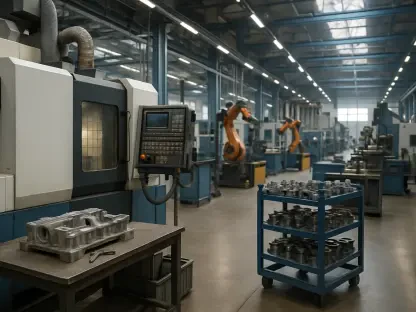
To turn an operator’s intuition into a digital asset, we have to bridge the gap between human experience and quantifiable metrics through non-intrusive observation. When a veteran knows a part is in specification just by the rhythm of a stamping press, they are essentially processing high-fidelity data that hasn’t been logged yet. We start by deploying edge data devices on stable, predictable machines to capture every independent variable possible, such as feed rates, spindle speeds, and thermal fluctuations. By prioritizing these variables in a pilot, we create a process narrative that quantifies the competitive advantage the facility has enjoyed for 20 years. This baseline isn’t just about numbers; it’s about capturing the “why” behind a machine’s longevity and translating those sensory cues into tighter production tolerances that every department can agree on.
Data often becomes stagnant in IT systems, leading to latency that prevents real-time machine tuning. How can manufacturers implement independent CPUs to bridge the gap between data analytics and PLC control logic, and what metrics ensure these closed-loop systems actually improve production tolerances without risking core stability?
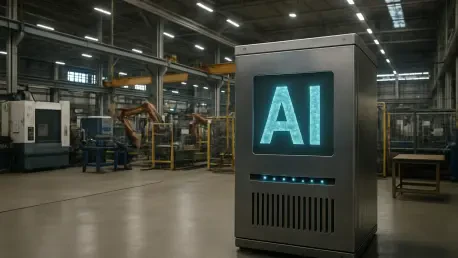
The danger in many modern setups is that critical insights move too slowly through IT silos, reaching the operator long after a quality defect has occurred. We solve this by utilizing independent control processing units (CPUs) that separate the primary machine control logic from high-level analytics. This architecture allows the PLC to maintain the core stability and safety of the machine while the secondary CPU processes complex data at high speeds to offer tuning recommendations. We look at metrics like information flow speed and latency between the process control and the analytics software to ensure the loop is truly closed. By validating these insights through on-edge dashboards, we can tighten tolerances in real-time without ever compromising the underlying control logic that keeps the factory running safely.
Factory floor teams are often skeptical of technical fads that might disrupt stable, decades-old processes. What strategies effectively involve these stakeholders in the data collection phase to build trust, and how does utilizing pilot results as proof points help transform AI from a perceived threat into an empowering tool?
Skepticism on the factory floor is actually a sign of a healthy culture that values what works; these teams have ignored “fads” for decades to keep production moving. To win them over, we must be intentionally transparent from day one of the data collection phase, identifying existing operational headaches rather than leading with fancy tech jargon. When we show an operator that the pilot program isn’t there to replace them, but to provide a tool that mirrors their own insights, the narrative shifts. Using the results of a pilot as a concrete proof point demonstrates that the AI is an assistant that helps them maintain quality and ownership over their station. This inclusion transforms the technology into a shared success, giving the very people who were most skeptical a seat at the table in shaping the future of the facility.
Building a training model requires high-fidelity data, yet gaps in historical records are common. In what scenarios should a facility rely on synthetic data versus real machine variations, and what are the long-term risks of failing to begin comprehensive, non-intrusive data collection on stable machines immediately?
While synthetic data can be a useful stopgap to fill missing links in a dataset, it can never fully replicate the unique environmental and mechanical nuances of a specific factory floor. Real machine data is the gold standard because it contains the subtle variations in temperature and wear that define a real-world process. The risk of waiting to collect this data is immense; every day without recording is a day of lost “instructional material” for your future AI models. Think of current data collection as a mandatory investment for operational improvement; failing to start now means your competitors will be training their models on years of high-fidelity history while you are still guessing at a baseline. You need to start non-intrusive collection on your most stable machines immediately to ensure your future algorithms are grounded in reality, not just simulations.
When moving from manual observation to automated decision-making, internal governance is vital. How should a company structure the transition from operator-led insights to fully automated systems, and what role do time-synchronized video and edge dashboards play in validating these high-speed AI interventions during a system changeover?
The transition must be a gradual evolution of trust, moving from “human-in-the-loop” to “human-on-the-loop” as the system matures. Initially, we use edge dashboards to present AI-driven insights to operators and engineers, allowing them to manually approve or adjust the recommendations. Time-synchronized video is a game-changer here, as it allows teams to play back high-speed events alongside the data logs to see exactly why an AI suggested a change during a complex system changeover. This visual and data-driven playback serves as a validation layer that builds the internal governance necessary for safety. Eventually, as the accuracy is proven over thousands of cycles, the system can move toward automated interventions, but always with the historical record and real-time dashboard providing a transparent window into the AI’s logic.
What is your forecast for industrial AI?
My forecast is that the competitive gap between “data-first” factories and traditional facilities will become an unbridgeable chasm within the next five to ten years. We are moving toward a future where the most successful plants won’t just have the best hardware, but the most refined digital narratives and closed-loop architectures. I expect to see a surge in “edge-heavy” environments where decision-making happens locally and instantly, reducing the reliance on bloated cloud structures for second-to-second adjustments. Factories that have already begun recording their tribal knowledge and machine variations will find themselves with an insurmountable lead in precision and flexibility. Ultimately, the winners will be those who treated their factory floor data as their most valuable raw material, starting their collection journey today to fuel the autonomous innovations of tomorrow.