
A strategic academic engagement, fueled by the British Council’s Transnational Education Exploratory Grant, is poised to redefine the manufacturing landscape in Bangladesh through a powerful partnership with the United Kingdom. Recently, a distinguished delegation of engineering faculty from the American International University-Bangladesh (AIUB) completed an intensive Digital Manufacturing Training Program hosted by Birmingham City University (BCU). This initiative represents more than just a simple exchange of knowledge; it signifies the forging of a vital link between two institutions committed to leveraging advanced technology to solve real-world industrial problems. By immersing Bangladeshi educators in the UK’s cutting-edge innovation ecosystem, this collaboration aims to plant the seeds of technological advancement that will grow to support the next phase of Bangladesh’s economic development, bridging critical gaps between academic theory and industrial application.
Forging a Path Through Innovation and Education
The delegation’s journey began with a comprehensive immersion into the operational ethos of Birmingham City University, a modern institution focused on cultivating future talent, generating societal knowledge, and driving economic prosperity. A central pillar of this mission is STEAMhouse, BCU’s state-of-the-art center for computing and digital technology. The AIUB faculty discovered that STEAMhouse is not merely a building but a fully integrated ecosystem designed to nurture innovation from conception to commercialization. It provides a dynamic environment with dedicated workspaces, incubation facilities for burgeoning ventures, and comprehensive innovation services for established industries. Furthermore, its specialized STEAM skills development workshops and robust support for student-led enterprises create a pipeline of talent equipped to tackle contemporary challenges, all while offering access to advanced prototyping and experimentation services that accelerate the transition from idea to impact. This holistic model provided an inspiring blueprint for how academia can directly fuel industrial growth.
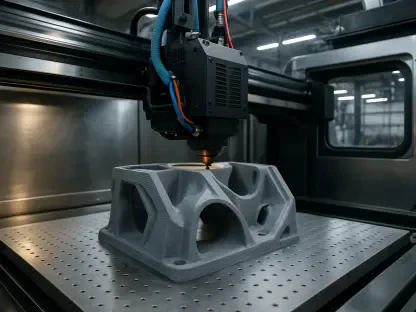
A tour of the Creative Lab within STEAMhouse provided a tangible demonstration of this collaborative philosophy in action, revealing a dynamic space where industry professionals, academics, and students converge to transform conceptual ideas into market-ready solutions. The lab was equipped with an impressive suite of modern digital manufacturing technologies that left a lasting impression on the visiting delegation. They observed advanced 3D printing capabilities, including both filament and resin-based machines for rapid prototyping, alongside a specialized 3D clay printing machine that opens new possibilities for architectural and artistic applications. The presence of a Computer Numerical Control (CNC) machine for high-precision subtractive manufacturing further showcased the facility’s comprehensive capabilities. This direct, hands-on exposure to cutting-edge equipment and a vibrant, interdisciplinary environment underscored the practical focus of the training program and BCU’s deep-seated commitment to fostering innovation and enabling inclusive economic growth through accessible technology.
Addressing Industry Challenges with Advanced Solutions
The training program moved swiftly from foundational concepts to addressing critical, real-world industrial challenges. The keynote address, delivered by Prof. Javaid Butt, a Professor of Manufacturing and Product Design at BCU, set a pragmatic tone by systematically identifying four significant problem areas currently confronting the field of digital manufacturing. These challenges included persistent inefficiencies in Single-Minute Exchange of Die (SMED) operations, which are exacerbated by a lack of standardization in fixture design and manufacturing. Another perplexing issue discussed was the chronic underutilization of high-performance carbon fiber components in the construction sector, despite their well-documented structural benefits. The presentation also highlighted the absence of standardized equipment for laser marking and automated inspection processes, leading to costly inconsistencies in quality control, and concluded by examining the complex engineering challenge of equestrian pole buckling caused by excessive heat, a problem that results in significant replacement and warranty costs for manufacturers.
The sessions that followed delved deeper into specialized research with direct relevance to both global and local needs, creating a clear pathway for impactful collaboration. Dr. Noel Perera, an Associate Professor in Innovation & Enterprise, presented several of BCU’s ongoing research projects centered on thermal management, including advancements in heat exchanger technology crucial for developing net-zero transportation systems and innovative energy storage solutions. The program also highlighted the value of student-led research, featuring a presentation by a BCU student on his work with reconfigurable welding fixtures, detailing current manufacturing hurdles and the sophisticated methodologies employed by industry partners like Daventry Metal Products. A particularly resonant presentation came from Dr. Cham Athwal, a Professor of Digital Technology, who introduced his “Smart-SIP” project. This initiative focuses on harnessing solar energy to support the electrification of the agricultural sector in Bangladesh, presenting an immediate and highly relevant opportunity for a joint venture that could yield substantial benefits for the nation’s economy and sustainability goals.
Expanding Horizons from Digital Transformation to Future Revolutions
The second day of the program continued its deep dive into specialized subjects that are shaping the future of industry. A session led by Mr. Vahid Zal, a Composite Materials Researcher at BCU, focused on the application of Carbon Fiber Reinforced Polymer (CFRP) Composites in Construction. He meticulously detailed the material’s extraordinary strength-to-weight ratio, a key driver of its high demand in aerospace and high-performance sectors, and explained the critical role of Finite Element Method (FEM) simulation in its structural design process. This computational tool allows engineers to analyze material behavior under various stresses, accurately determine load capacity, and identify potential points of failure before physical prototypes are ever created. Following this, Dr. Md. Ashikul Khan, the Program Director for the M.Sc. Management Suite, conducted an insightful session on Digital Transformation and Adoption for Process. He provided a historical overview of the industrial revolutions before delving into the contemporary problems and challenges associated with implementing widespread digital transformation, introducing the KHB methods as a quantitative tool for analyzing interdependence in complex, multi-faceted projects.
The final day of the training explored advanced integrated systems and forward-facing concepts that pushed beyond the current industrial paradigm. Nelson Iziomo, a KTP Associate at BCU, presented an innovative Modular Class 1 Laser Marker & Vision Inspection System. He detailed how this unified platform seamlessly integrates safety protocols, advanced robotics, machine vision, and sophisticated software, demonstrating its practical feasibility through structured design, meticulous layout planning, and extensive simulation. Subsequently, Dr. Muhammad Adnan, the Program Lead for the DL Engineering Management Program, delivered a visionary talk on the synergy of Industrial Revolutions 4.0 through 6.0. He offered a critical examination of the limitations of current Industry 4.0 models and outlined the key pillars and emerging concepts of Industry 5.0, with its focus on human-centric collaboration, and the nascent ideas forming Industry 6.0. The day also featured another compelling student presentation on enhancing the reliability of Electric Vehicles (EVs) by using additively manufactured (3D printed) shock and damage absorbers, showcasing a novel multi-stage absorber designed to solve existing vehicle enclosure problems.
Solidifying a Partnership for Mutual Advancement
The extensive training program culminated in a formal closing ceremony that underscored the diplomatic and strategic importance of the academic collaboration. The closing speech was delivered by Most. Hamida Khatun, the First Secretary and Head of Chancery at the Bangladesh Assistant High Commission in Birmingham, whose presence signified high-level support for the initiative. She presented plaques of gratitude to the AIUB delegates, who in turn received one from the representatives of BCU, cementing the mutual respect and appreciation fostered during the visit. The ultimate consensus emerging from the program was a strong and shared intent for sustained future collaboration between the American International University-Bangladesh and Birmingham City University. Both institutions articulated a unified vision to continue the partnership, aiming to leverage their respective strengths and resources. This foundational visit successfully established a concrete framework for transferring UK expertise to catalyze both academic enrichment and industrial development within Bangladesh, particularly in the rapidly evolving fields of digital manufacturing and sustainable technology.