
A groundbreaking advancement in military technology has emerged not from a corporate research and development lab but from the ingenuity of a junior Marine whose experience fixing cars provided the foundation for building a sophisticated, combat-ready aerial system. This achievement, the development of the Marine Corps’ first fully 3D-printed, government-compliant unmanned aerial system known as “HANX,” represents a pivotal moment in the evolution of military logistics and tactical capabilities. Centered at the II Marine Expeditionary Force Innovation Campus, this project signifies a powerful shift toward decentralized, user-driven manufacturing, demonstrating how empowering individual service members with the right tools and support can yield solutions to some of the most pressing modern battlefield challenges. The story of HANX is not just about a drone; it is about a new way of thinking, problem-solving, and equipping the warfighter for the conflicts of today and tomorrow.
From Auto Shop to Innovation Hub
The Making of an Innovator
The journey of the HANX drone began long before its creator, Lance Cpl. Volpe, ever donned a Marine Corps uniform, rooted in a childhood environment that nurtured curiosity and technical aptitude. Raised by two engineer parents, Volpe was encouraged from a young age to explore how things worked, leading him to join a Lego robotics club in middle school and delve into the world of 3D printing by the seventh grade. This early exposure to building, programming, and design cultivated a natural skill set that would prove indispensable later in his career. His passion for mechanics continued to grow, leading him to pursue higher education in automotive maintenance technology. In this field, he gained professional experience as a car mechanic, developing a particular fascination with the intricate electronic systems that govern modern vehicles. This work honed his diagnostic and problem-solving mindset, teaching him to systematically identify issues and engineer effective solutions—skills directly transferable to the complex world of unmanned aerial systems. The global instability brought on by the COVID-19 pandemic in 2020 led him to seek a new path, and he enlisted in the Marine Corps with the goal of finding job security while embracing the challenge of becoming one of “America’s finest.”
Upon completing his military occupational specialty school in 2022, Volpe was assigned as a standard motor transport mechanic, a role that seemed far removed from his passions for robotics and advanced manufacturing. However, his trajectory shifted dramatically when a colleague mentioned the II MEF Innovation Campus, a facility conveniently located just across the street from his workplace. Recognizing an opportunity to reconnect with his hobbies and apply his unique skills in a meaningful way, Volpe proactively approached the campus leadership, confidently articulating his experience and his desire to contribute. His value was demonstrated almost immediately when he successfully repaired two of the campus’s 3D printers that had perplexed the existing staff. This act not only showcased his technical proficiency but also solidified his position within the innovation-focused environment. This pivotal transition from a conventional mechanic to a pioneering drone developer exemplifies a growing trend within the military: identifying and leveraging the non-traditional talents and pre-existing expertise of its service members to drive critical technological advancements from the ground up, rather than relying solely on external contractors.
The Catalyst for Creation
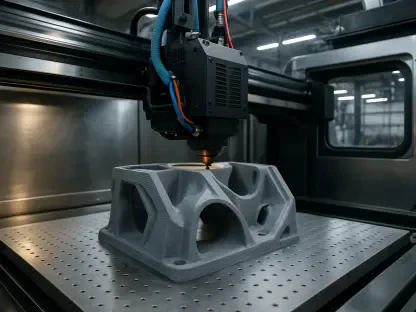
The very existence of the II MEF Innovation Campus served as the critical catalyst that transformed Lance Cpl. Volpe’s potential into a tangible, groundbreaking achievement. Established as a dedicated hub for teaching, training, and empowering Marines in advanced manufacturing disciplines, the campus provides an ecosystem where intellectually curious and technically skilled individuals are given access to the essential resources needed to bring their ideas to life. With state-of-the-art materials, sophisticated software, and high-end hardware at their disposal, Marines at the campus are encouraged to experiment, prototype, and develop solutions to real-world operational challenges. The facility is not merely a workshop but a carefully cultivated environment designed to foster a culture of innovation, breaking down the traditional barriers that can often stifle creativity within a large, bureaucratic organization. It operates on the principle that the next great military innovation may come from a junior enlisted Marine who simply needs the right tools and the freedom to explore their concepts without the fear of failure.
This forward-thinking environment is sustained by leaders who actively seek out and champion innovative projects. Chief Warrant Officer 3 Matthew Pine, the officer in charge of the campus, played a pivotal role in initiating the drone project after learning about a similar endeavor within the U.S. Army. Recognizing Volpe’s unique combination of personal interest and technical experience in building drones, Pine facilitated a trip to Fort Campbell, Kentucky, allowing Volpe to observe the Army’s program firsthand. This act of leadership provided the initial spark of inspiration and, more importantly, demonstrated a profound trust in a junior Marine’s potential to lead a complex project. Throughout the development of the HANX drone, Pine provided essential guidance, helping the team navigate bureaucratic hurdles and evolving policy requirements. At the same time, he strategically afforded them the autonomy to make their own design choices and development decisions. This supportive, hands-off leadership style was instrumental in cultivating the rapid, agile, and creative problem-solving atmosphere necessary for the project’s ultimate success, proving that institutional support is just as vital as individual ingenuity.
Building the “HANX” Drone from the Ground Up
Design and Teamwork
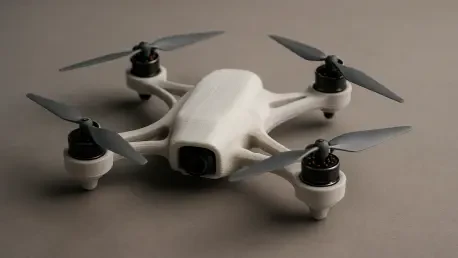
Inspired by his observations of the Army’s drone program but driven to create a superior and more accessible alternative, Lance Cpl. Volpe embarked on an ambitious design and development journey. He identified several key weaknesses in the existing model: it carried a high price tag and relied heavily on third- and fourth-party contractors for its design and hardware, making it a system that could not be fully built or maintained by the soldiers who used it. Volpe’s vision was to create a platform that was not only significantly cheaper but also fully producible in-house by Marines. This new drone needed to be modular and adaptable without sacrificing critical capabilities. Faced with an aggressive 90-day deadline dictated by the operational tempo of the Innovation Campus, Volpe immersed himself in an intense prototyping phase, often working around the clock. Leveraging his prior experience modifying commercial drone kits, he now faced the far greater challenge of designing and building a complex aerial system entirely from the ground up. The prototype, aptly named “HANX” after Volpe’s own nickname, evolved rapidly through five major versions and dozens of smaller, incremental adjustments, a testament to the agile and iterative development process he employed.
A central theme throughout the creation of the HANX drone was its deeply collaborative nature. While Volpe served as the project’s visionary and lead designer, he consistently emphasized that the achievement was only possible through the combined efforts and diverse skills of the entire team at the Innovation Campus. He took charge of the overall project management but skillfully delegated key tasks and actively sought continuous input from his peers, fostering an environment where every member’s contribution was valued. The specific contributions of the team were essential to the project’s success. Cpl. Liam Smyth developed the initial design for the drone’s robust landing gear, a critical component for its operational durability. Staff Sgt. Jonathan Borjesson dedicated countless hours to meticulously tuning the drone’s flight controllers, ensuring its stability and responsiveness met precise specifications. Meanwhile, Cpl. Isauro Vazquezgarcia and Cpl. Corven Lacy managed the continuous operation of the 3D printers, producing the necessary parts while also providing their own valuable design feedback. This synergy demonstrated that even when driven by a single individual’s vision, complex technological innovation within a military context is fundamentally a team achievement, relying on the collective expertise and dedication of a committed group.
Overcoming Modern Hurdles
Perhaps the most significant and arduous challenge of the HANX project was not the engineering of the drone itself, but ensuring the final product was fully compliant with the stringent security standards mandated by the U.S. government. A central requirement was that all critical electronic components be compliant with the National Defense Authorization Act (NDAA). This act is specifically designed to prevent the use of parts, particularly from foreign adversaries, that could contain “backdoor software” or other vulnerabilities. Such vulnerabilities could be exploited to intercept sensitive data, compromise the device’s operations, or turn the technology against its users. This crucial security measure meant that the team could not simply use cheap, readily available, off-the-shelf components that are common in the commercial drone market. Instead, every single piece of critical electronics, from the flight controller to the communication systems, had to be sourced from a vetted and approved manufacturer, a process that added a significant layer of complexity to the project and demanded a completely different skill set than mechanical design or software tuning.
Lance Cpl. Volpe undertook a painstaking and meticulous research process to meet these requirements, a task he described as a difficult but necessary back-and-forth with government entities and private companies. He spent a significant portion of the project’s more than 1,000 work-hours identifying and vetting potential manufacturers, meticulously messaging company representatives, and rigorously verifying that their components met the strict NDAA standards. This deep dive into the intricacies of the U.S. government’s supply chain security requirements was as crucial to the project’s success as the physical design of the drone itself. After months of this rigorous work, the final integrated product was submitted for official approval. The turning point arrived when the program office at Naval Air Systems Command (NAVAIR) notified the team of policy changes to the interim flight clearance process, which ultimately enabled the approval of HANX for flight. With this final, crucial approval, HANX officially became the first 3D-printed drone designed and built entirely by Marines to be both NDAA and NAVAIR approved, setting a new precedent for secure, in-house military innovation.
A New Paradigm in Military Technology
Capabilities and Strategic Impact
The successful development and approval of the HANX drone represented more than just a new piece of hardware; it heralded a paradigm shift in how the Marine Corps can procure, deploy, and adapt small unmanned aerial system (sUAS) technology. Its primary advantages lie in its remarkably low cost and its inherent modularity. Being inexpensive and easy to produce with readily available 3D printers makes the drone expendable, a critical attribute that opens up its use for high-risk missions where the loss of an expensive, proprietary system would be unacceptable. This expendability makes it an ideal candidate for a variety of roles, including as a one-way attack drone. Furthermore, its modular design allows it to be rapidly reconfigured for diverse mission sets. A single HANX airframe can be adapted for reconnaissance by fitting it with advanced cameras, for logistics by equipping it to carry small payloads, or for explosive ordnance disposal (EOD) by modifying it to carry and deploy charges. This adaptability was immediately recognized, with an EOD unit planning to purchase 20 HANX drones for their operations. This stands in stark contrast to commercially acquired drones, which are often proprietary “black boxes” that the military is not permitted to modify or repair, limiting their tactical flexibility.
The HANX project directly supported the Secretary of War’s strategic intent to proliferate drone technology across the force and bolster the U.S. domestic drone manufacturing base. By creating a system that can be built by any Marine in any unit with the proper training and equipment, the project provided a tangible framework for “unleashing American drone dominance.” It armed combat units with a low-cost, highly adaptable capability that can be produced at the point of need, significantly reducing logistical tails and procurement timelines. This achievement served as a powerful model for overcoming the “bureaucratic risk-aversion culture” that often stifles innovation and slows the acquisition of new technologies. Instead of waiting years for a traditional procurement program to deliver a solution, the HANX drone demonstrated that empowered warfighters can develop their own effective tools in a matter of months. This approach not only enhances operational readiness but also fosters a more resilient and self-sufficient fighting force, capable of innovating at the speed of modern conflict and staying ahead of evolving threats on the battlefield.
Institutionalizing Innovation for the Future
Following the drone’s official approval, the team at the II MEF Innovation Campus immediately began the crucial work of codifying the knowledge and processes gained throughout the project. Their goal was to ensure that the creation of the HANX drone was not a one-time success story but a repeatable and scalable capability that could be disseminated across the entire Marine Corps. They started developing comprehensive training plans and a draft course framework designed to institutionalize the skills required for its production and maintenance. This effort aimed to equip any Marine unit with the necessary knowledge and a list of required equipment to manufacture, operate, and sustain the HANX drone independently. This strategic move from a prototype to a fully documented and teachable system is a critical step in transforming a novel idea into a sustainable military capability. It aligns perfectly with the broader push within the Department of Defense to integrate additive manufacturing into real-world readiness and sustainment frameworks, moving the technology from a mere novelty to a reliable and deployable logistics tool.
The journey of the HANX drone, born from one Marine’s lifelong passion for technology and nurtured by a forward-thinking command climate, ultimately laid the groundwork for a more agile, self-sufficient, and technologically empowered Marine Corps. The project did not just produce a piece of hardware; it validated a new model for military innovation where the end-users are also the creators. This approach empowered service members to solve their own problems, rapidly iterate on designs based on direct operational feedback, and bypass the lengthy and often restrictive traditional procurement cycles. The success of HANX proved that with the right support, resources, and institutional trust, the ingenuity residing within the enlisted ranks can be unlocked to create powerful, secure, and cost-effective solutions to modern military challenges. It established a clear and inspiring precedent for future innovation, demonstrating that the future of military readiness may very well be printed in-house.