
The global industrial sector currently stands at a crossroads where the historical reliance on infinite resource extraction has met the hard reality of ecological limits and supply chain instability. Transitioning from a linear take-make-dispose industrial model to a restorative framework requires the real-time visibility provided by artificial intelligence and the Internet of Things. For decades, the sheer complexity of tracking materials through their entire life cycle prevented meaningful circularity, leaving valuable metals and polymers to accumulate in landfills. However, the current technological landscape of 2026 has introduced a suite of tools that convert these systemic inefficiencies into measurable economic assets. By creating a transparent digital thread that follows a product from design to recovery, organizations can finally move beyond superficial recycling toward a truly closed-loop system. This evolution is not merely an environmental imperative but a strategic shift that allows manufacturers to insulate themselves from the price volatility of raw materials and the logistical risks of global trade.
The Technological Infrastructure of Industry 4.0
Building the Intelligent Industrial Backbone
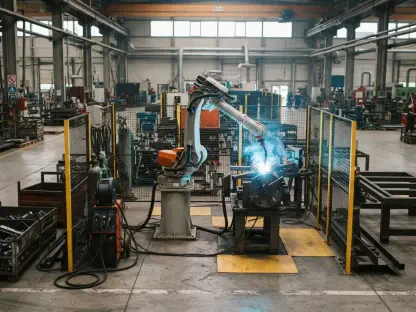
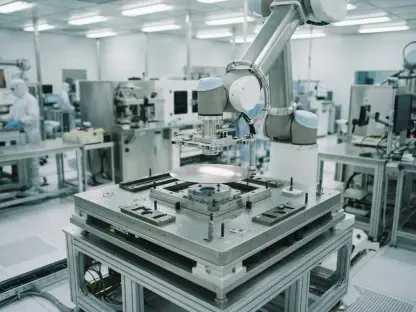
Cyber-Physical Systems (CPS) represent the technical foundation of this sustainable shift by integrating physical hardware with advanced computational cores to create an intelligent factory environment. These systems rely on a network of sensors and actuators that monitor production parameters in real time, allowing machinery to adjust its energy consumption or material usage based on current demand. This level of synchronization eliminates the “ghost waste” often found in traditional manufacturing, where machines continue to run at peak capacity regardless of actual output needs. Furthermore, the integration of cloud computing and Everything-as-a-Service models provides the massive processing power required to handle industrial data at scale, turning raw sensor output into actionable intelligence that optimizes every stage of the production cycle.
By mastering the five dimensions of industrial data—volume, velocity, variety, veracity, and value—manufacturers can identify subtle inefficiencies that were previously invisible to human operators. The transition to a data-driven model ensures that every resource, whether electricity, water, or raw ore, is used with maximum precision. This intelligent backbone also facilitates a more flexible production line capable of handling varying grades of recycled materials, which often present challenges for rigid, non-digital systems. As these cyber-physical networks become more sophisticated, they allow for a decentralized approach to manufacturing where production can be throttled or accelerated based on the availability of renewable energy or the proximity of recovered material streams, thereby reducing the overall carbon footprint of the entire operation.
Leveraging Digital Twins for Maintenance
A Digital Twin serves as a virtual replica of a physical asset, providing a high-fidelity simulation environment that mirrors a machine or component’s status through real-time sensor data. In the context of a circular economy, this technology is a primary driver of resource longevity because it shifts the maintenance paradigm from reactive or scheduled interventions to a purely predictive model. Instead of replacing a part based on a generic manufacturer’s recommendation—which often results in the disposal of perfectly functional components—operators use digital twins to monitor actual wear and tear. This allows for the extension of a product’s lifecycle to its absolute physical limit, ensuring that materials remain in active use for as long as possible before they are slated for refurbishment or recycling.
The utility of a digital twin extends beyond simple maintenance into the realm of high-fidelity performance optimization and design feedback loops. By simulating various operational scenarios in a virtual environment, engineers can determine how to run machinery more efficiently to prevent premature degradation. This data is then fed back into the design phase, allowing for the creation of more durable products that are easier to repair. When a component eventually reaches the end of its functional life, the digital twin provides a complete history of its usage and stress levels, informing future recyclers about the material’s structural integrity. This level of granular detail removes the uncertainty that often devalues secondary materials, making the reuse of high-performance alloys and polymers a viable industrial standard.
Precision Engineering and Resource Efficiency
Reducing Waste Through Additive Manufacturing
Additive Manufacturing, commonly recognized as 3D printing, has emerged as a fundamental alternative to traditional subtractive methods that generate significant scrap material. By constructing parts layer by layer from digital blueprints, this technology ensures that material is only placed where it is structurally necessary, virtually eliminating the waste associated with carving or milling. This “design-to-part” methodology is particularly effective for creating complex, lightweight geometries that reduce the total volume of raw materials required for a finished product. These lightweight designs offer a secondary benefit during the operational phase, as reduced mass translates directly into lower energy consumption for mobile machinery and transport vehicles, further contributing to the decoupling of economic growth from resource usage.
Beyond the immediate reduction in production waste, additive manufacturing enables the use of advanced circular materials, such as bio-based polymers and recycled metal powders. Because the process is entirely controlled by digital files, it is possible to adjust printing parameters in real time to compensate for variations in recycled material quality. This flexibility allows manufacturers to incorporate higher percentages of secondary materials without compromising the structural integrity of the final part. The ability to print on demand also means that components can be designed for easy disassembly, with integrated features that allow parts to be snapped apart or dissolved at the end of their life. This proactive approach to design ensures that the materials used today are ready to be seamlessly reintegrated into the production cycles of tomorrow.
Localizing Production and Spare Parts
The digitalization of manufacturing blueprints allows for a radical shift in logistics, moving from the mass transportation of physical goods to the high-speed transmission of data. By establishing a network of local additive manufacturing hubs, companies can produce spare parts on demand in close proximity to end users, drastically reducing the carbon emissions associated with global shipping. This localized approach is a cornerstone of the circular economy, as it facilitates the repair and refurbishment of products that might otherwise be discarded due to the unavailability or high cost of replacement components. Instead of waiting weeks for a part to arrive from an overseas warehouse, a technician can simply download a secure file and print the necessary item locally, keeping critical equipment in service and extending its total lifespan.
This shift to on-demand production effectively eliminates the need for massive “just-in-case” inventories that occupy warehouse space and eventually become obsolete. In a traditional model, companies often overproduce spare parts to ensure long-term support, leading to millions of tons of unused components eventually being scrapped. Digital inventories replace this waste with a repository of virtual files that never expire and require no physical storage. Furthermore, localized production hubs can serve as collection and processing points for used products, creating a regional loop where discarded items are shredded and repurposed into printing filament for new parts. This regionalized circularity strengthens local economies and builds a more resilient supply chain that is less vulnerable to the disruptions of international trade routes.
Security and Financial Foundations of Circularity
Protecting the Digital Circular Infrastructure
As industrial systems become increasingly interconnected to support circular flows, the importance of a robust cybersecurity framework cannot be overstated. A breach in a digitized factory could allow unauthorized actors to tamper with material tracking registers or alter the digital blueprints used in additive manufacturing, potentially leading to the production of defective or dangerous goods. To safeguard the integrity of the circular economy, organizations must implement the “CIA triad”—confidentiality, integrity, and availability—across their entire digital infrastructure. Protecting the veracity of data is particularly critical when tracking the chemical composition of recycled materials, as any corruption of these records could lead to the unintended mixing of toxic substances into the secondary material stream, undermining the safety of the entire reuse cycle.
Compliance with modern regulatory standards, such as the NIS2 Directive, has become a mandatory requirement for manufacturers looking to participate in the circular market. These regulations mandate proactive incident management and a high level of security across the entire supply chain, ensuring that even the smallest vendors do not become a weak point in the digital network. By treating cybersecurity as a fundamental pillar of sustainability, companies can build trust with consumers and partners who rely on the accuracy of “digital product passports.” These passports provide a tamper-proof record of a product’s origin, repair history, and material content, which is essential for high-quality recycling. Without a secure digital foundation, the transparency required for a circular economy would remain vulnerable to manipulation, halting the transition toward a more sustainable industrial future.
Ensuring Profitability and a High Return on Investment through Strategic Financial Planning and Management
The transition to a circular economy is increasingly driven by financial performance metrics rather than purely environmental goals, as digitalization makes the business case for sustainability undeniable. By utilizing standard mathematical frameworks like Net Present Value (NPV) and Return on Investment (ROI), organizations can demonstrate the tangible value of keeping materials in a closed loop. For instance, the ability to recover and reuse high-value metals reduces exposure to price volatility in the global commodities market, providing a level of financial stability that traditional linear models cannot match. Digitalization allows companies to track these savings with precision, proving that waste reduction is directly correlated with an improved bottom line and long-term business resilience.
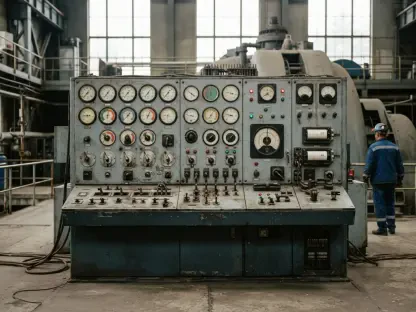
A significant challenge in this transition involves the presence of legacy infrastructure, which often consists of older, manual machinery that lacks native connectivity. Rather than undertaking an expensive and wasteful teardown of existing facilities, a strategic modernization approach focuses on “refactoring” and “repurposing.” By incrementally adding IoT sensors and smart controllers to older assets, manufacturers can unlock hidden technological value and integrate these machines into a modern, digitized workflow. This method significantly lowers the barrier to entry for circularity, allowing smaller firms to participate in sustainable production cycles without massive capital expenditure. This incremental evolution ensures that the shift toward circularity is inclusive and economically viable, fostering a wider adoption of sustainable practices across the global manufacturing landscape.
Advanced Data Management and Product Lifecycle Management: Comprehensive Strategies for Coordinating Information Throughout Every Stage of the Product Lifecycle
Implementing Ontologies for Proactive Design
For a product to be truly circular, its recovery must be planned during the initial design phase through a process known as “Proactive Design for Circular Manufacturability.” This requires the use of domain-specific ontologies, which are structured digital vocabularies that define the complex relationships between materials, manufacturing processes, and end-of-life recovery paths. By using these standardized digital frameworks, designers from different disciplines can collaborate more effectively, ensuring that every component is tagged with a “persistent digital record” that stays with it throughout its life cycle. This record, accessible via RFID or QR codes, informs future recyclers about the exact chemical composition of the item and provides detailed instructions for its safe and efficient disassembly.
The use of digital ontologies removes the guesswork that historically hindered high-quality recycling, where the inability to distinguish between different grades of plastic or metal led to the downcycling of valuable materials into low-grade products. With a proactive digital record, a sorting facility can instantly identify which components can be refurbished, which should be remanufactured, and which must be broken down into raw elements. This “circularity-by-design” approach ensures that products are not only durable and functional but also fundamentally compatible with the recovery infrastructure. By baking circularity into the digital blueprint, manufacturers create a transparent system where waste is treated as a design flaw rather than an inevitable byproduct, paving the way for a future where products are built to be reborn.
AI-Driven Recovery and Material Sorting
The downstream recovery of materials has long been the weakest link in the circular chain, often relying on labor-intensive manual sorting that is prone to error and inconsistency. However, the integration of artificial intelligence and advanced sensor platforms has revolutionized this stage by providing automated systems capable of identifying complex alloys and polymers with high precision. These AI-driven platforms can scan large volumes of industrial or electronic scrap and instantly categorize components based on their material value and potential for reuse. Because these systems utilize machine learning, they become more accurate with every interaction, eventually outperforming human workers in both speed and reliability, which significantly lowers the cost of material recovery.
This technology also enables a process known as “landfill mining,” where automated systems are deployed to historical disposal sites to harvest valuable materials that were discarded before modern recycling was possible. By mapping the location and concentration of specific waste streams, AI helps turn these environmental liabilities into “urban mines” of new wealth. To prevent tampering with material records, these recovery systems are often integrated with secure digital ledgers that track the flow of secondary materials back into the production cycle. This ensures that every kilogram of recovered material is accounted for and meets the necessary quality standards for manufacturing. By automating the most difficult part of the circular process, AI provides the scalability required to make waste recovery a primary source of raw materials for modern industry.
Strategic Frameworks for Sustainable Engineering
Applying the 10R Hierarchy Model
Engineers and industrial planners increasingly rely on the “10R Hierarchy” to guide their circularity efforts, moving well beyond the basic “Reduce, Reuse, Recycle” mantra. This expanded model prioritizes higher-level actions such as Refuse, where harmful or unrecyclable materials are excluded from the design entirely, and Repair or Refurbish, which aim to keep products in their highest-value state for as long as possible. By following this hierarchy, organizations ensure they are not merely managing waste but actively preventing its creation. Digitalization supports this framework by providing the data needed to determine which “R” strategy is most appropriate for a given product at a specific point in its life, ensuring that the energy and resources already invested in a component are not lost to premature recycling or incineration.
Frameworks like the Ellen MacArthur Foundation’s “ReSOLVE” model further complement this hierarchy by providing a strategic checklist for circular business actions, including Regenerate, Share, and Virtualize. In practice, this might involve moving from selling physical products to offering “Product-as-a-Service,” where the manufacturer retains ownership and responsibility for the item’s maintenance and eventual recovery. This shift aligns the company’s financial interests with the product’s longevity; the longer a machine stays in service, the more profit the manufacturer earns. Digital tools are essential for managing these service-based models, as they provide the real-time tracking and performance monitoring required to ensure that a shared asset is used efficiently and returned to the loop in good condition, fostering a regenerative industrial culture.
Developing Human Capital and Roadmaps
The transition to a digital circular economy is as much a human challenge as it is a technological one, requiring a workforce that is skilled in the nuances of sustainable engineering and data science. Educational institutions have begun to modernize their curricula to focus on “circular engineering,” teaching the next generation of designers how to use AI and IoT to manage complex material flows. This development of human capital is essential for managing the “nervous system” of a modern factory, where employees must be as comfortable with cyber-risk management as they are with mechanical assembly. A comprehensive roadmap for this transition involves not only the deployment of new sensors but also the continuous training of personnel to interpret the data they generate, ensuring that human insight remains at the center of the circular revolution.
Implementing a circular strategy requires a clear, step-by-step approach that begins with a detailed analysis of current waste streams. Step 1: Analyzing Waste Streams involves using digital monitoring to identify where materials and energy are being lost in the existing production cycle. Step 2: Setting Targets focuses on establishing measurable goals for material recovery and life extension based on the initial audit data. Step 3: Implementing Design-for-X methodologies ensures that all new products are built with end-of-life recovery in mind, utilizing digital tagging and modularity. By following this structured roadmap, manufacturers can transition from legacy linear models to a future-proof circular system. This coordinated effort between technology, strategy, and people ensures that the industrial sector remains a productive force while respecting the finite nature of the global resource base.
Establishing a Resilient Industrial Legacy
The study of digital circularity established a new benchmark for how modern industrial operations functioned and succeeded. Researchers identified that the intersection of Industry 4.0 technologies and circular economy principles created a symbiotic relationship that was previously unattainable. The implementation of these strategies provided a clear path for companies to move from speculative sustainability to a data-driven reality, where every resource was tracked and every byproduct was valued. By integrating cyber-physical systems and predictive maintenance tools, the industry successfully decoupled its growth from raw material consumption, providing a buffer against the supply chain shocks that defined the previous era. The transition proved that environmental stewardship was not a cost center, but a catalyst for innovation and financial resilience. Companies that adopted these digital circular models realized significant gains in operational efficiency and market stability, setting a precedent for a more responsible industrial legacy. Ultimately, the synthesis of digital intelligence and restorative design demonstrated that a sustainable future was built on the foundation of transparency, security, and the relentless optimization of material flows.