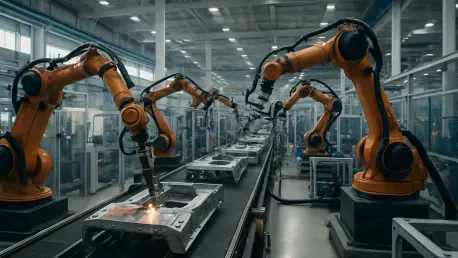

The seamless orchestration of silicon and steel on the factory floor has transitioned from a high-tech novelty to the fundamental backbone of global industrial competitiveness. This transformation represents a convergence where physical machinery meets advanced digital intelligence, creating a cohesive ecosystem known as Industry 4.0. Automation is no longer confined to the image of isolated robotic arms performing repetitive assembly line tasks; instead, it has become a comprehensive integration of high-tech hardware, such as autonomous robots and precision conveyors, and complex software systems, including Artificial Intelligence and Enterprise Resource Planning platforms. The global economy is now inextricably linked to these technologies, making the understanding of their implementation essential for any industrial stakeholder.
This article explores the multifaceted ways in which automated technologies are reshaping the manufacturing landscape. The objective is to provide a detailed analysis of how these systems optimize production, ensure personnel safety, and promote environmental responsibility. Readers can expect to learn about the strategic metrics used to measure success, the rise of collaborative robotics, and the integration of data-driven decision-making. By examining these core components, the narrative illustrates how modern factories are evolving into intelligent, self-optimizing environments that balance technical efficiency with human-centric design.
Key Questions or Key Topics Section
How Does Automation Improve Overall Equipment Effectiveness?
At the heart of modern manufacturing efficiency is a metric known as Overall Equipment Effectiveness, which serves as a rigorous standard for evaluating production performance. This metric compares a factory’s theoretical maximum capacity against its actual output, identifying gaps in availability, performance, and quality. While reaching a perfect score is nearly impossible in a physical environment, the integration of automated systems allows manufacturers to push toward the world-class benchmark of eighty-five percent. This is achieved by replacing reactive strategies with proactive, data-driven workflows that minimize the traditional bottlenecks found in manual labor.
One of the primary drivers of this improvement is the implementation of Internet of Things sensors that monitor the health of machinery in real time. By analyzing vibrations, heat, and output, these systems predict potential failures before they occur, effectively shifting maintenance from a disruptive necessity to a planned activity. Furthermore, automated systems facilitate rapid changeovers between product batches, allowing rails to adjust and tools to swap in seconds rather than hours. This level of precision ensures that production cycles remain consistent around the clock, as robotic units do not suffer from fatigue or distraction, maintaining a steady output that human-operated lines simply cannot replicate.
In What Ways Does Automation Enhance Workplace Safety and Worker Well-being?
The social impact of automation is perhaps most evident in the drastic reduction of workplace hazards and the improvement of ergonomic conditions. By delegating tasks that are considered dirty, dull, or dangerous to mechanical systems, manufacturers are successfully mitigating the risks of chronic injuries and acute accidents. Robots now handle heavy lifting, exposure to toxic chemicals, and operations in extreme heat, which were historically the leading causes of long-term health issues for factory staff. This shift does not eliminate the human element but rather repositions it toward more complex, supervisory roles that require cognitive rather than physical exertion.
A notable advancement in this area is the widespread adoption of collaborative robots, or cobots, which are designed to work alongside humans without the need for traditional safety cages. These machines utilize force-limiting sensors to detect human presence and prevent collisions, creating a harmonious workspace where machines handle precision tasks while humans focus on quality control and problem-solving. Additionally, the use of wearable technology and exoskeletons provides physical support for workers who must perform repetitive overhead tasks, significantly lowering the physical toll of the job. Through virtual reality training and digital twins, employees also gain the ability to practice emergency procedures in a risk-free environment, ensuring they are prepared for real-world scenarios.
Can Automated Systems Drive Environmental Sustainability and Resource Conservation?
The intersection of automation and sustainability has become a critical focal point for modern industrial strategy, particularly as corporations strive to meet stringent environmental goals. Smart building management systems now utilize sensors to monitor ambient temperatures and machine heat output, automatically adjusting heating and cooling to eliminate energy waste. This granular level of control ensures that energy consumption is tied directly to active production needs, rather than running on a fixed, inefficient schedule. Consequently, many executives view these smart initiatives as essential investments that align operational efficiency with ecological stewardship.
Resource conservation is further enhanced through the precision of automated machinery, which significantly reduces material scrap rates. In chemical-heavy industries or those requiring massive amounts of water, automated closed-loop systems monitor contamination and pH levels in real time to filter and recycle resources indefinitely. This prevents the flushing of industrial waste into the environment and reduces the demand for raw material intake. Modern supervisory systems also provide the data necessary for transparent reporting, allowing companies to track their carbon footprint with unprecedented accuracy and make adjustments toward a more circular economic model.
What Role Does Artificial Intelligence Play in the Modern Manufacturing Strategy?
The integration of Artificial Intelligence represents the most sophisticated layer of modern automation, moving beyond simple programmed movements toward autonomous decision-making. Leading manufacturing sites now embed analytical and generative AI into their core operations to facilitate complex logic on the factory floor. This technology allows systems to learn from historical data, optimizing assembly sequences and predicting supply chain disruptions before they manifest. The result is a factory that can think for itself, making minor adjustments to speed or pressure to maintain quality without requiring constant human intervention.
However, the success of AI in manufacturing depends on a holistic integration across the entire value chain rather than isolated projects. High-performing factories utilize digital twins to simulate various production scenarios, allowing them to test the impact of new designs or processes in a virtual space before physical implementation. This reduces the risk of costly errors and accelerates the time it takes to bring new products to market. By creating a unified, intelligent system, manufacturers can scale technological advantages across global networks, ensuring that every facility operates at the highest possible standard of digital maturity.
Summary or Recap
Automation serves as the transformative engine that redefines how products are conceived, manufactured, and delivered to the market. By addressing the core pillars of efficiency, the modern factory achieves higher output and lower waste through the strategic use of sensors and predictive analytics. The workforce also experiences a significant shift, moving away from hazardous physical labor toward sophisticated technical roles supported by collaborative robotics and advanced training simulations. Furthermore, the push for sustainability is bolstered by automated resource management, ensuring that industrial growth does not come at the expense of environmental health. These developments highlight a future where technology and human ingenuity work in tandem to solve the most pressing challenges of production.
Conclusion or Final Thoughts
The journey of industrial evolution reached a pivotal moment where the adoption of automated systems became the standard for survival. It was once believed that technology would merely replace labor, yet the reality showed that it redefined the nature of work, fostering safer and more intellectually engaging environments. Manufacturers who prioritized the integration of artificial intelligence and sustainable practices positioned themselves as leaders in a global market that demanded both speed and responsibility. These actions demonstrated that the successful factory was not just the one with the most machines, but the one that best utilized data to protect its people and the planet.
Moving forward, the focus shifted toward the continuous refinement of these digital-physical hybrids. Organizations began to invest more heavily in upskilling their workforce to manage the complex algorithms governing production lines. There was a clear realization that the most resilient operations were those capable of adapting to real-time changes through autonomous decision-making and flexible infrastructure. As these systems became more accessible, the gap between traditional manufacturing and the high-tech future narrowed, leaving a legacy of innovation that transformed the industry into a more efficient, safe, and conscious sector. Manufacturers reflected on these changes as the necessary steps taken to ensure long-term viability in a rapidly changing world.