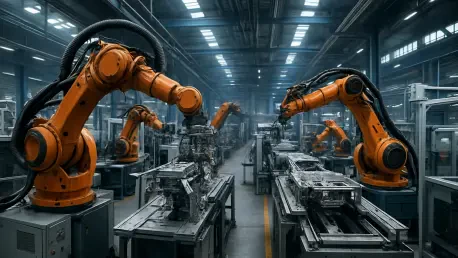

The industrial landscape is currently witnessing a profound shift as traditional automation yields to a more sophisticated paradigm known as Manufacturing Artificial Intelligence Transformation. This evolution, often referred to as AX, is not merely about replacing human labor with machines but involves the creation of a cognitive infrastructure capable of self-optimization and real-time decision-making. LS Electric has positioned itself at the forefront of this movement by unveiling its Korean-style next-generation AI factory model. This framework prioritizes the standardization and integration of equipment data across the entire production floor, ensuring that every sensor and actuator contributes to a holistic understanding of the manufacturing process. By addressing the fragmentation of data, the company has established a foundation where productivity increases alongside environmental sustainability, effectively reducing carbon emissions and energy waste through precise, data-driven operational adjustments.
Integrating Intelligence: The Core of the Modern Production Line
Data Harmonization: Standardizing the Industrial Language
The success of an AI-driven facility relies heavily on the quality and accessibility of the information gathered from various hardware components scattered throughout the plant. LS Electric has focused its efforts on bridging the gap between disparate systems by implementing a unified data architecture that allows for seamless communication between legacy machines and modern sensors. This standardization process is essential for achieving Manufacturing AI Transformation, as it removes the silos that previously hindered comprehensive site analysis. By creating a synchronized data stream, the system can monitor energy consumption patterns and carbon outputs in real-time, allowing managers to implement green manufacturing practices without sacrificing high-volume output. This approach transforms the factory floor from a collection of isolated workstations into a single, breathing organism that responds dynamically to shifting market demands and internal performance metrics.
Predictive Analysis: Maximizing Uptime Through Digital Twins
Beyond simple data collection, the integration of digital twin technology serves as a cornerstone for proactive facility management and long-term reliability. By creating a virtual replica of the physical production line, LS Electric enables operators to simulate various scenarios and assess the potential impact of adjustments before they are applied in the real world. This capability is bolstered by advanced predictive maintenance algorithms that analyze vibrations, temperature fluctuations, and power usage to identify abnormal signals early. A practical application of this technology was observed at the L&F Guji plant, where the implementation of AI-driven diagnostics significantly reduced unexpected downtime by forecasting component failures before they manifested as physical breakdowns. This shift from reactive maintenance to a predictive model ensures that maintenance schedules are optimized based on actual wear and tear rather than arbitrary timelines, thereby extending the lifecycle of expensive capital equipment.
Hardware and Software: Synergy in High-Speed Manufacturing
Advanced Control: The Impact of the SU-CM70 Controller
The physical execution of complex AI algorithms requires robust hardware capable of processing massive amounts of data at lightning speed, which is where the SU-CM70 PLC becomes indispensable. This high-performance programmable logic controller represents a significant departure from traditional hardware-bound systems by adopting a software-centric design philosophy. It allows for the simultaneous control of multiple sophisticated devices, providing the flexibility required to manage modern, high-speed production lines that must adapt to frequent product changes. The SU-CM70 serves as the brain of the operation, executing complex logic while maintaining steady communication with the broader AI platform to ensure that every movement is synchronized with the overall production plan. This level of responsiveness is vital for maintaining quality control in environments where even a millisecond of delay can lead to material waste or safety hazards, proving that hardware remains a critical pillar of digital transformation.
Safety and Diagnostics: AI Vision and Conversational Interfaces
Maintaining a secure and efficient work environment has become increasingly complex, leading to the development of specialized AI platforms like LS SHE and the LS Factory Black Box. LS SHE utilizes sophisticated AI vision systems to monitor the factory floor for potential hazards, identifying safety violations or equipment malfunctions that might escape the human eye. Meanwhile, the LS Factory Black Box functions as a diagnostic archive, recording and analyzing the root causes of process abnormalities to prevent their recurrence. To make these insights accessible to human operators, LS Electric introduced conversational AI tools built on large language models that facilitate intuitive troubleshooting. Instead of sifting through thousands of pages of technical manuals, technicians can simply ask the AI for specific diagnostic steps or historical maintenance data. This democratization of information ensures that even less experienced personnel can effectively manage high-tech systems, bridging the skills gap in the industrial sector.
The transition toward intelligent manufacturing demanded a shift in how organizations viewed their digital assets and human capital. Industry leaders recognized that scalable solutions were necessary to support the broader ecosystem, particularly for small and medium-sized enterprises seeking to remain competitive. By leveraging the expertise gained from operating a Global Lighthouse Factory, LS Electric demonstrated that the path forward involved democratizing access to high-level automation tools. Companies were encouraged to prioritize the integration of modular AI components that could grow alongside their operational needs rather than attempting a total overhaul of existing infrastructure. The successful deployment of these technologies proved that long-term survival in the global market required a commitment to continuous data refinement and workforce training. Moving forward, the focus shifted toward refining these autonomous systems to handle increasingly varied production tasks while maintaining rigorous environmental standards, ensuring that efficiency and sustainability remained inseparable goals in the industrial landscape.